Matox News

Truth Over Trends, always!

Warner Bros Showdown: Trump’s Fight for the Future — Deal or No Deal?

U.S. Media Moguls and the Geopolitical Landscape

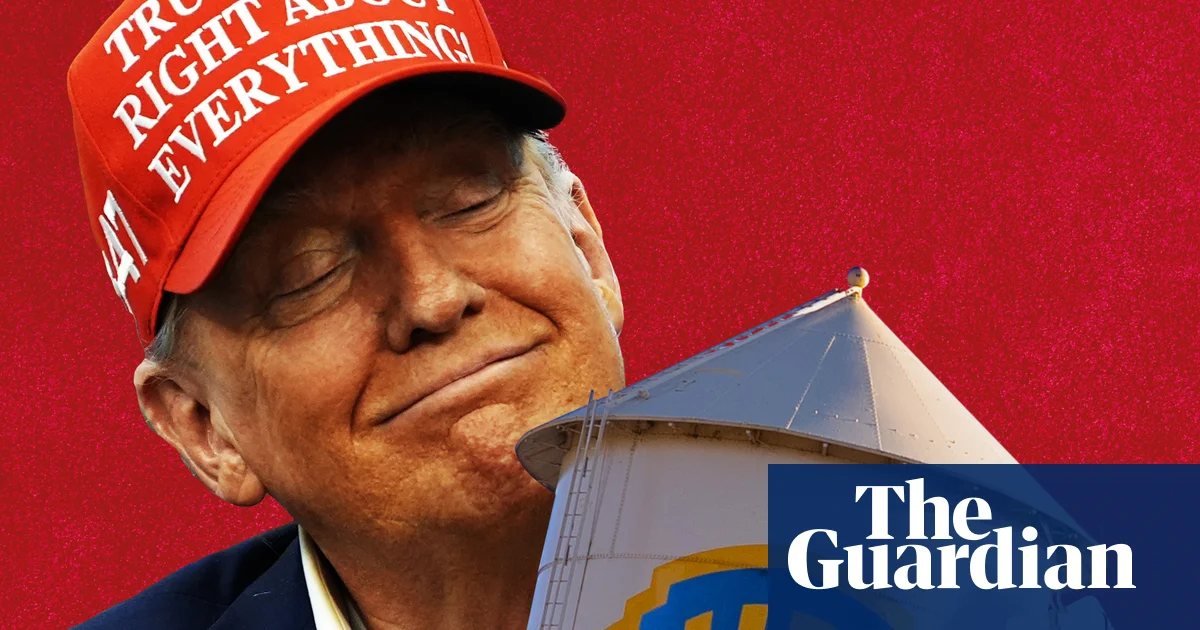
The recent upheaval in the international media industry reveals a profound shift that could redefine the global power balance. At the heart of this shift is President Donald Trump’s controversial influence over an impending mega-merger involving Netflix, Warner Bros Discovery (WBD), and other media giants. The $82.7 billion acquisition deal by Netflix for WBD’s extensive portfolio, which includes iconic assets like Batman, Casablanca, and CNN, is now complicated by political interference that extends beyond mere market competition to the very fabric of free enterprise and democratic process. As the world watches, the potential for a shaping of global media narratives by a single nation’s government looms large, threatening to tilt the scales of international diplomacy and news dissemination.

Political Puppeteering and a Dangerous Precedent

Trump’s involvement, or at least his declared interest, highlights a disturbing trend — one where the White House’s hand is being seen as an arbiter in big corporate deals. Historically, horizontal mergers—especially ones of this magnitude—are subject to vigorous antitrust scrutiny from independent agencies that seek to prevent monopolistic consolidation. However, the current administration’s apparent willingness to entertain direct presidential influence risks undermining decades of established legal standards. Renowned legal scholar Tim Wu from Columbia University pointed out that such interference in merger reviews is “not how the system was designed,” expressing concern that the White House’s new approach could erode the independence of antitrust regulators. Analysts warn that if the deal proceeds amid political meddling, it may set a precedent where government officials deploy influence as a weapon to favor certain corporate interests, fundamentally threatening market competition and consumer choice on a global scale.

Who Holds the Power: Society or State?

Paramount Skydance’s aggressive $108 billion bid, backed by Trump supporters, underscores a critical geopolitical chess game. The bid’s significance extends beyond simple corporate rivalry; it symbolizes a tug-of-war over media sovereignty and control of narrative powers that shape societal perceptions worldwide. Critics, including Senator Elizabeth Warren and other democrats, emphasize that such consolidation raises profound concerns about the erosion of diversity in media voices and the potential suppression of dissenting views. With Hollywood historically a potent tool for ideological influence, the possible monopolization of entertainment and news outlets in the hands of a few — especially with political operatives blurring the lines — threatens to limit the very fabric of open discourse.

Disturbingly, this potential merger involves not only American firms but also international actors. As analysts warn, the culmination of these moves could deepen the crisis of global media neutrality, with powerful alliances aligning to endorse or oppose mergers based on geopolitical agendas. The danger is clear: when political influence seeps into the mechanism of market regulation, the result can be a shadow empire of propaganda— a space where dissent is quashed, and national interests dominate the narrative worldwide. The international community, including independent think tanks and watchdog groups, must remain vigilant against such threats to democracy and free enterprise.

The Weight of History and the Unfolding Future

As Trump’s recent statements and actions continue to raise alarms, the global stakes become ever clearer. This contentious collision of corporate interests, political ambitions, and international values of free speech underscores a pivotal moment in history—one where the consequences extend beyond the borders of the United States. The unfolding drama echoes echoes from past eras of conflict, where media control often predates or catalyzes larger geopolitical upheavals. Will the independent mechanisms designed to shield markets from monopolistic powers endure, or will they be subsumed by the ambitions of a single nation’s leadership? As the world teeters on the edge of this new frontier, the real question remains: who will shape the stories of tomorrow—the free societies or the shadowy interests pulling strings behind closed doors? The answer, like history itself, is still being written.

Thailand and Cambodia clash persists despite Trump’s ceasefire claim

In a dramatic turn of events, Thailand and Cambodia are once again embroiled in fierce border clashes that threaten regional stability and challenge international diplomacy. Despite claims from U.S. President Donald Trump of a ceasefire agreement, reports indicate that hostilities persisted overnight, with Thai forces continuing to press along the border and Cambodian forces launching renewed rocket attacks. The long-standing border dispute, rooted in colonial-era demarcations, has surged back into violent confrontation, illuminating how unresolved historical grievances can resurface with devastating consequences.

It was on Friday night that President Trump announced, through social media, that a mutual ceasefire had been negotiated, citing the双方 agreement to return to previous accords signed in October. However, the reality on the ground diverged sharply from diplomatic pronouncements. Thai Prime Minister Anutin Charnvirakul clarified that Thailand’s military actions would persist until Cambodia fully withdrew its forces and demined the border—a demand that Cambodia, in turn, rejected, stating that landmines left from the 1980s civil war could not be removed overnight. As fighting escalated with shelling, air strikes, and casualties mounting—at least 21 deaths and 700,000 displaced—analysts and international observers warned of an emerging crisis that could destabilize Southeast Asia even further.

The geopolitical impact of these renewed hostilities extends beyond bilateral tensions. The region, historically a pincushion for imperial interests, is again demonstrating that local disputes can quickly spiral into flashpoints with broader consequences. The United Nations and regional organizations like the ASEAN have voiced concern but largely remain powerless to de-escalate the conflict. The fact that the clashes involve air strikes and landmine threats indicates a shift towards more aggressive tactics, fueling fears that the conflict could spiral into a larger regional war if not contained. Global analysts warn that unchecked violence will deepen mistrust and undermine efforts for concrete border resolutions, threatening decades of fragile peace.

Moreover, the diplomatic efforts—lauded initially as a breakthrough—are now under scrutiny for their actual efficacy. Thailand’s warning to the US to avoid linking the conflict to trade policy underscores the delicate balance of geopolitics in Southeast Asia. The region’s major powers, including China and India, watch intently, aware of how this conflict could be used to influence broader strategic interests. Historians note that this border dispute, essentially inherited from colonial maneuvering, exemplifies how historical lines drawn by foreign powers continue to incite violence, threatening to undo the region’s progress towards stability.

As Cambodian reports of fresh Thai air strikes surface amid continued firefights and accusations of ceasefire violations, the phrase “the peace process is fragile” echoes among diplomatic corridors. The conflict’s unresolved history combined with recent military escalations paints a disturbing picture of a region at the brink. The global community, led by a fragile international order, must grapple with the dangerous dynamics at play. The weight of history, compounded by contemporary geopolitical ambitions, leaves South-East Asia in a state of uncertainty—poised on the precipice where peace and chaos collide, and the lessons of the past threaten to be lost amid the roar of ongoing conflict. With each day, the story of this border dispute writes itself deeper into the fabric of history—reminding us that some conflicts, once ignited, may burn longer than anyone expects, shaping the face of the future in ominous ways.

Thailand and Cambodia Clash Again Despite Trump’s Ceasefire Claim

Emerging Crisis on the Thai-Cambodian Border: A Tug of War with Global Ramifications

The recent escalation of hostilities along the Thai-Cambodian border has reignited longstanding tensions rooted in historical territorial disputes. Despite claims from U.S. President Donald Trump that a renewed ceasefire had been agreed upon through diplomatic channels, the reality on the ground suggests a far more volatile and unpredictable conflict. Cambodian officials assert that Thai forces, including fighter jets, continue to strike targets across the border, undermining any claims of a peaceful resolution. Meanwhile, Thailand’s military counters with accusations of violations of international rules, specifically targeting civilian areas and deploying landmines—a move that only deepens the cycle of violence.

This fragile flashpoint reflects more than a regional dispute; it is emblematic of the geopolitical impact of external influences and flawed diplomatic interventions. The United States, under Trump’s leadership, played a pivotal role in the original peace accord, leveraging threats to withdraw trade privileges to push Thailand and Cambodia toward compromise. Yet, as recent weeks demonstrate, treaties and ceasefires tend to be fragile, especially when interconnected with historical grievances and nationalistic fervor. Analysts, including scholars at the International Crisis Group, warn that such unresolved conflicts risk broader regional destabilization, especially as both countries leverage their respective military capabilities—Thailand with jet fighters and Cambodia with BM-21 rocket launchers—further escalating the threat of wider conflict.

Despite claims of a renewed ceasefire brokered during a call involving Trump, Prime Minister Hun Manet of Cambodia, and Prime Minister Anutin Charnvirakul of Thailand, the reality remains discordant. Neither Thai nor Cambodian leaders officially acknowledged the agreement in their subsequent statements, and the Cambodian prime minister even indicated ongoing hostilities. This disconnect highlights the fragile nature of international diplomacy in volatile regions and the importance of verified facts. The conflict’s roots are embedded deeply in history—dating back to colonial-era border demarcations and international court rulings—further complicating diplomatic efforts. Notably, a 1962 ICJ decision awarded sovereignty over border territories to Cambodia, a verdict still fiercely contested within Thailand, fueling persistent enmity.

As violence erupts anew, the broader implications for international stability are significant. The United Nations and regional actors are watching with concern as at least 20 lives have been lost in recent clashes. The regional hierarchy remains fragile, with Malaysia’s role as a mediator underscored by its hosting of previous peace accords, yet these efforts are frequently undermined by nationalist rhetoric and strategic military deployments from both sides. The ongoing clash acts as a stark reminder that unresolved historical disputes, if left unaddressed, threaten to spiral into broader conflicts that could draw in neighboring nations and shift regional power dynamics. The weight of history presses heavily on the present, and the international community must tread carefully, mindful that tomorrow’s calamity could easily become today’s irreversible tragedy.

Von der Leyen slaps down Trump’s Election interference Claims—Europe Stands United

As the world observes an increasingly volatile geopolitical landscape, the spotlight remains fixed on Ukraine, Russia, and the wider Western alliances shaping international stability. Recent developments reveal a complex web of negotiations, territorial disputes, and strategic moves that could redefine borders and influence power dynamics for years to come. At the center of this maelstrom are Ukraine’s territorial integrity, Russia’s assertive claims, and the West’s cautious approach, highlighting the profound geopolitical impact of decisions made today and how they resonate across societies.

Intent on consolidating its narrative, the Kremlin’s foreign policy aide Yuri Ushakov issued a provocative statement asserting that “the whole of Donbas belongs to Russia,” despite international consensus on Ukraine’s sovereignty. This claim, vehemently rejected by Kyiv and Western analysts alike, underscores the persistent reluctance of Moscow to accept any potential compromise on territorial disputes. The strategic importance of Donbas, comprising the Donetsk and Luhansk regions, remains a key sticking point in peace talks. The European Union and NATO consider these developments as potential preludes to renewed conflict, emphasizing how Russia’s unwavering stance challenges the prospects of a peaceful resolution.

Meanwhile, in the corridors of power, UK and US officials debate the long-term security risks of a potential Ukrainian retreat. **Peter Ricketts**, a former UK security adviser, expressed deep concerns over the US proposal for a “free economic zone” in parts of Donbas under Ukrainian control, warning that these “guarantees” are likely superficial, and that Russian infiltration, reminiscent of Crimea’s annexation, would inevitably follow.** Such analysis signals a broader apprehension: that international espionage, pretext-driven incursion, and political destabilization could consume Ukraine from within, paving the way for a new phase of Russian expansion. This scenario not only threatens Ukrainian sovereignty but also jeopardizes European security architecture, prompting analysts worldwide to question whether the West’s strategies truly deter further Russian advances or inadvertently embolden them.

Amid these complex negotiations, the European Union faces internal disagreements over the handling of frozen Russian assets. Countries like Hungary oppose permanent asset freezes, whereas others discuss the possibility of using seized funds for Ukraine’s reparation efforts—a move that has ignited tensions within EU member states. The recent vetoed law in Slovakia, where President Pellegrini challenged government reform, exemplifies the fragile balance of power and the growing tensions surrounding EU coherence. Historians and geopolitical analysts warn that such internal discord could weaken the EU’s unified stance, inadvertently providing Russia with openings to exploit divisions and extend its influence across the continent.

As the diplomatic dance continues and new proposals hover on the horizon, the true question remains: whether Vladimir Putin is willing to sign a genuine peace deal or if he is merely playing a game of delay, buying time to consolidate his military gains over winter. With the ongoing narrative of fake negotiations and strategic deception, the world stands at a historical crossroads where every decision could either lead to a fragile peace or ignite a broader conflict. As atmospheric tensions escalate, the echoes of history remind us that the unfolding story in Ukraine and beyond is far from over; indeed, it is a chapter in a much larger saga of power, sovereignty, and the enduring struggle for geopolitical dominance that continues to shape the future of our societies.

Supreme Court to weigh Trump’s bid to end birthright citizenship—what’s at stake?

US Supreme Court to Decide Future of Birthright Citizenship and Its Geopolitical Consequences

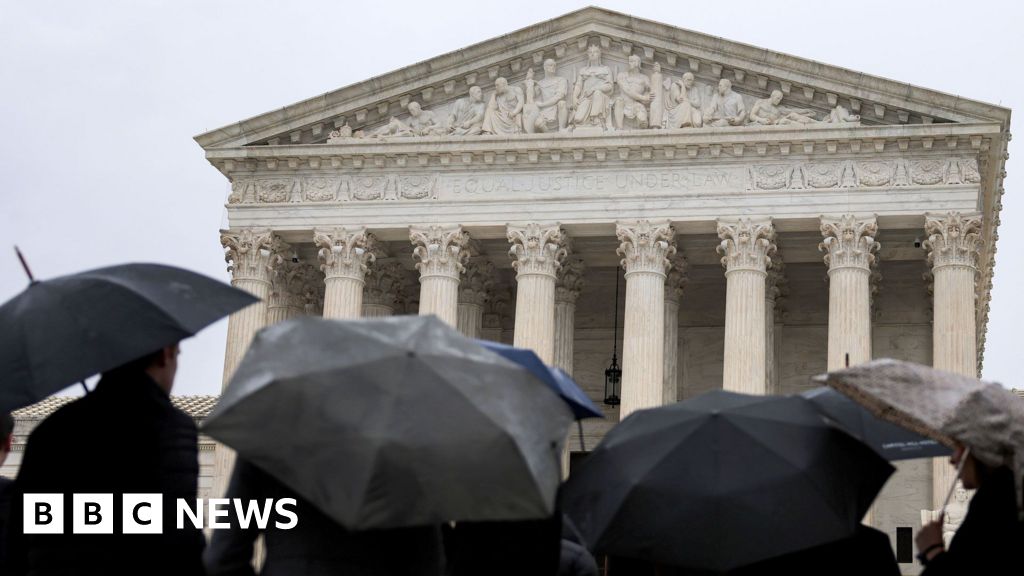
The United States stands at a pivotal crossroads as the Supreme Court prepares to decide on the legitimacy of Donald Trump’s executive order that seeks to restrict the constitutional guarantee of birthright citizenship. This significant legal battle stems from Trump’s attempt to reinterpret the 14th Amendment, ratified in 1868, which guarantees automatic citizenship to every individual born on U.S. soil. The case, Trump v Barbara, has ignited fierce debates around legal authority, immigration policy, and the very fabric of American identity.

The dispute centers on a direct challenge to a long-standing principle that has shaped U.S. society for over a century. Under President Trump’s order, if upheld, tens of thousands of children born in the U.S. annually could lose their citizenship if their parents are undocumented or temporarily residing in the country. The policy would deny these children access to vital government programs like Medicaid, food aid, and educational benefits, altering the socio-economic landscape for future generations and raising grave questions about how society treats its most vulnerable. Legal analysts suggest that such a move, if legalized, would signal a major shift in immigration policy—effectively redefining what it means to be an American at a fundamental constitutional level.

Historically, the U.S. has been among the roughly 30 nations worldwide that extend automatic citizenship to anyone born on their territory. Countries like Canada and Mexico have similar policies, framing them as both humanitarian standards and statements of national sovereignty. However, critics argue that Trump’s legal push—underpinned by a fringe interpretation of the 14th Amendment—aims to curtail immigration, particularly from Latin America and other regions viewed with suspicion by the current administration. The American Civil Liberties Union (ACLU) and numerous legal scholars have vocally opposed the executive order, asserting it violates the fundamental constitutional rights rooted in over 150 years of American legal tradition.

Internationally, this legal challenge signals a broader geopolitical impact. As global powers observe the U.S. re-assessment of its immigration and citizenship norms, foreign governments and international organizations are left to grapple with the implications. Many view the U.S. as a leader in human rights and legal standards; thus, altering its constitutional interpretation risks undermining its credibility on the world stage. Political analysts warn that such internal shifts could embolden other nations to reevaluate their own citizenship policies, potentially fueling regional instability and further complicating transnational migration patterns. The decision by the Supreme Court, expected in early summer, will not simply determine the fate of a legal principle but could recalibrate America’s role as a land of opportunity versus a fortress of exclusion.

As historians and international observers chart the turbulent waters of this legal showdown, the weight of history presses heavily upon the courtroom. What is at stake is not only the future of countless children and families but the very identity of a nation built upon the promise of equality and opportunity. The Court’s ruling will echo across generations, shaping the narrative of America’s commitment to its foundational ideals or signaling a profound departure into a more restrictive, divided society. In the unfolding chapters of this legal saga, the world watches—and the true story of what it means to be an American continues to be written, one verdict at a time, leaving a legacy that history may one day question as either a beacon of hope or a cautionary tale of loss and division.

Somali-Americans Slam Trump's ‘Garbage’ Comments—Stand Strong and Proud
Somali-Americans Slam Trump’s ‘Garbage’ Comments—Stand Strong and Proud

Geopolitical Shifts Unfold as U.S. Policy Sparks Global Tensions

In an era marked by intense geopolitical realignments, the United States under President Donald Trump has once again sent shockwaves through immigrant communities and international relations alike. Trump’s biting rhetoric targeting the Somali-American community in Minnesota has ignited fears that ripple beyond the local level, illustrating how domestic rhetoric can influence America’s standing on the world stage. His recent comments at the White House, where he declared, “I don’t want them in our country, I’ll be honest with you… their country is no good for a reason,” have been condemned locally and internationally, with community leaders describing his words as dangerous and stigmatizing. Such language not only jeopardizes the safety and integration of immigrant communities but also undermines the moral authority of the U.S. as a leader advocating for human rights and inclusion.

Furthermore, the escalating rhetoric has intensified fears among Somali-Americans, particularly in Minnesota, where the community constitutes a significant demographic. Aj Awer, a community leader, criticized the comments as “not becoming of a president” and warned of the potential for increased radicalization or violence. Analysts from institutions like the International Crisis Group warn that such rhetoric may embolden extremist groups and foster division among societies, ultimately weakening the social fabric of a nation built on diversity. Meanwhile, reports of aggressive immigration enforcement tactics, including federal operations targeting undocumented residents, have added to the climate of anxiety. Observers argue this stance risks alienating immigrant communities and fueling social fragmentation, thereby complicating America’s efforts to project stability and leadership in a turbulent world.

The internal domestic fallout mirrors a troubling trend of recurring accusations of fraud and corruption that the Trump administration has leveraged to justify these hardline policies. In Minnesota, allegations of charity fraud involving Somali immigrants and claims of broad-based “money laundering” have been politicized, leading to an investigation by congressional oversight. Such actions mirror a broader pattern where national security concerns are intertwined with political narratives, complicating efforts to differentiate between real threats and inadvertent stigmatization. Historians like Dr. Kevin B. MacDonald suggest that such policies, if unchecked, could accelerate societal polarization and heighten tensions within immigrant enclaves. Meanwhile, the ending of Temporary Protected Status (TPS) for Somali residents signals a shift toward stricter immigration enforcement, raising questions about the long-term geopolitical impact of these inward-looking policies.

As the world watches, this unfolding chapter underscores the fragility of global stability. The aggressive stance taken by the U.S. not only alienates minority communities but also signals a retreat from its traditional leadership role. International organizations like the United Nations have expressed concern, warning that such divisive policies could destabilize regions already grappling with crisis. The deepening shadows cast by rhetoric, enforcement tactics, and political manipulation threaten to transform domestic discord into an international crisis, rewriting the narrative of American exceptionalism. With history hanging in the balance, the true consequence of these choices remains yet to be written—an enduring testament to the power of words and policies in shaping the course of nations for generations to come.

National Guard shooting suspect to face murder charges amid Trump's aggressive immigration crackdown
National Guard shooting suspect to face murder charges amid Trump’s aggressive immigration crackdown

The recent surge of violence and political upheaval surrounding Washington, D.C. has ignited a firestorm with far-reaching geopolitical impacts that ripple across the international landscape. The escalation of violence—marked notably by the deadly shooting of National Guard members during a targeted attack close to the White House—has cast a shadow over what was once regarded as a symbolic safe zone. The attack, suspected to have been conducted by an Afghan national, underscores the complex challenge faced by U.S. authorities, who are now grappling with the security implications of foreign nationals involved in domestic violence. The incident further fuels Donald Trump‘s narrative that America’s borders and national security are compromised, prompting calls for stringent immigration policies.

The international community watches keenly as Trump vows to “permanently pause migration from all third-world countries,” signaling a potential shift away from America’s longstanding commitment to being a haven for immigrants. His promise, announced in a late-night social media post, aims to “end all federal benefits and subsidies to non-citizens” and remove those deemed “not a net asset” to the country. Yet, these aggressive rhetoric and policy proposals defy the legal and societal realities within the United States, where previous bans faced judicial hurdles and legislative resistance. Global analysts and human rights organizations caution that such measures could destabilize international efforts to support refugees and undermine America’s moral standing.

The incident has become a clear turning point, marking heightened tensions between the Biden administration’s policies and the growing nationalist wave, with many fearing increased institutional crackdowns and deepening societal divisions. As the Trump-era policies of mass deportations and immigration restrictions take a renewed shape, international voices—especially within Europe and Canada—warning that America risks retreating into isolationism and xenophobia. Renowned historians such as Professor Laura Sanchez argue that these developments threaten to turn the clock back on decades of inclusive policies, risking economic consequences due to the significant contributions of foreign-born workers, who fuel roughly 31 million American jobs.

This crisis also amplifies the debate about how internal decisions affect societal cohesion and international perceptions. The attack’s suspected perpetrator, linked to Biden’s post-2021 Afghan evacuation program, exemplifies the unintended consequences of rapid resettlements. As Trump calls for reexamining the status of Afghanistan nationals and intensifying immigration enforcement, international observers wonder whether the US is steering itself toward a more insular, security-focused approach—one that risks alienating traditional allies and destabilizing regional geopolitics. Historians warn that such internal rifts, if unaddressed, could lead to long-term societal fragmentation, with echoes that may reshape international relations for generations.

As the dust settles, the weight of history presses down—highlighting a moment where America’s founding ideals clash with burgeoning fears and nationalistic impulses. The choices made by its leaders in this perilous era could either forge a path toward renewed unity or fracture the social fabric beyond repair. The story of this chapter is still being written, but one thing remains certain: the unfolding narrative will influence the world’s outlook on democracy, security, and human rights for decades to come.

Meet Trump's "Drone Guy" Becoming Key Player in Ukraine Peace Talks
Meet Trump’s “Drone Guy” Becoming Key Player in Ukraine Peace Talks

Geopolitical Shifts and Emerging Power Players in US Military Politics

In the tangled web of international power, the recent appointment of Dan Driscoll as the youngest-ever Army Secretary in the United States marks a notable shift in the country’s military and geopolitical landscape. At only 39, Driscoll’s rise to prominence underscores an emerging trend where technology, youth, and political alliances forge new avenues for influence—an aspect not lost on international analysts and historians. Despite his limited diplomatic experience, Driscoll’s close ties with key figures like Vice President JD Vance and former President Donald Trump signifies a potential reorientation of America’s military and strategic priorities, especially regarding the ongoing crisis in Ukraine.

His unannounced visit to Kyiv and subsequent discussions with Ukrainian officials signal a significant departure from traditional diplomatic channels, hinting at a more direct or even unconventional approach to conflict resolution. The fact that Driscoll, with no formal background in international diplomacy, engaged in top-level talks with Zelensky and Russian officials, demonstrates a possible shift toward a strategy where military technology and unorthodox negotiations play an increasing role. Analysts, including those from international think tanks, warn that such moves could recalibrate America’s role in global conflicts, tilting the balance of influence in ways reminiscent of Cold War-era brinkmanship, but now driven by emerging battlefield technologies and rapid information exchanges.

Trump’s recent social media hints about directing his envoy Steve Witkoff to meet with Vladimir Putin in Moscow—plus Driscoll’s overt involvement—highlight an essential shift: the potential melding of military preparedness with diplomatic gambits. This combination might redefine how America projects power and mediates conflicts in our multipolar world. More critically, Driscoll’s vision of future warfare—where every soldier harnesses drones and artificial intelligence—reflects a broader trend towards technological dominance. Historical voices from military strategists and defense analysts warn that as societies become more reliant on silicon and software, the battlefield itself transforms into an arena of information warfare and automation, promising both unprecedented efficiency and dangerous vulnerabilities.

In the backdrop of these developments, questions emerge about Driscoll’s possible future role – whether as a key figure in negotiations over Ukraine, potential defense secretary, or a strategic envoy. Warnings from international bodies suggest that the autonomy and rapid decision-making enabled by technological integration could either speed up peace processes or plunge the world into new conflicts. As Europe, Russia, and Ukraine grapple with this shifting power dynamic, history warns us that decisions made today—often in backrooms and secret negotiations—could reverberate through generations. The unfolding saga of a young, tech-savvy military leader navigating a world on the brink underscores that history’s weight is immense, and the future remains unwritten — a ticking clock where each move could tilt the global balance and redefine the nature of warfare itself.

G20 allies to gather as Zelenskyy warns of ‘impossible choice’ over Trump’s peace plan

As Ukraine teeters on the brink of yet another pivotal moment in its ongoing conflict, the international community faces a convergence of strategic interests and increasing internal tensions. The upcoming G20 summit in Johannesburg has become a focal point for Western leaders, notably UK Prime Minister Keir Starmer, who is set to rally Ukraine’s allies to bolster a US-drafted peace plan aimed at ending the war with Russia. This diplomatic effort underscores the intense pressure Western powers are exerting to find a resolution — a resolution that many critics argue could betray Ukraine’s sovereignty and red lines.

What makes this situation even more dramatic is the conflicting narratives coming from Kyiv and Moscow. Volodymyr Zelenskyy has explicitly warned that accepting the US-Russian proposal could strip Ukraine of its territorial integrity and national dignity. Zelenskyy described the moment as one of the most difficult in Ukraine’s history, expressing fears that an imposed peace could leave the nation “without freedom, dignity, and justice.” Meanwhile, Vladimir Putin dismisses Ukrainian resistance as unrealistic, publicly declaring that Kyiv and its European allies cling to illusions, dreaming of inflicting a strategic defeat on Russia — a stance that echoes the Kremlin’s broader narrative of standing firm against what it frames as Western aggression. Putin‘s rhetoric not only reinforces Russia’s stance but also aims to sway international opinion to view the proposed deal as a capitulation, casting doubt on its feasibility.

The geopolitical impact of these developments is profound. The West’s unwavering support for Ukraine and the push for a “genuine and fair” peace, as reiterated by France’s President Emmanuel Macron and Germany’s Chancellor Friedrich Merz, brings into focus the broader contest for influence and the future stability of Europe. Analysts suggest that how this conflict advances or concludes will shape the geopolitical landscape for decades to come. Tensions are mounting as discussions pivot toward whether international diplomacy will succeed in staving off a larger, more destructive conflict or instead enable a further erosion of Ukrainian sovereignty under the guise of peace.

Adding to this tension are emerging reports of provocative actions, such as a Ukrainian drone attack on Russian energy facilities in the Samara region, which has resulted in casualties and a heightened state of alert in Moscow. This act of defiance indicates that, despite diplomatic efforts, the conflict remains volatile. Meanwhile, US officials are increasingly concerned about clandestine meetings in Miami, where members of the Trump administration reportedly met with Kirill Dmitriev, a Russian envoy under US sanctions. Such revelations threaten to complicate diplomatic processes — raising the worry that hidden agendas and back-channel negotiations might undermine official efforts toward peace, or worse, escalate hostilities.

As the world watches the shifting sands of diplomacy and conflict, one thing remains undeniable: history is writing itself in real time, and nations now face a dilemma of unprecedented magnitude. Will they forge a peace rooted in respect and fairness, or succumb to the temptations of strategic capitulation that could redefine sovereignty and alter the course of history? The unfolding drama at the G20 summit promises to be remembered as the moment when global courage, or cowardice, decided Ukraine’s fate — but in the shadows, the true hand of geopolitics continues to shape the coming storms, leaving the future suspended in a volatile balance of power and principle.

Is Trump’s Absence Dimming South Africa’s Spotlight?

South Africa’s G20 Presidency: A Test of Diplomacy Amidst Geopolitical Tensions

As South Africa takes the helm of the G20 this year, its ambitions are clear: to amplify the voices of developing nations on the global stage and push for reforms that could reshape international economic governance. With a storied history of navigating complex diplomatic waters, Pretoria has positioned itself as a champion for economic fairness, advocating for lower borrowing costs for emerging markets, climate finance, and the strategic utilization of Africa’s critical minerals. This year’s summit, hosted amid a climate of rising global instability, underscores the crucial role that middle powers can play in steering the world away from exclusive oligarchic decision-making towards broader, more inclusive multilateral cooperation.

However, the summit is overshadowed by a significant diplomatic crisis that reflects broader geopolitical conflicts and a deepening rift between South Africa and the United States. President Donald Trump has publicly excused himself from the gathering, citing discredited claims about violence against South Africa’s white minority and alleged land seizures. The decision to withdraw US participation — initially signaling only a diplomatic boycott and later reinforcing it by refusing to send high-level representatives — signals not just a diplomatic shift but a realignment of global alliances and influence. Relations have frayed; the US expelled South Africa’s ambassador, cut aid, and imposed tariffs of up to 30%, the highest in sub-Saharan Africa, pointing to how decisions at this summit could influence future international cooperation.

Adding to the tension is the absence of key global leaders such as Vladimir Putin, Xí Jinping (sending only his Premier, Li Qiang), and Javier Milei from Argentina. These withdrawals, combined with the US’s stance, threaten to diminish the summit’s influence—raising questions about whether the assembly can produce meaningful outcomes without the participation of the world’s leading powers. Some analysts believe this could open a window for pushback from emerging economies and middle powers, who might seize the opportunity to foster consensus outside the shadows of superpower influence.

Despite the absences, South Africa remains resolute. Foreign Minister Ronald Lamola emphasized that the summit would proceed, asserting that the priorities of pressing issues—climate change, technology, and resource management—must be addressed regardless of US participation. As the summit unfolds, the key test lies in whether these nations can forge a collective vision that transcends the discord from Washington and Beijing, aiming to build a more resilient and equitable global order.

In the shadow of this unfolding diplomacy, the question endures: Will history remember this as a turning point towards a more multipolar world or as a failure of international collaboration in an era of relentless upheaval? With each wavering alliance and diplomatic absence, the stakes are higher than ever, as the world watches the fragile dance of power and principle, knowing that the decisions made in Johannesburg could resonate through the corridors of history long after the summit concludes. The unfolding story of Africa’s rise and the retreat of old alliances paints a vivid tableau—one where the future remains unwritten, yet undeniably shaped by the choices of today.

Social Media Auto Publish Powered By : XYZScripts.com