Venezuela’s Prisoner Release: A Sign of Shifting Political Tides or Strategic Gesture?
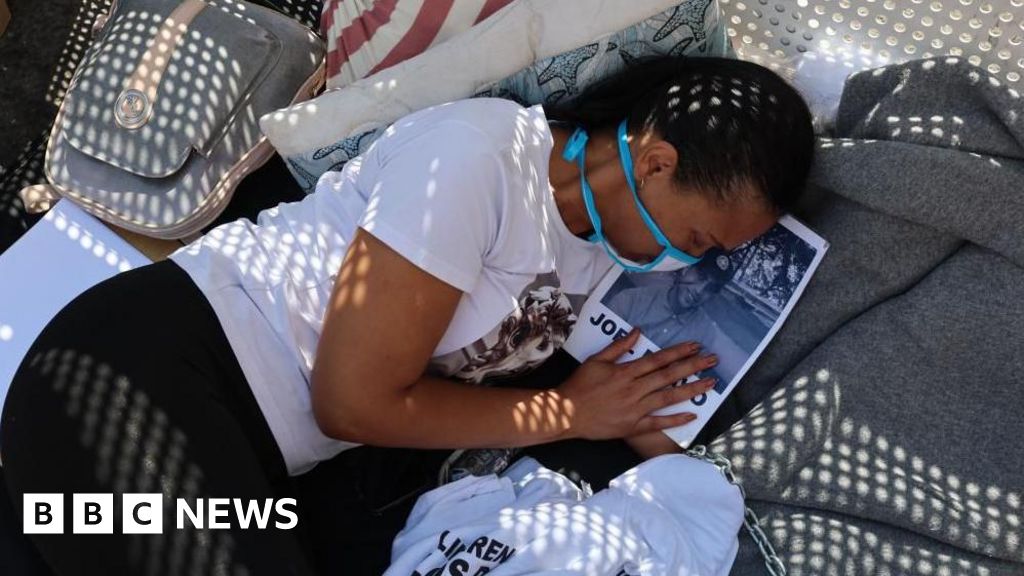
Since 8 January, a dedicated vigil has been underway outside a Venezuelan police detention facility, marking a significant development in the ongoing political saga that continues to shape the fate of this turbulent nation. The initiative was announced by Jorge Rodríguez, the head of the Venezuelan National Assembly, who declared that “a significant number” of prisoners would be freed as a *”goodwill gesture”* aimed at demonstrating the *”interim government’s*” desire for *”peace”*. This move, hailed by some as a step toward reconciliation, has resonated within the broader context of Venezuela’s ongoing political crisis, highlighting how decisions on prisoners and political concessions carry far-reaching geopolitical implications.
From an international perspective, this gesture comes amid escalating tensions involving various national and global actors who are keenly observing whether Venezuela’s internal disputes will give way to genuine reform or simply serve as a temporary façade. Russia and China, long-standing allies of President Nicolás Maduro, have supported the status quo, emphasizing stability and sovereignty. Conversely, Western nations, led by the United States, continue to press for democratic reforms and human rights improvements, often framing such prisoner releases as *”initial steps”* within a broader strategy. Analysts, referencing reports from organizations like the United Nations, warn that “such gestures must be accompanied by comprehensive political dialogue” to avoid superficial demonstrations that fail to address deeper systemic issues.
Within Venezuela, the move reflects a complex interplay of domestic and international pressures. Supporters see it as a *”glimmer of hope”* amid persistent economic hardship and political repression, while critics argue that these releases are merely tactical, aimed at softening international criticism while maintaining control. For historians and political analysts, this event underscores a crucial *”turning point”* — a test of the interim government’s sincerity and the resilience of opposition forces. As globally renowned analyst Michael C. Doyle points out, \u201Cthe decision to free prisoners is a calculated step, but it’s also a reflection of a power struggle where concessions are often less about principle than strategic positioning.\u201d This reflects a broader trend seen in complex sovereign crises: concessions are carefully negotiated to preserve core interests while projecting an image of reform.
For the international community, the significance of such decisions cannot be understated. How Venezuela’s internal machinations play out directly impacts regional stability in Latin America, influences global energy strategies, and tests the mettle of multilateral institutions tasked with promoting peace and democracy. As nations watch with cautious optimism and guarded skepticism, the unfolding narrative remains a stark reminder: the sands of history are shifting, but the outcome remains uncertain. Will this gesture of goodwill herald a genuine shift toward peace or become another chapter in a long-standing game of geopolitical chess? The world waits, apprehensively aware that the outcome of events in Venezuela could ignite or quench hopes for a more stable and just hemisphere.