

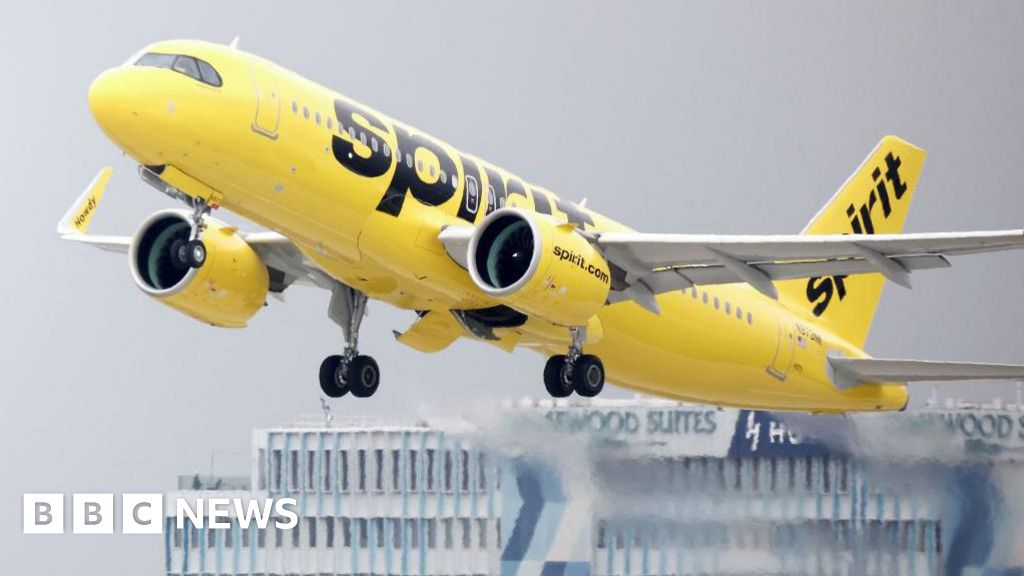
US Airline Bailout Proposal Sparks Political and Economic Turmoil
In a dramatic turn of events, the United States government’s initial plan to acquire up to 90% of a major airline’s ownership was met with fierce opposition from across the political and financial spectrum. The proposal, aimed at rescuing a struggling airline amidst ongoing economic uncertainty, had envisioned the federal government effectively becoming the majority stakeholder, positioning itself as a key player in the airline’s future. However, this approach ignited controversy not only among Wall Street financiers but also within Capitol Hill, revealing the underlying tensions between government intervention and free-market principles that have long defined American economic policy.
Transportation Secretary Sean Duffy’s remark that such a rescue would amount to tossing “good money after bad” underscored the skepticism surrounding the plan, emphasizing concerns that government funds could ultimately prove futile or even detrimental. Analysts warn that such a move might set a dangerous precedent, undermining decades of economic doctrine advocating for minimal government interference in private enterprise. This stance found support among various industry stakeholders and political leaders, who voiced fears that a government-led takeover could distort market dynamics, stifle competition, or burden taxpayers with unsustainable liabilities.
Furthermore, the opposition was not confined to domestic elites. International institutions and foreign policymakers closely watched the unfolding debate, aware of the geopolitical implications of such a heavy-handed intervention. As the global economy remains fragile, international analysts warn that a precedent of federal control over a major airline could encourage similar actions elsewhere, inviting questions about sovereignty, free enterprise, and the balance of power between government and private sector players in shaping global commerce. These concerns are raised by experts at the International Monetary Fund and World Economic Forum, who caution that unpredictable government bailouts could induce instability in broader markets.
As the debate rages, historians and political pundits reflect on the broader significance of the proposed bailout. Some view it as a symptom of a deeper crisis—the erosion of individual economic freedoms and the retreat from an open, competitive market model. Others perceive it as a litmus test for the resilience of American capitalism amid ideological battles that question whether government should act as a safety net or a reckless actor risking long-term societal costs. These decisions are poised to leave a lasting mark—not just in economic charts, but in the very fabric of national sovereignty and societal trust.
In the end, the broader narrative remains unwritten. The unfolding drama over this airline bailout is more than a single policy dispute; it reflects the relentless tug-of-war between visionaries seeking government control and defenders of free enterprise. As history continues to unfold, one question looms large for the nations of the world: what is the true cost of risking core principles for the illusion of stability in times of chaos? The answer, as this chapter warns, may well determine whether the era of free markets survives the tide of governmental overreach or is forever reshaped by the imperatives of political expediency.
















