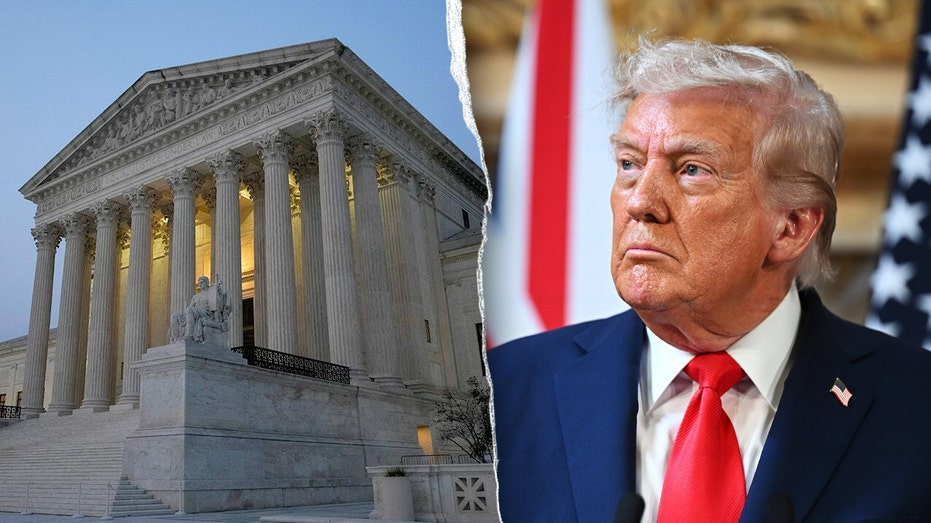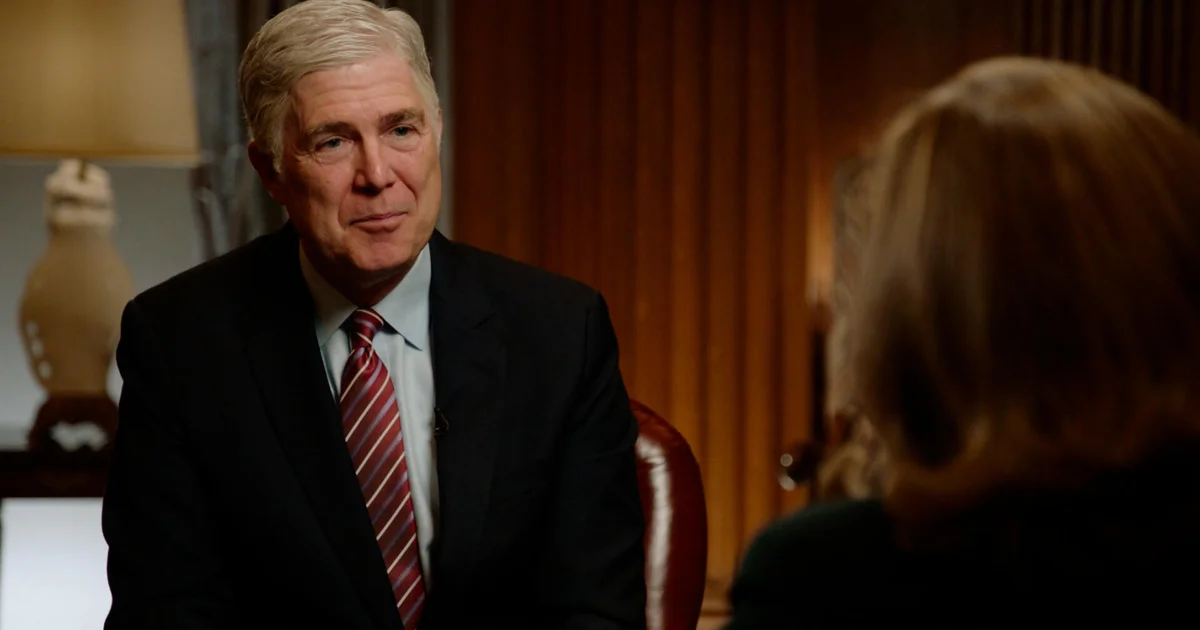
The recent assault by President Donald Trump on Justices Neil Gorsuch and Amy Coney Barrett underscores a pivotal power struggle within the American judicial and political architecture. In an era marked by turbulent shifts and high-stakes battles, the President’s critique of these justices—who were appointed during his administration—signals a profound contest over the interpretation of executive authority versus judicial independence. Their votes to strike down his sweeping tariffs demonstrate not merely a legal decision but a symbolic confrontation that touches on the core of constitutional authority and the direction of national policy.
At the heart of this confrontation lies a critical ideological tension—a clash between unitary executive power championed by the administration and the judiciary’s role as a check to presidential overreach. Historically, constitutional scholars like Alexander Hamilton and James Madison laid the groundwork to balance these powers, but recent events reveal an ongoing struggle to define their boundaries. Trump’s comments—characterized by personal rebukes toward the justices—are more than mere political posturing; they are a reflection of a broader, battle for the soul of America’s constitutional framework. The decision to strike down the tariffs, viewed by many as an overreach of executive authority, exemplifies the judiciary asserting its independence in a climate where the executive branch seeks to consolidate control.
Such conflicts resonate with past epochs of constitutional upheaval, reminiscent of the Jeffersonian and Jacksonian debates over federal power, or even the New Deal court clashes of the 1930s. Here, the power struggles are not abstract; they shape the daily lives of Americans, influencing economic policy, national security, and the very practice of governance. Critics argue that the President’s attack aims to undermine the judiciary’s authority, positioning himself as the ultimate arbiter of policy, while defenders view this as a necessary assertion of executive prerogative in safeguarding national interests. Each move within this domestic chess game directly impacts the people, dictating the course of law and policy in a nation founded on the principle of checks and balances.
Ultimately, the current political climate underscores a profound truth: politics remains the grand stage of human destiny, where ideologies clash, alliances shift, and history’s pen is wielded with every decision. As the dust settles from this legal and political crossfire, the American people are reminded that these power struggles are not merely battles of rhetoric but the very mechanism that sculpts the future of their republic. In this arena, the contest between leadership and liberty is relentless, and the outcome will forever mark the trajectory of American sovereignty—where every ruling, every critique, and every decision is a stroke upon the canvas of history.