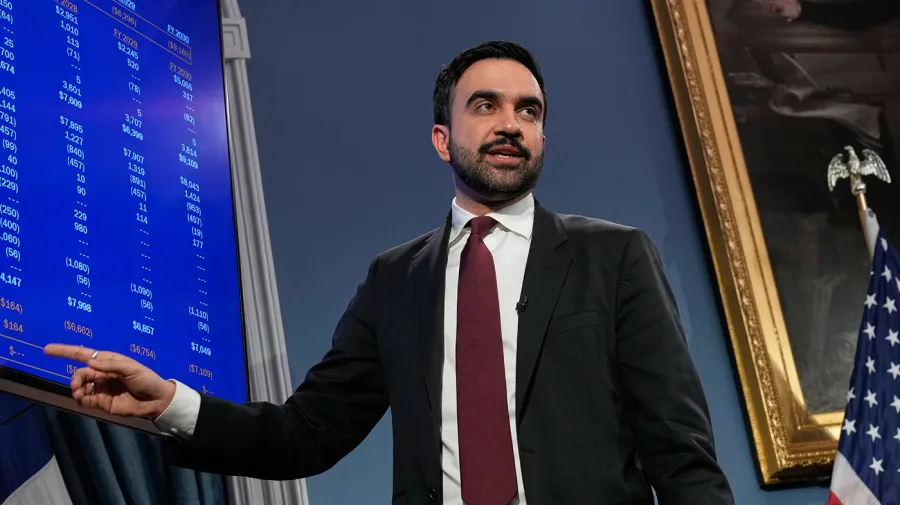
In an era where superficial glitz often masks underlying socio-political tensions, New York City’s Mayor Zohran Mamdani has chosen to divert attention from the opulence of the Met Gala to spotlight the backbone of the fashion industry—its workers. While the glimmer of high-profile fashion appeals to the elite, Mamdani’s gesture signifies a deeper recognition of the persistent economic disparities and the political struggles faced by those in the shadows of the luxury. His emphasis on seamstresses, tailors, retail workers, and delivery drivers underscores the ongoing power struggle between capital and labor—an age-old battle that shapes policies, influences ideologies, and ultimately, determines the fabric of society itself.
This declaration, though seemingly modest, echoes a broader ideological contest rooted in the progressive-Left’s push for worker recognition and the Right’s emphasis on market-driven growth. Mamdani’s focus on the “immense talent and dedication” of these often underpaid workers is not merely about celebration; it’s a pointed critique of how the political establishment has historically marginalized these workers’ struggles. The push to elevate their contributions reflects the ideological shift towards recognizing marginalized groups as vital stakeholders within the social contract—a move that, in the eyes of many conservative analysts, could threaten the traditional notions of individual responsibility and economic freedom. As the debates over labor laws and wages intensify, the question remains: are we prioritizing social justice at the expense of economic liberty?
Historically, figures like Friedrich Hayek and Milton Friedman have warned that such social movements—demanding government intervention—could erode individual freedoms and distort market mechanisms. Conversely, contemporary constitutional experts critique policies that, under the guise of protecting workers, risk expanding state power and reconfiguring the constitutional balance of authority. Mamdani’s rhetoric, and the ensuing political reaction, serve as a microcosm of this eternal struggle—where who controls the decision-making process ultimately decides how societal fate is woven. The larger question remains: will the movement toward acknowledging overlooked labor truly serve the people’s interests or merely pave the way for further government overreach?
As politics continues to unfold on this battleground, it’s clear that the power struggle extends beyond mere policy—it’s about who writes the narrative of the nation’s destiny. From the halls of City Hall to the chambers of Washington, leaders are wrestling with the legacy of their choices. Just as the founders envisioned a system where checks and balances prevent tyranny, today’s decisions about labor, economics, and social equity define the trajectory of democracy itself. Politics, much like destiny, is a crucible where ideas are forged—reminding us that in the great story of nations, it is not fate but human agency that ultimately scripts history’s next chapter.