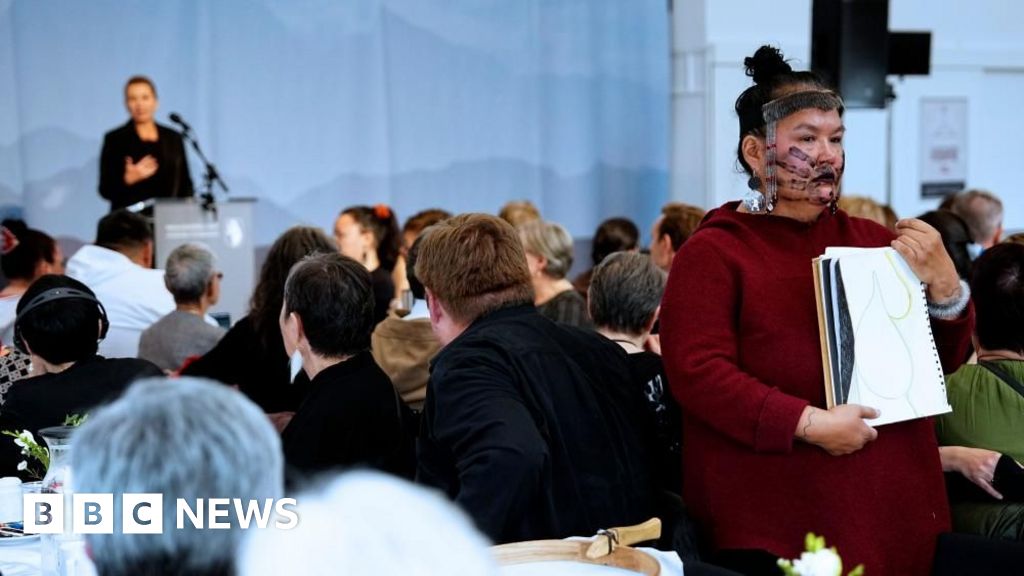
The historic apology by Danish Prime Minister Mette Frederiksen for the forced contraception program that targeted thousands of Inuit women in Greenland during the 1960s and 70s marks a significant, albeit complex, chapter in the ongoing relationship between Denmark and Greenland. The scandal, involving the involuntary implantation of IUDs—sometimes on girls as young as 12—has reignited discussions about colonial misdeeds, human rights violations, and the legacy of Western interference in indigenous populations. As a nation that transitioned from a Danish colony to an autonomous territory, Greenland’s journey is emblematic of broader geopolitical shifts, especially as global interest in the Arctic intensifies amid climate change and strategic competition.
Historically, Greenland has been pivotal in the geopolitical machinations of the North Atlantic, with Denmark maintaining oversight over healthcare until 1992, well into its push for autonomy. The recent revelations, coupled with Frederiksen’s formal apology, are not merely about acknowledging past injustice but serve as a crucial turning point that underlines the importance of self-determination and sovereignty for Greenlanders. Many analysts, including international organizations like the Arctic Council, emphasize that such admissions of past abuse are essential for healing and for redefining the trust and future governance of this strategic landmass highly coveted for its natural resources and geopolitical significance.
Despite the apology, critics argue that Denmark’s response remains insufficient without concrete reparations or acknowledgment of possible human rights violations. A lawsuit filed by 143 women seeking compensation underscores ongoing grievances and indicates that the wounds inflicted during colonial rule continue to resonate within Greenlandic society. Historians have pointed out that colonial-era policies were driven by economic and strategic interests, often at the expense of indigenous welfare. The unfinished chapter of reparations and acknowledgment highlights a broader international dilemma: how former colonial powers reconcile with past abuses, and whether genuine reconciliation can be achieved without tangible justice. The international community watches closely, mindful that the phase of unspoken colonial trauma is giving way to demands for accountability and dignity.
Furthermore, the implications extend into the Arctic’s geopolitical arena, where the United States, Russia, and China are maneuvering for influence around the melting ice, and President Trump’s earlier demand to acquire Greenland underscored the continent’s rising strategic importance. Denmark’s handling of Greenland affairs now faces increased scrutiny, as the narrative shifts from mere resource exploitation to sovereignty and moral rectitude. The recent controversies surrounding the removal of Inuit children and the reversal of a recent separation case exemplify the fragile trust needed for Greenland’s transition toward full self-governance. The decade ahead could see a profound redefinition of power dynamics, where Greenland’s indigenous voices demand recognition beyond symbolic apologies, challenging long-standing colonial structures and asserting their rightful place in a multipolar Arctic.
As history continues to unfold, the weight of past injustices, geopolitical ambitions, and the aspirations of Greenland’s people converge into a narrative that is both cautionary and hopeful. The apology, while a significant step, marks only the beginning of a deeper reckoning—one that tests the resilience of colonial legacies and the capacity of nations to mend their fractured histories. In the icy silence of the Arctic, the echoes of this moment will reverberate for generations, serving as a reminder that the ongoing struggle for dignity and sovereignty is written not just in history books, but in the very fabric of the future, where old worlds are shifting and new ones are emerging with the weight of history still to be written.