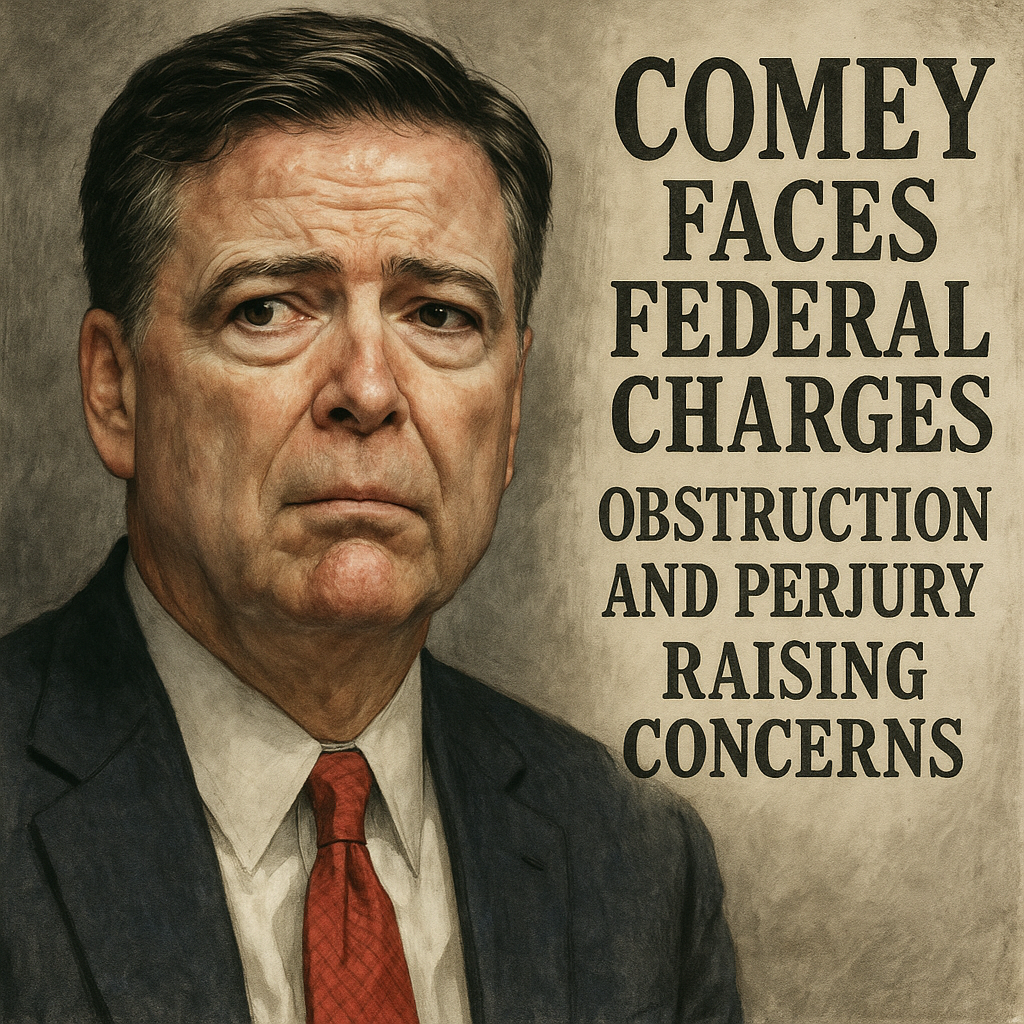
The recent indictment of former FBI Director James Comey by a federal grand jury marks a pivotal moment in the ongoing power struggles within the American political landscape. This development, coming on the heels of President Donald Trump’s calls for accountability, underscores the relentless battle over control of institutions and narrative. Comey, once a cornerstone of the FBI’s leadership, now faces charges including making a false statement and obstruction—charges that transcend mere legal accusations, embodying the ideological clash between those seeking to maintain law and order versus those striving for accountability in the face of perceived corruption.
From a historical perspective, this move echoes classic political dramas where the machinery of justice becomes a tool in the broader power struggle. The timing, just days after Trump’s public insistence on prosecuting Comey, amplifies the notion that decisions within the justice system are becoming increasingly intertwined with partisan interests. Experts in constitutional law note that such indictments, especially against figures once considered within the security state establishment, reflect a turbulent shift—possibly a redefinition of the boundaries of executive authority and oversight. This is reminiscent of earlier eras of political upheaval, where legal actions against high-ranking officials signal whether a nation is on a path toward justice or chaos.
Critics argue that the charges are emblematic of a broader trend where political factions leverage legal mechanisms to settle scores or shape public perception. Supporters, however, contend that no public servant is immune to scrutiny, regardless of stature. As constitutional theorists remind us, the rule of law must be protected against the temptation of political vendettas, lest the very fabric of constitutional governance frays. The charges also serve to remind citizens that, in a constitutional republic, power is mortal and fleeting; institutions exist to keep it in check, but they are also vulnerable to manipulation.
Ultimately, these events underscore that politics is less about personalities and more about the battle for the soul of the nation. Decisions made today will ripple through history, shaping not just legal precedents but the societal fabric itself. As political strategist and thinker Leo Strauss might suggest, in this realm of relentless power struggles, the future remains unwritten—destiny is proclaimed on the stage of battles that test the limits of authority and justice. In this unfolding narrative, the true victors are those who shape the rules of the game—and, perhaps, who decide the very course of national destiny.