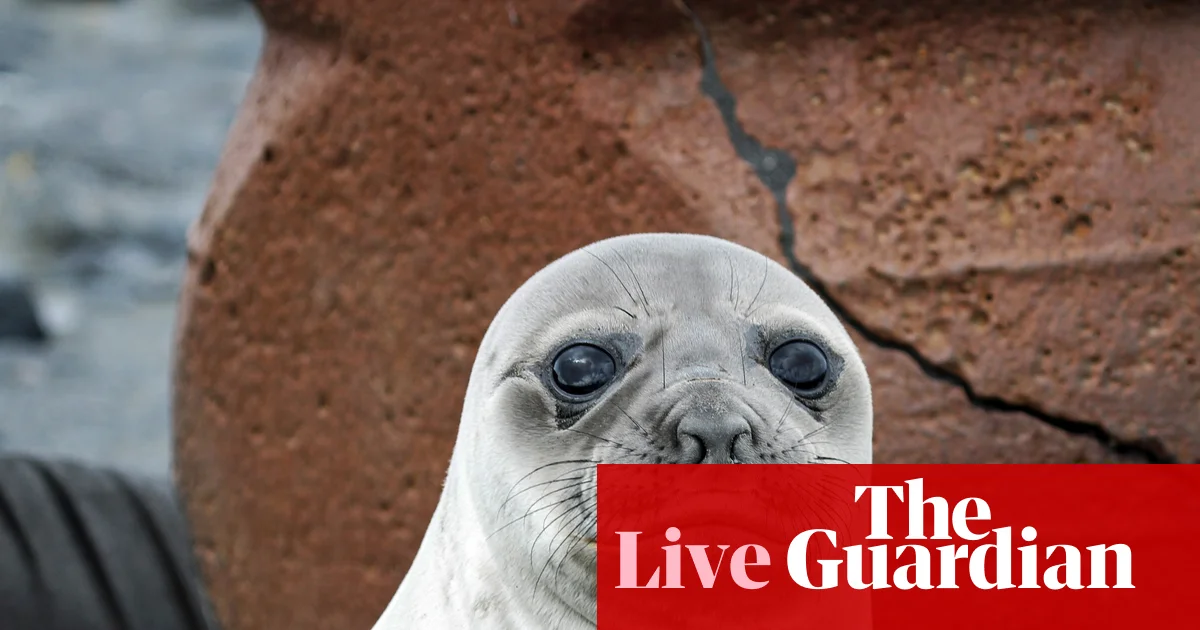
In a week marked by unprecedented scientific observations and intense geopolitical debates, the international community finds itself at a critical inflection point. Australian scientists have recently detected signs consistent with H5 avian influenza—commonly known as bird flu—in elephant seals on Heard Island, located more than 4,000 kilometers southwest of Perth. While officials from the Department of Agriculture, Fisheries and Forestry clarify that a definitive detection has yet to be confirmed, this finding underscores the persistent threat of zoonotic diseases crossing species and boundaries, especially in isolated regions. Of particular concern is the fact that Australia remains the only continent without the highly contagious H5 strain, a fact that both scientists and strategists highlight as a potential weakness in regional biosecurity.
Experts warn that such wildlife cases, while seemingly isolated, heighten the urgency for international cooperation in surveillance and preparedness. The detection on Heard Island, a sub-Antarctic enclave, signals that viruses may be quietly circulating in the most remote corners of the planet—yet the potential for spread to mainland populations still triggers alarm. The World Health Organization and regional bodies are closely monitoring developments, emphasizing that the potential spillover of H5 into human populations could alter the global landscape dramatically. Historian and analyst Dr. Samuel Rothenberg notes that “the interconnectedness of ecosystems and nations today amplifies the impact of such biological threats,” warning that in an age of rapid travel and climate change, what begins in isolated wildlife could soon become a global crisis.
Simultaneously, while health officials grapple with preventing a pandemic, political leaders face escalating challenges on the domestic front—particularly concerning law and order, where recent cases have shaken public confidence. In New South Wales, authorities are resuming their investigation into the decades-old cold case of Colleen Walker-Craig, a 16-year-old Indigenous girl last seen in 1990. The renewed effort to locate her remains, involving water searches along the Nambucca River, is emblematic of a broader societal struggle to address unresolved atrocities and ensure justice. As detectives reopen old wounds, the political implications resonate across the Pacific, fueling calls for reform and transparency. Analysts suggest that this is a testament not only to the persistence of local issues but also to the broader importance of justice in shaping national identity and sovereignty.
Adding to the complexity, the Australian government is considering large-scale reforms—lifting caps on major events at the historic Royal Randwick Racecourse and easing restrictions on concerts in Sydney—aimed at revitalizing the economy and boosting city vibrancy. However, critics from the opposition argue that such measures could be overshadowed by internal crises, including a surge of unfair dismissal claims that threaten to overwhelm the nation’s tribunal system. Opponents contend that these legal backlogs, which have increased by 27% over the past five years, symbolize deeper systemic issues—exposing an economy struggling under burdens of red tape and regulatory duplication. Opponent and Shadow Minister Andrew Bragg warns that these legislative changes, while well-intentioned, threaten to make it even more difficult for local businesses to thrive, thus impacting Australia’s geopolitical standing as a competitive hub in the Indo-Pacific region.
As the tide of crises and opportunities continue to unfold, from virus detection to justice and economic reform, history remains an unforgiving judge. The decisions taken in these critical moments will echo through generations, shaping the destiny of nations in an era defined by transnational challenges and resilience. The world watches with bated breath, knowing that history’s next chapter is still being written—its ink penned by policymakers, scientists, and societies daring to face the turbulent future with resolve or despair.