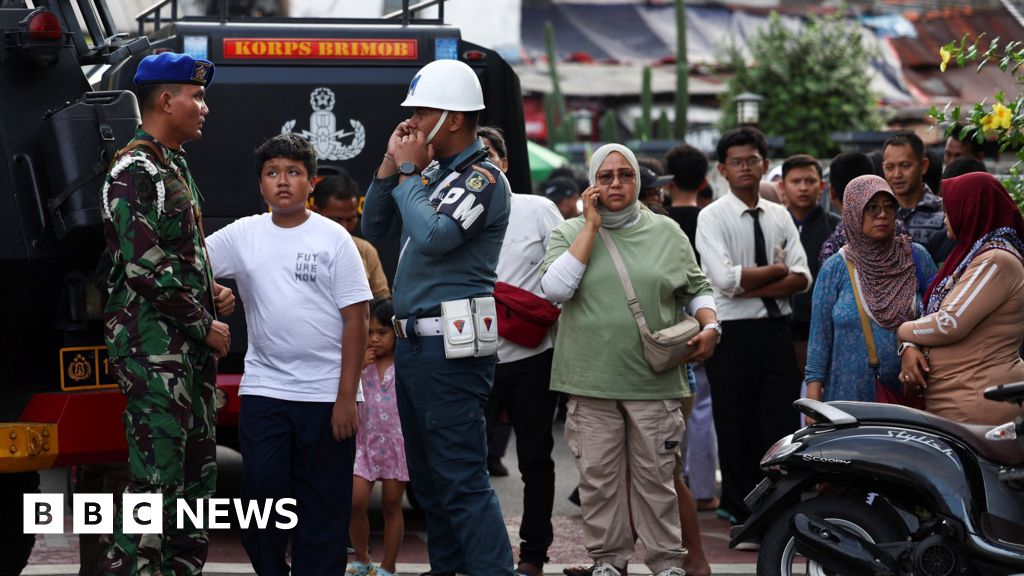
Jakarta, Indonesia — One of the world’s largest Muslim countries faced a harrowing moment this Friday when an explosion during Friday prayers at a mosque inside a high school complex injured dozens of individuals. Authorities report that at least fifty-four people have been hospitalized, with injuries ranging from minor burns to more severe wounds. The incident has sent shockwaves across the nation, raising questions about security, radicalism, and societal vulnerabilities within Indonesia’s diverse landscape.
Initial investigations point to a potentially complex motive, as officials have detained a 17-year-old student who is currently undergoing surgery. Police and bomb disposal experts continue to search the premises for evidence, with some preliminary reports indicating the presence of homemade explosives and suspicious objects resembling firearms. Authorities have yet to determine whether this tragedy was an isolated act of violence, a personal grievance, or a symptom of deeper societal unrest, but the emergence of such violent incidents in Indonesia—home to the world’s largest Muslim population—raises alarming questions about the current geopolitical climate.
Experts and analysts are scrutinizing the troubling details that have come to light. An anonymous pupil reported that the suspect had often been bullied and was known for drawing violent imagery, casting the incident in a troubling light concerning social alienation and mental health issues among youth. Additionally, a school cook described a “massive” blast with smoke billowing and windows shattered. The scene’s disturbing evidence included two objects resembling firearms and a belt designed for storing gun cartridges. Disturbingly, one such firearm bore inscriptions referencing “14 words. For Agartha.” and “Brenton Tarrant. Welcome to Hell.”—a chilling echo of Christchurch’s terrorist who murdered 51 worshippers in 2019, highlighting a disturbing crossover of violent ideologies.
Global institutions and security analysts are concerned about the broader geopolitical impact of such incidents. Historians warn that violence in Indonesia, while often framed as internal or local, reflects a shifting landscape where global radical ideologies can infiltrate societies, inciting unrest even in nations with strong Islamic traditions. The presence of the inscribed firearm, referencing a notorious mass shooter, signals a troubling nexus—whether imported extremism or domestic radicalization—posing a threat not only to Indonesia but to regional security. International organizations have called for heightened vigilance, emphasizing that societal resilience depends on addressing underlying causes such as extremism, societal alienation, and the proliferation of dangerous ideologies online—elements that threaten to destabilize the fabric of peaceful coexistence.
As investigators pursue answers, the incident serves as a stark reminder that history remains a fluid and ominous narrative. With each violent event, the trajectory of societal stability is challenged and reshaped by decisions made today. Indonesia’s leadership faces a critical crossroads: continue to grapple with internal divisions or confront the socio-political fractures fueling youth radicalization. The world watches with bated breath, knowing that how Indonesia responds will influence regional stability and could set a precedent for either resilience or further chaos. The echoes of this tragedy will continue to reverberate through the corridors of history, underscoring that the struggle against violence is unending—and often, the price of peace is paid in the silent, watchful moments of history’s unfolding story.