

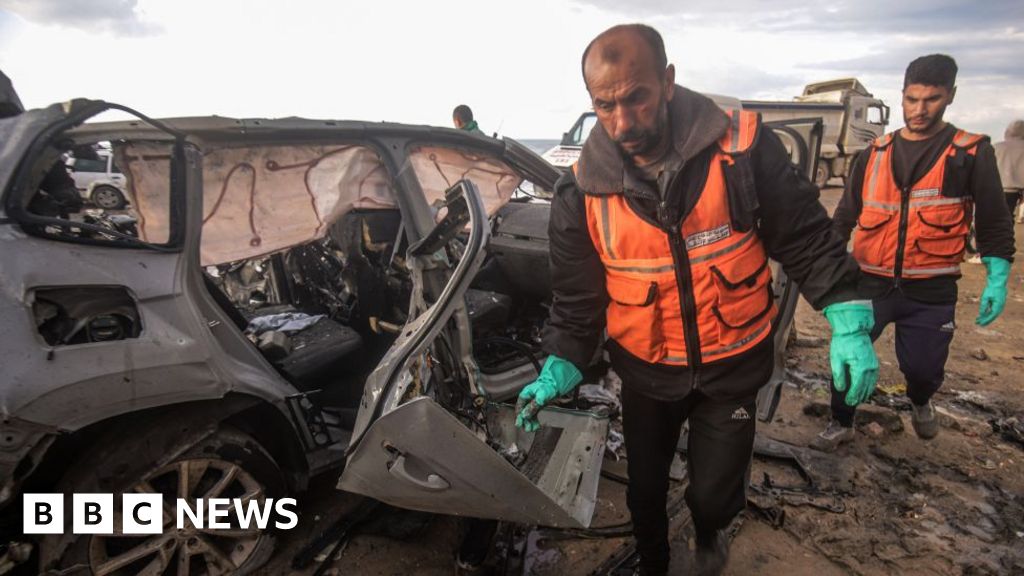
The recent precision strike by Israel targeting a senior Hamas commander in Gaza underscores the ongoing volatility and deeply entrenched conflict in the region. The elimination of Raed Saad, the head of weapons production for Hamas’s military wing, the Qassam Brigades, signifies a calculated escalation by Israeli forces amid heightened tensions following the October 7 attacks, which resulted in over 1,200 deaths and more than 250 hostages taken. The extent of this operation reveals the precise nature of Israel’s military approach, aimed at dismantling Hamas’s leadership structure, yet it also amplifies international concerns regarding the broader humanitarian crisis unfolding in Gaza.
- In the aftermath, reports from Gaza suggest that multiple casualties resulted from the strike, including Saad’s aide and another lower-ranking official, raising questions about the collateral damage inflicted on civilians.
- The strike took place within a sensitive border area controlled by Israel, near the so-called Yellow Line, since 10 October, when a shaky US-led ceasefire was established. This fragile peace continues to be tested as violence persists on both sides, with analysts warning of how such targeted killings risk unleashing further cycles of retaliation.
- Israel’s ongoing efforts to eliminate key Hamas figures, including Saad who had survived multiple prior attempts, illustrates its unwavering resolve to weaken the militant organization’s capabilities. However, critics argue that such tactical moves could undermine the broader geopolitical stability of the region, potentially emboldening hardline factions and complicating diplomatic prospects.
Meanwhile, international organizations and security analysts are closely monitoring how these events shape the ongoing saga of the Palestinian-Israeli conflict. The Biden administration’s support for Israel’s right to defend itself remains firm, even as the humanitarian toll in Gaza mounts to catastrophic levels. The UN and human rights groups continue to voice concerns about the sheer scale of Palestinian casualties—more than 70,000 fatalities reported by Hamas-run health authorities—highlighting the devastating impact on civilians caught amidst military operations. These developments have so far stalled any meaningful progress towards lasting peace, leaving millions in limbo as the specter of war looms large.
Driven by this escalating cycle of violence, the geopolitical landscape shifts once again with the implementation of President Trump’s 20-point peace plan. Its core premise involves disarmament of Hamas, regional de-radicalization, and the establishment of a transitional Palestinian governance under an international “Board of Peace,” overseen by a reconfigured U.S. administration. While many in Israel oppose a Palestinian state, viewing it as a security threat, others see this framework as a potential pathway to stability—if all parties commit to the arduous process of reconciliation. The plan’s future hinges on complex negotiations, with Benjamin Netanyahu set to meet President Trump on 29 December to discuss its prospects, a meeting that could determine whether the region steps toward a long-awaited resolution or descends further into chaos.
As history continues to unfold, analysts warn that the decisions made in these perilous moments will resonate for generations. The fate of Gaza, the resilience of its people, and the security of Israel are all intertwined in a web of geopolitical ambitions and regional loyalties. In this crucible of history, where peace remains elusive, the weight of unresolved conflicts demands not only strategic resolve but visionary leadership—lest the promise of peace be forever overshadowed by the shadows of war.
















