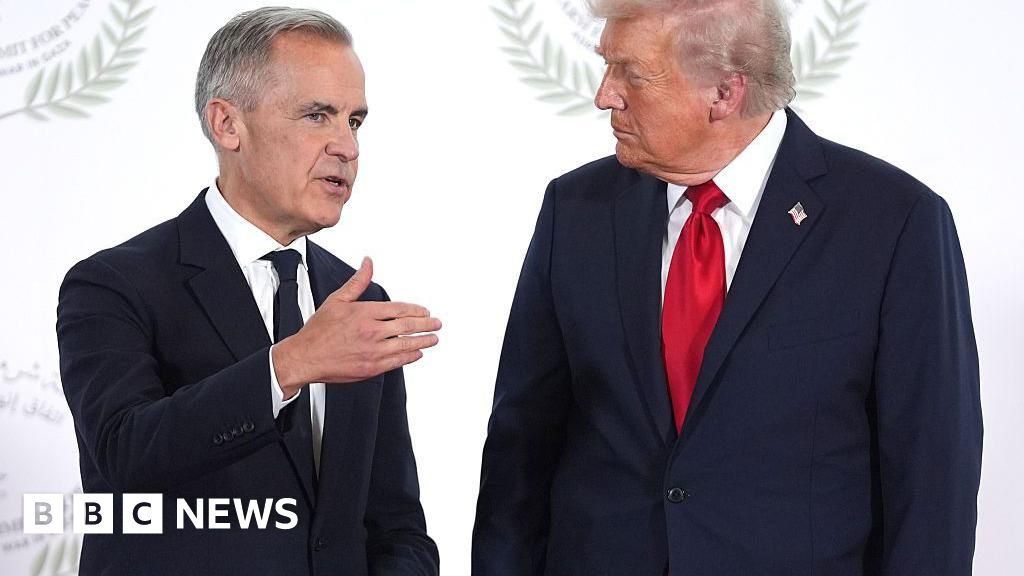
In an era characterized by shifting alliances and unpredictable economic policies, Canada finds itself at a critical crossroads in its relationship with the United States. The recent diplomatic stance taken by Prime Minister Mark Carney reflects a notable departure from previous negotiations—his apparent lack of urgency in resuming trade talks has stirred concerns both domestically and internationally. While Carney dismisses the timing of discussions as trivial and claims there is no “burning issue” to address, critics argue this signals a strategic shift, foretelling a more cautious, perhaps even confrontational, approach to trade under the shadow of mounting geopolitical tensions. This attitude could herald a new phase of Canadian independence in trade policy, distancing itself from the unpredictability of U.S. negotiations heavily influenced by the upcoming U.S. midterm elections and national political winds.
The pause in negotiations comes amid a backdrop of escalating tariffs imposed by Washington, including a 35% levy on certain Canadian exports, with specific sectors like metals and automobiles bearing the brunt of these punitive measures. Historically, such tariffs have crippled Canadian exports—about 75% of which are directed southward—and threaten the very fabric of its economy. With some Canadian officials advocating patience, Canadian trade representatives like Richard Madan continue lobbying U.S. lawmakers behind the scenes, even as formal negotiations stagnate. This diplomatic standstill is compounded by the fractured relationship over an anti-tariff advertisement from Ontario, which appears to have deeply offended the U.S. administration, further complicated by Trump’s unpredictable, often retaliatory, trade tactics. Renowned analysts, including Chris Sands of Johns Hopkins University, warn that *”a great deal of posturing”* obscures the underlying vulnerability that Canada’s economy faces in the face of American tariffs, which are both a tool of economic leverage and political signaling.
The geopolitical impact of this standoff extends beyond immediate economic concerns. As global leaders converge on events such as the FIFA World Cup draw—where Carney is expected to meet with President Trump—the diplomatic signals sent are fraught with implications. Canadian Prime Minister Carney’s recent trips to the United Arab Emirates and his focus on securing foreign investment signal a strategic pivot. With Canada’s goal to double non-U.S. exports within a decade, the government seeks to diversify its trade alliances amidst the turbulence. However, the shadow of Washington’s tariffs looms large, pressing Canadian industries, especially aluminum and heavy machinery, into a battle for survival. Industry leaders like Jean Simard emphasize that *”time is on our side,”* hinting that patience may benefit Canada in the long run, even as some U.S. sectors, such as aluminum, start feeling the pinch as stockpiles dwindle and dependence on imports intensifies. The looming review of the USMCA trade agreement, slated for December hearings, hints at a possible turning point—perhaps a window for Canada to influence the future arrangement and assert its economic sovereignty.
Yet, the internal political landscape complicates matters further. U.S. midterm elections are casting a long shadow, with many in Congress positioning themselves for upcoming campaigns. The growing discontent among American voters, evidenced by a recent Fox News poll indicating that 76% harbor negative views towards the economy, has pushed President Trump toward softening some tariffs, signaling a cautious openness to negotiations on metals and energy. Although the trade negotiations have hit a standstill, the impending US trade review and international pressures could hint at a possible thaw—yet the risk remains that history may be dictated not by diplomacy, but by increasingly entrenched national interests and the relentless march of history itself. As Canada steadies itself, navigating a complex web of geopolitical challenges, the future remains uncertain. The flesh-and-blood reality is that the decisions made today will ripple through generations, forging a path that could either unite or divide the continent—a defining chapter in the new world order, where the echoes of past conflicts still resonate with unforgiving clarity.