

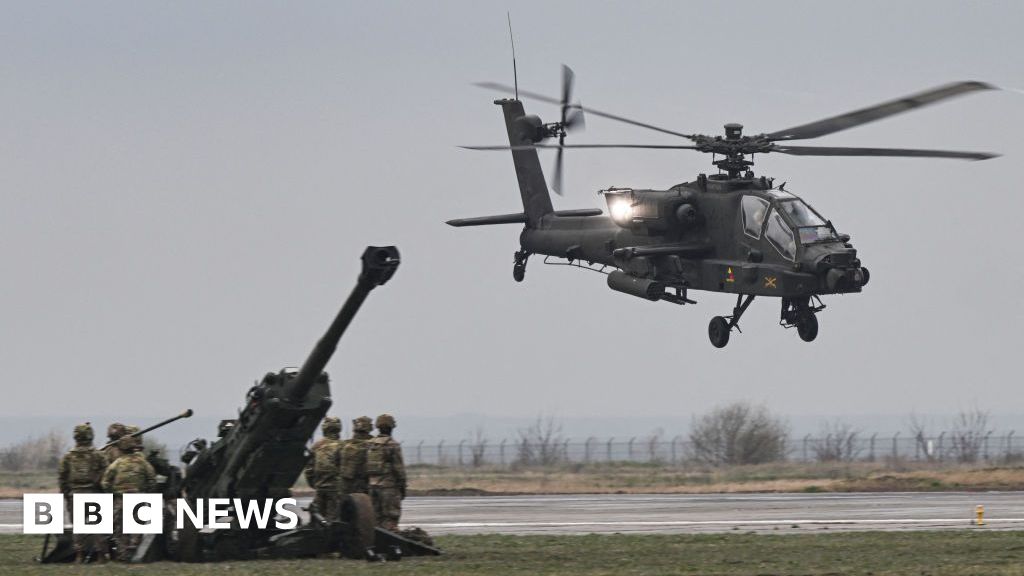
The recent announcement from Romania’s defence ministry that the United States plans to reduce its troop presence on NATO’s eastern flank marks a significant turning point in the unfolding chess game of geopolitics. Around 900 to 1,000 American troops will remain stationed in Romania—down from the previous 1,700—reflecting a strategic realignment under the Biden administration’s evolving priorities. Officially, this move is portrayed as a routine “resizing” that does not diminish the US commitment to NATO or to Article 5 of the alliance, which underscores mutual defense. Yet, amidst reassurance from Pentagon officials, international analysts and NATO allies are questioning the deeper implications of this shift, especially as tensions with Russia continue to escalate.
U.S. officials, including defense leaders like Pete Hegseth and Wladyslaw Kosiniak-Kamysz, clarified that the troop reduction aligns with Washington’s focus on the Indo-Pacific region, urging European NATO members to shoulder more responsibility for their own defense. European countries, particularly in Eastern Europe, are now confronting the reality that American troop levels are not static but subject to an ongoing strategic recalibration. If the U.S. is pulling some forces out of Romania and nearby nations, the question of security guarantees looms large. Historians such as Robert Kagan and analysts from the U.S. Council on Foreign Relations point out that such troop adjustments, while not unprecedented, could signal a diminished willingness to confront Russian aggression directly, which has profound ramifications for regional stability.
The Eastern flank has recently been the site of increased Russian assertiveness, with multiple airspace violations reported by Poland, Romania, and Estonia. The creation of NATO’s Eastern Sentry mission—aimed at bolstering vigilance along the entire eastern boundary—comes in response to these provocations. Nonetheless, senior NATO officials emphasize that despite troop reductions, the alliance maintains a “robust presence” with over 100,000 U.S. military personnel deployed across Europe, far exceeding pre-2022 levels. Defense analysts warn that the real significance of these adjustments lies not just in numbers but in perception. A perceived weakening of NATO’s eastern posture could embolden Russia, risking a new escalation that might plunge the region into chaos as history’s shadows lengthen.
As the global geopolitical landscape continues to evolve, the decisions of the United States resonate far beyond the borders of Romania or Poland. They reflect a broader debate on the future of Western alliances and the balance of power. The recent troop movements are not isolated; they are intertwined with a narrative of shifting priorities, international commitments, and the enduring threat of Russian revisionism. The memories of the Cold War, the fears of regional conflict, and the hopes for stability collide amid these strategic realignments. In the shadow of these titanic shifts, the world must ask itself: Will this repositioning lead to lasting peace or set the stage for a new chapter of peril? As history waits patiently, the answer remains unwritten, hung in the balance between diplomacy and conflict, diplomacy and chaos—where the weight of the future is ultimately borne by the willing and the vulnerable alike.














