US and Canada at Crossroads: Trade Tensions Ignite a New Global Crisis
The fragile landscape of international trade has once again been rocked by a provocative move from President Donald Trump, who declared an immediate halt to all negotiations with Canada following a contentious advertisement campaign. The ad, sponsored by the government of the Canadian province of Ontario, utilized audio excerpts of Ronald Reagan’s 1987 address to underscore a stark warning: tariffs harm American workers and economic stability. Trump’s swift denunciation of the campaign as “FAKE” and “egregious” signals a worsening of already tense relations, casting a shadow over the broader North American economic framework. As trade negotiations die on the vine, the geopolitical how decisions affect nations and societies becomes unmistakably clear: a trade war on the rise threatens to destabilize not only regional stability but also the global balance of power.
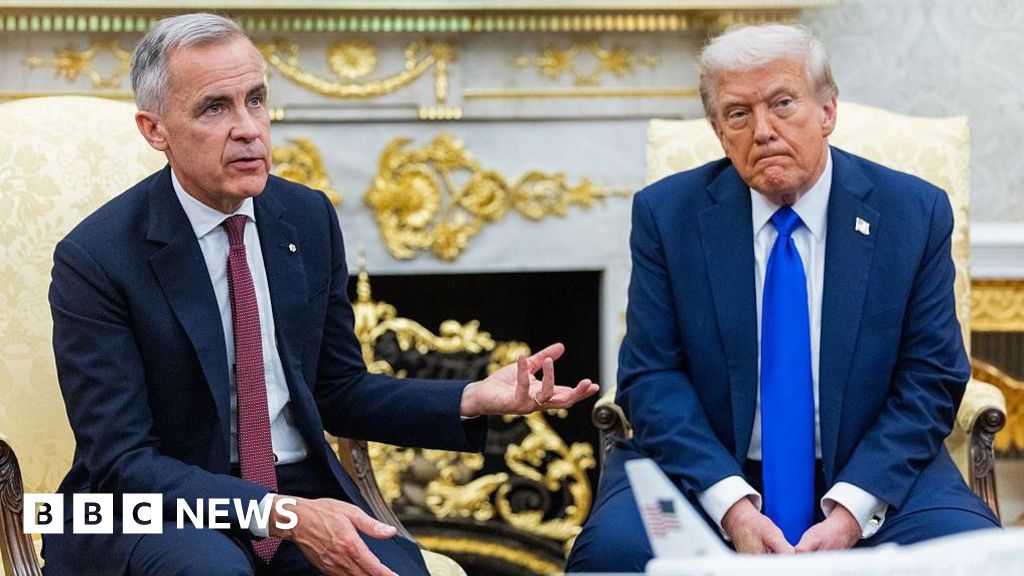
Analysts highlight how these moves are part of a broader pattern of challenging traditional trade agreements. Prime Minister Mark Carney has been tirelessly seeking to forge a deal that would ease the impact of U.S. tariffs—particularly those targeting Canadian goods. Yet, Ontario’s Premier Doug Ford, a vociferous critic of Washington’s tariffs—imposing a 50% levy on metals and 25% on automobiles—has openly threatened to retaliate, even suggesting cutting off power supplies to the U.S. This political tension exemplifies how doorway policies influence how societies adapt to economic pressure. The White House’s sector-specific tariffs have caused significant job losses and shrinking industries in Ontario, illustrating the tangible damage inflicted on middle-class livelihoods when geopolitical decisions prioritize protectionism over free trade. Such conflicts threaten to escalate further, raising the specter of a full-scale trade war that analysts warn could lead to economic fallout reminiscent of the early 20th century’s protectionist era.
Meanwhile, international organizations and historians are scrutinizing this modern crisis through the lens of history, with some cautioning that Trump’s aggressive stance risks reigniting Cold War-era tensions. The United States Supreme Court’s upcoming decision on tariffs’ legality looms large in this evolving narrative, potentially forcing Washington to reimburse billions collected from tariffs—an outcome that could undermine Trump’s signature economic policies. The Ronald Reagan Foundation has condemned the Ontario government for mishandling Reagan’s speech by “selectively editing” his words to serve political ends. This contentious use of history underscores how decisions in this moment could redefine diplomatic norms, and whether the legacy of Reagan, a symbol of free enterprise, can be warped into a tool of modern protectionism.
As China’s embassy in Washington indicates with similar propaganda efforts, the strategic use of historical figures and economic rhetoric underscores a broader global contest—a contest for influence, sovereignty, and economic leadership. The mounting tensions threaten to fracture longstanding alliances, pushing societies toward a pivotal choice: embrace the chaos of protectionism or rally back to the principles of free trade that once fostered unprecedented prosperity. The forces shaping this story are still unfolding, but the weight of history reminds us that the decisions taken in this crucible of geopolitical tension will resonate for generations. In the crucible of power struggles and economic brinkmanship, the world stands at a threshold, teetering on the edge of a new, uncertain chapter in history—where the echoes of Reagan and the audacity of Trump collide amidst rising tides of nationalism and global uncertainty.