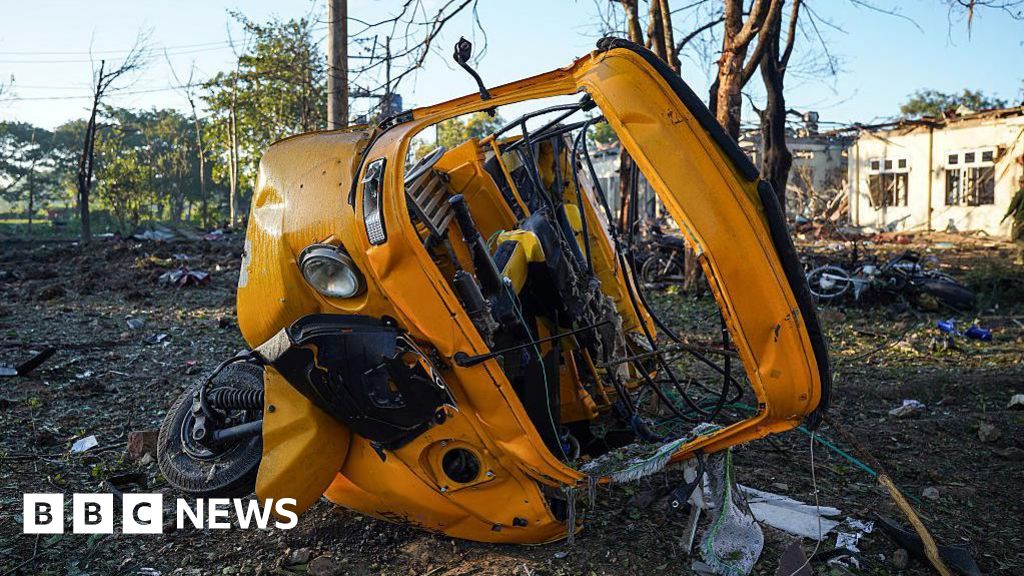
In a troubling escalation of Myanmar’s ongoing civil conflict, deadly air strikes have once again shattered the fragile veneer of stability in the country. Reports confirm that at least 34 civilians, including patients at a hospital in Mrauk-U, were killed when the military regime launched an indiscriminate attack—shocking the international community and underscoring the brutal realities of this protracted conflict. These strikes are emblematic of the regime’s aggressive pushback against ethnic militias, notably the Arakan Army, which has fiercely resisted the military’s attempt to reassert control over contested regions in Rakhine state. With the country’s first election since the February 2021 coup looming on December 28, the military’s escalation points to a deeper struggle over sovereignty, legitimacy, and control.
This episode in Myanmar’s tumultuous political landscape demonstrates the profound geopolitical impact of external influence. The military’s recent procurement of advanced technology and weaponry from Russia and China has significantly shifted the battlefield dynamics, enabling rapid territorial gains through relentless airstrikes and heavy bombardments. These developments have alarmed analysts and international entities like the United Nations, with UN human rights chief Tom Andrews describing the upcoming elections as a “sham,” designed to legitimize a fundamentally illegitimate regime. The military’s tactics of targeting civilian infrastructure, including hospitals and religious sites, serve to defy international condemnation and deepen the humanitarian crisis. As civil liberties deteriorate—a crackdown that has already led to tens of thousands of arrests—the regime’s actions threaten to plunge Myanmar into a new era of violence and despair.
Meanwhile, opposition groups, ethnic militias, and political dissidents have vowed to boycott the elections in protest against what they see as a rigged process designed to entrench military power. Incidents such as the arrest of a candidate from a central Myanmar region and the detention of activists reveal a government intent on silencing dissent. These measures reflect a broader pattern of repression that has become a defining feature of Myanmar’s internal struggles, with rights groups warning that the military regime is consolidating authority through sheer force. The international community’s inability to intervene decisively has left a power vacuum, allowing the junta to conduct its brutal campaign under a cloak of legitimacy—an uneasy, dangerous compromise that may only embolden the regime.
As the world watches Myanmar’s tragedy unfold, history warns us of the peril that comes with turning a blind eye to tyranny. With each bomb dropped and every soldier deployed, the nation drifts further from peace and into the abyss of chaos. The decisions made in the coming weeks will shape Myanmar’s future—either as a sovereign nation fighting for survival or as a fractured state shackled beneath the heel of militarism. In this moment of profound upheaval, the weight of history presses down on every stakeholder, and the story of Myanmar hangs delicately in the balance—its destiny still uncertain, its struggles echoing across borders as a stark reminder of the cost of unchecked power.