Global Powers and Nations Confront a Tumultuous Turning Point in Gaza
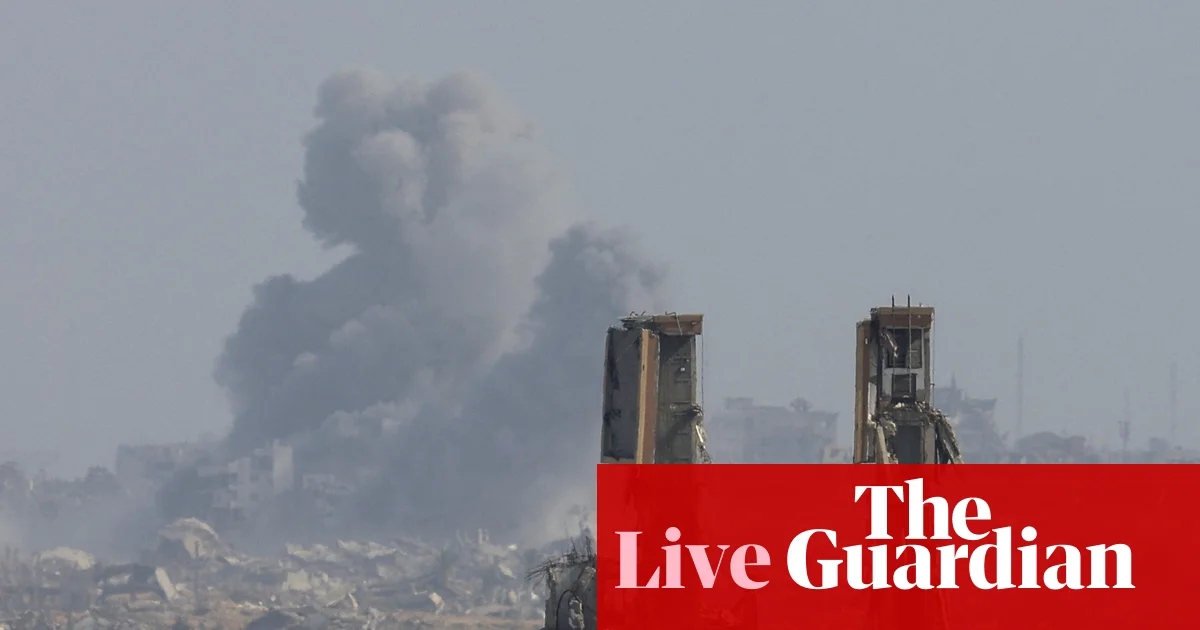
The latest reports from Gaza reveal a night of relentless violence, with the Gaza civil defense facilities reporting dozens of Israeli airstrikes and artillery shells despite calls from former President Donald Trump for an immediate ceasefire. The civil defense spokesman, Mahmud Bassal, underscores the severity: “It was a very violent night, during which the Israeli army carried out dozens of air strikes and shelling on Gaza City and other areas in the Strip, despite President Trump’s call to halt the bombing.” Casualties continue to mount as hospitals like Gaza City’s Baptist hospital and Nasser hospital in Khan Younis treat the wounded, including women and children caught in the crossfire.
This ongoing military campaign illustrates the complex and volatile layer of factors at play. Israel’s prime minister Benjamin Netanyahu has instructed the military to prepare for the “immediate implementation” of the first phase of Trump’s Gaza plan, which calls for the release of hostages and the potential surrender of Hamas’ control in Gaza. However, witnesses and analysts note the Israeli military’s recent intensification of bombing despite political formalities suggesting a shift toward a defensive posture. This juxtaposition reflects a broader dangerous fragmentation of military and diplomatic signals, complicating international efforts to mediate a ceasefire.
International Response and Power Dynamics in Flux
Global reactions remain deeply divided. United Nations Secretary-General António Guterres expressed cautious optimism, stating that “all parties should seize this opportunity” to end the conflict. Meanwhile, the European Union and several major nations like UK, Germany, India, and Canada voiced support for Trump’s proposed plan, emphasizing the importance of hostage releases, disarmament, and a pathway to peace based on a two-state solution. Notably, Germany’s Chancellor Friedrich Merz underscored the urgency: “The hostages must be released. Hamas must disarm. The fighting must cease immediately.” This international backing signals a notable shift, perhaps the most hopeful since two years of relentless violence marked by Israeli missile strikes and Palestinian resistance.
However, the situation remains precarious. Hamas has responded cautiously to Trump’s initiative, with their official stance signaling a willingness to negotiate over some issues, but not a clear commitment to disarmament or a complete ceasefire. The group’s endorsement of limited points of the US plan coincides with a declaration by Palestinian Islamic Jihad that it aligns with Hamas’ stance, thereby reinforcing a fragile unity. Heavier warnings are issued from Jerusalem and Tel Aviv, with Israeli officials signaling readiness for swift military action if diplomatic efforts falter.
The Geopolitical Weight and Future of the Middle East
Decades of pedagogical understanding from historians and several reports from the International Crisis Group point to a pivotal moment: the decisions made now could reconfigure the entire geopolitical landscape of the Middle East for generations. As Egypt and Qatar prepare intra-Palestinian dialogues and international mediators strain for an enduring peace, the underlying question remains: will the current promises translate into a sustainable peace or an escalating regional crisis?
With Turkey expecting the return of dozens of nationals seized at sea, and Israel positioning itself for a strategic shift, the regional balance hangs in the balance. The international community watches with bated breath as leaders, from Anthony Albanese of Australia to Narendra Modi of India, rally behind prospects for a two-state solution. Yet, beneath these diplomatic overtures, the threat of renewed conflict and regional destabilization lingers—a reminder that in the theater of geopolitics, every decision carries the weight of history, and the stage is set for a future that is yet unwritten.