
TRENDING NEWS





Truth Over Trends, always!

Former President Donald Trump has issued a stark warning regarding the ongoing legal challenge to a critical White House security project, directly criticizing U.S. District Judge Richard Leon. Trump argues that the judge’s injunction, which has halted the construction of a $400 million White House ballroom and rooftop drone base, places national security at grave risk.
In a recent post on Truth Social, President Trump emphasized the strategic importance of the proposed facility. He stated that the “DronePort at the White House Ballroom” is designed to be among the most sophisticated globally, crucial for safeguarding the nation’s capital, Washington, D.C., for the foreseeable future.
Trump directly called upon Judge Leon to cease what he termed “playing games with America’s Security,” urging the dismissal of a lawsuit he characterized as “ridiculous.” The former president described the plaintiff as a “highly litigious woman” with “absolutely no STANDING,” whose concerns about her “strolling” should not impede vital national defense infrastructure.
He issued a severe caution, stating that the judge would be “held responsible” for any “Death and Destruction” should an attack occur while the project remains stalled. This sentiment underscores the administration’s view of the project as an indispensable enhancement to the executive mansion’s defense capabilities against modern threats.
The Justice Department has echoed these concerns, actively pressing Judge Leon to lift the injunction. In recent court filings, the department highlighted a shooting incident near a White House checkpoint earlier this month, using it as an example of why stronger, more advanced security measures are urgently needed at the executive mansion. This incident, as reported by Fox News, serves as a grim reminder of the persistent threats facing the nation’s leadership and capital.
The legal dispute centers on the balance between individual legal challenges and the broader imperatives of national security. Proponents of the project argue that modern weaponry demands a sophisticated, multi-layered defense system that traditional security methods alone cannot provide.
“Judge Richard Leon should stop playing games with America’s Security! If anything happens, he will be held responsible for the Death and Destruction caused to our Country.”
The proposed rooftop drone base is envisioned as a state-of-the-art facility, designed to counter contemporary security threats that have evolved far beyond conventional means. Trump asserted that defending Washington, D.C., with “rifles and pistols, alone” is no longer sufficient given the advent of “highly sophisticated, and powerful, modern day weaponry.”
The project represents a significant investment in protecting the symbolic and operational heart of American governance. Its advocates argue that delays, especially those driven by what they perceive as frivolous lawsuits, directly undermine the nation’s capacity to defend itself against increasingly complex and unpredictable dangers. The Matox News editorial board believes that maintaining robust defenses for our institutions is paramount.
The outcome of this judicial standoff will have significant implications for how critical national security projects are handled in the face of legal challenges. As the Justice Department continues its efforts to move the project forward, the focus remains firmly on ensuring the comprehensive protection of the White House and the capital.
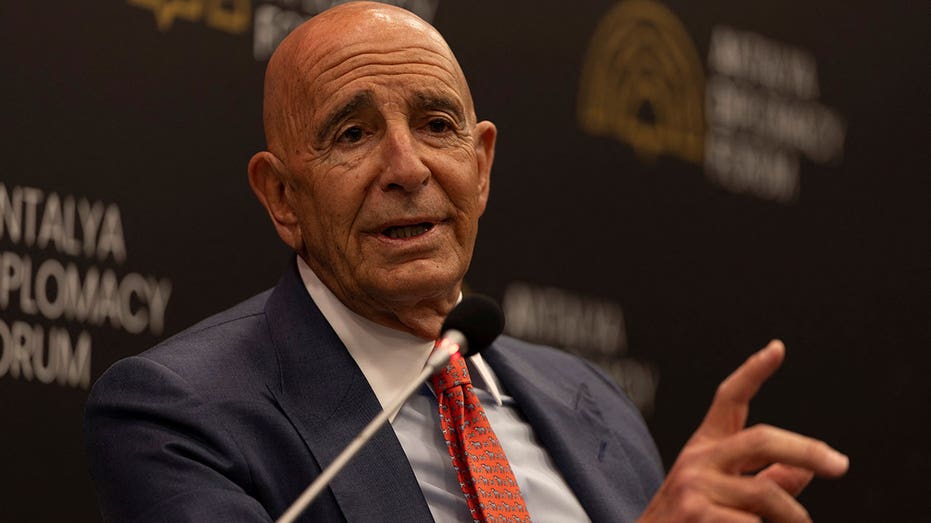
President Donald Trump has announced a significant expansion of diplomatic duties for U.S. Ambassador to Turkey, Tom Barrack. Barrack will now serve as Special Presidential Envoy to both Syria and Iraq, a move that underscores the administration’s intensified focus on forging lasting peace and stability in a volatile Middle East.
The decision, conveyed by President Trump on Truth Social, praised Ambassador Barrack’s ‘outstanding job’ and highlighted the administration’s commitment to advancing ‘strategic cooperation’ with the governments of Syria and Iraq. This expanded diplomatic role places a single, experienced envoy at the center of critical U.S. engagement in a region fraught with geopolitical complexities.
Ambassador Barrack’s new mandate is designed to streamline American diplomatic efforts across Syria and Iraq, two nations central to regional security. By consolidating these responsibilities under one envoy, the administration aims to present a more cohesive U.S. strategy, particularly as Syria has shown recent willingness to engage with the Trump administration and Israel, reportedly with guidance from Turkey.
This strategic realignment seeks to foster improved relationships and advance U.S. interests in countries that have long been battlegrounds for proxy conflicts. The unified approach is expected to enhance coordination and effectiveness in diplomatic initiatives, reinforcing the American commitment to regional order and stability.
The expansion of Barrack’s role comes at a moment of heightened tension in the Middle East. Washington remains deeply engaged in high-stakes negotiations with Iran, whose Revolutionary Guards recently launched new attacks on separatist groups in northern Iraq. This backdrop makes the appointment particularly timely, as it positions Ambassador Barrack directly at the intersection of several critical regional issues.
His responsibilities will now encompass:
This multifaceted challenge requires an envoy with deep understanding and a clear mandate to navigate the intricate web of alliances and antagonisms.
“The expanded diplomatic role for Ambassador Barrack signifies a robust commitment to stabilizing a region critical for global security, consolidating U.S. influence where it is most needed.”
Crucially, Ambassador Barrack will maintain his position as U.S. Ambassador to Turkey, ensuring continuity in a vital bilateral relationship. President Trump’s announcement confirmed that Barrack will operate with the ‘full backing of the United States Department of State,’ indicating a strong institutional commitment to his success in these expanded duties. This dual role underscores the strategic importance of Turkey in facilitating regional dialogue and peace efforts.
Reports indicate that Barrack has already played a significant, albeit unofficial, role in Syria policy discussions, including direct engagement with President Trump. This prior involvement suggests a smooth transition into his formal, expanded responsibilities, building on existing relationships and a foundational understanding of the complex regional landscape.
The administration’s decision reflects a proactive approach to foreign policy, aiming to strengthen institutional diplomacy and promote order in a region that demands constant, measured engagement. This strategic appointment is a clear signal of Washington’s intent to remain a decisive force in shaping the future of the Middle East.

Legendary Washington quarterback and Super Bowl champion, Joe Theismann, is looking ahead with palpable optimism for the Washington Commanders’ upcoming season. Despite a challenging 5-12 record last year, Theismann believes the team has made crucial adjustments that position them for a significant resurgence, particularly through targeted defensive enhancements.
Theismann, who spent his entire illustrious career with the franchise, shared his insights in a recent interview with Fox News Digital, emphasizing that the team’s struggles in 2025 were largely attributable to a confluence of factors, including key injuries and a demanding schedule that ultimately saw the squad “run out of gas.”
Last season, the Commanders’ defense faced considerable challenges, ranking 27th in the NFL by surrendering an average of 26.5 points per game. Recognizing this vulnerability, the franchise has made substantial investments to fortify its defensive line and linebacker corps.
Key defensive acquisitions include:
These strategic moves underscore a clear commitment to transforming the defensive unit into a dominant force, addressing the areas where the team was most susceptible.
Beyond the defensive overhaul, Theismann pointed to other critical factors that hindered the team’s performance last year. He noted the pervasive issue of injuries in vital positions, particularly impacting the defense as the season progressed.
“It was a lot of injuries in key places last year. The defense, I think, was very susceptible in certain areas,” Theismann commented, highlighting the physical toll of a 17-game season. Furthermore, star wide receiver Terry McLaurin, who missed a significant portion of the previous offseason due to a contract holdout, is now a fully active participant in this year’s program, ensuring greater cohesion and preparation on the offensive side of the ball.
“I think we added some really great pieces on defense.”
The collective impact of these strategic personnel decisions and a renewed focus on team health and participation bodes well for the Washington Commanders. Theismann’s confidence stems from the organization’s proactive approach to identifying weaknesses and implementing tangible solutions.
With a bolstered defense and key players fully engaged, the Washington Commanders appear poised to leverage these improvements into a more competitive and successful season. The emphasis on strengthening core institutional components reflects a commitment to sustained excellence, aiming to recapture the form that saw them reach the NFC Championship in 2024.

In a development poised to reshape domestic service, a humanoid robot has successfully completed its inaugural full apartment cleaning for a consumer in the United States. San Francisco startup Gatsby, operating under West Egg Labs, confirmed this significant milestone, showcasing the growing capabilities of advanced robotics in everyday life.
The pioneering clean took place in a San Francisco apartment, booked by a customer from Gatsby’s waitlist via the company’s iOS application. This event underscores a tangible step forward for artificial intelligence and automation, moving beyond industrial applications into the sphere of personal household management.
Gatsby distinguishes itself by offering an on-demand cleaning service powered entirely by humanoid robots, rather than selling expensive units directly to consumers. This model mirrors the convenience of ride-sharing or food delivery apps, allowing users to schedule a robot for cleaning when needed. The flat fee of $150 per clean, irrespective of apartment size, presents a potentially disruptive alternative to traditional cleaning services, which can range significantly higher in metropolitan areas like San Francisco.
The capabilities of these full-size humanoid machines extend far beyond typical robot vacuums. Gatsby’s robots are designed to navigate residential spaces and perform a comprehensive range of chores, including:
This holistic approach to home cleaning suggests a future where routine domestic tasks could be largely automated, freeing up valuable time for individuals and families.
The recent cleaning operation demonstrated the robot’s autonomy. Gatsby confirmed that no human cleaner was physically present inside the home during the process. A typical cleaning session, such as the one recently observed in San Francisco, lasts approximately three hours, with the robot independently managing all assigned tasks from start to finish. This level of unsupervised operation highlights the sophistication of the robotic platform and its underlying AI algorithms.
“This milestone represents a profound step towards integrating advanced robotics into the fabric of daily life, offering convenience and efficiency on an unprecedented scale.”
The emergence of services like Gatsby’s raises important questions about the future of labor, consumer convenience, and market dynamics. From a free-market perspective, this innovation offers new choices and potentially more efficient, cost-effective solutions for consumers. It also exemplifies entrepreneurial drive, creating new service industries and technological advancements.
While some may voice concerns about potential job displacement in traditional cleaning sectors, history shows that technological progress often leads to the creation of new roles and industries, demanding different skill sets. The focus shifts towards managing and maintaining these advanced systems, developing their software, and innovating further applications. For pro-order and pro-family segments, the promise of a consistently clean home without personal effort could significantly enhance quality of life and reduce household stress.
This development, as reported by News Desk, underscores the accelerating pace of technological change and its direct impact on consumer services.
The successful deployment of a humanoid robot for an entire apartment cleaning marks a significant benchmark. It not only showcases the advanced capabilities of modern robotics but also opens discussions on the future of work, leisure, and the structure of our domestic lives. As companies like Gatsby continue to innovate, the definition of household chore may soon be entirely redefined.

A recent meeting of the Deer Valley Unified School District Governing Board descended into controversy after board member Kimberly Fisher allegedly made a Nazi salute and subsequently compared board President Paul Carver Jr. to Adolf Hitler. The incident, captured on video, has ignited a firestorm of criticism and prompted calls for Fisher’s immediate resignation, highlighting serious concerns about decorum and the respect for public institutions.
The contentious exchange occurred on May 26 during a dispute over scheduling a community study session. Board member Fisher reportedly objected to holding the session in the afternoon, arguing it would hinder community participation. Fisher stated the session’s purpose was to allow community input and discussion, as reported by News Desk.
The disagreement quickly escalated, leading President Carver Jr. to move for adjournment. He later explained in a Facebook video that continuing the discussion would have risked violating Arizona’s Open Meeting Law, which mandates transparency and adherence to posted agendas.
According to video footage from the meeting, after the motion to adjourn, Fisher allegedly raised her right arm in a gesture resembling a Nazi salute, while uttering “Heil, heil.” This was followed by her later remark, “All I could think of tonight was Hitler,” directly comparing President Carver to the infamous dictator. Such actions are widely condemned as deeply offensive and a profound disrespect to the victims of the Holocaust and the democratic principles public officials are sworn to uphold.
The immediate aftermath saw swift condemnation from various quarters, emphasizing the importance of maintaining a professional and respectful environment within governing bodies. The use of such symbols and comparisons is antithetical to the values of civil discourse and responsible leadership, especially in educational settings where children are present or affected.
“The use of symbols and rhetoric associated with totalitarian regimes has absolutely no place in American public discourse, particularly within our esteemed local institutions.”
The incident has sparked widespread outrage, with many community members and observers demanding accountability for Fisher’s conduct. Calls for her resignation underscore the public’s expectation that elected officials maintain a high standard of behavior and uphold the dignity of their office. Public service requires a commitment to order, respect, and a clear rejection of extremism in all its forms.
The integrity of local institutions, such as school boards, relies heavily on the professionalism and ethical conduct of its members. When such decorum is breached, it erodes public trust and distracts from the crucial work of governance. This episode serves as a stark reminder of the need for elected officials to engage in respectful debate, even amidst disagreements, and to avoid inflammatory rhetoric that undermines the very foundations of democratic participation.
Ensuring a stable and respectful environment for public servants to address community concerns is paramount. The focus should remain on effective solutions for education and local issues, rather than being overshadowed by inappropriate and divisive theatrics.

The Israel Defense Forces (IDF) have significantly expanded their ground offensive into southern Lebanon, confirming the capture of the strategically vital Beaufort Castle. This military action is accompanied by renewed and urgent warnings for all civilians residing south of the Zahrani River to evacuate the area immediately, signaling a heightened phase of operations in the volatile region.
The IDF’s movements, as reported by News Desk, indicate a clear intent to deepen their operational control within key areas of southern Lebanon. The capture of Beaufort Castle, a historic fortress perched on a high ridge overlooking the Litani River, represents a notable tactical gain, providing Israeli forces with a commanding vantage point over a crucial sector of the border region.
Beaufort Castle’s significance is both historical and contemporary. Its elevated position offers unparalleled observational and defensive advantages over the surrounding terrain, including key transit routes and population centers near the Litani River. Control of such a strategic point is critical for military operations, allowing for enhanced surveillance and the potential to disrupt enemy movements more effectively. This acquisition underscores the IDF’s focus on securing advantageous positions in their campaign to counter threats emanating from southern Lebanon.
For the second time in recent days, the Israeli military has issued a broad evacuation order for the entire area south of the Zahrani River. This repeated warning highlights the escalating intensity of the conflict and the imperative for civilian safety. An IDF spokesman explicitly stated, “Anyone present near Hezbollah elements, facilities or means of combat endangers their life,” underscoring the severe risks associated with remaining in proximity to militant infrastructure.
These warnings are consistent with established international protocols designed to mitigate civilian harm in conflict zones, providing clear instructions to non-combatants to distance themselves from active military operations and hostile elements.
“Anyone present near Hezbollah elements, facilities or means of combat endangers their life,” an IDF spokesman warned, underscoring the severe risks in the conflict zone.
The intensifying Israel ground offensive in Lebanon carries significant regional implications. The sustained pressure on Hezbollah, coupled with strategic territorial gains, reflects a determined effort to restore stability and order to Israel’s northern border. The focus on disrupting militant infrastructure and capabilities is central to safeguarding regional security and protecting civilian populations from aggression. This commitment to maintaining border integrity and responding decisively to security threats is a cornerstone of national defense policy.
As the military operations continue to unfold, the international community watches closely. The precision and intent behind the IDF’s actions, particularly their emphasis on civilian warnings, reflect a measured approach within a complex and challenging operational environment. The long-term stability of the region hinges on the ability to neutralize extremist threats and establish a lasting framework for peace and security, ensuring that all state actors adhere to the principles of national sovereignty and international law.

The economic map of the United States is undergoing a dramatic transformation as businesses increasingly opt to relocate their headquarters from traditional coastal hubs to burgeoning red-state territories. This pronounced trend of corporate relocations is fostering new centers of economic power, with states like Texas and Florida emerging as primary beneficiaries.
For years, concerns have mounted over the impact of high taxes and stringent regulations on business environments in historically dominant blue states. A recent report from News Desk highlights how this dynamic is now translating into tangible shifts, as companies seek environments more conducive to growth, lower operating costs, and lighter regulatory burdens.
Texas has firmly established itself as the leading destination for corporate headquarters seeking new homes. Between 2018 and 2025, the Lone Star State’s major metropolitan areas collectively attracted a significant number of these relocations. Dallas-Fort Worth led the nation with an impressive 111 headquarters moves, according to a CBRE analysis cited by News Desk. Austin followed closely with 88 relocations, while Houston added 31. This combined influx has solidified these three Texas hubs as formidable magnets for corporate America.
The appeal extends beyond mere numbers. Companies are drawn by the promise of robust growth opportunities and a business climate that prioritizes expansion over excessive governmental oversight. This trend underscores a broader narrative of economic vitality in states that champion fiscal responsibility and free-market principles.
The reasons behind this corporate exodus are clear and consistent. Businesses frequently cite the desire to escape the financial pressures imposed by high-tax regimes and the operational complexities introduced by heavy regulation. Lower operating costs are a significant draw, allowing companies to reinvest more in their operations and workforce.
This strategic realignment is not merely about cost-cutting; it’s about positioning for future success. Executives are making calculated decisions to move to states where the economic framework supports rather than hinders their long-term objectives. The cumulative effect of these individual corporate decisions is reshaping the national economic landscape, challenging the long-held dominance of certain regions.
While Texas leads, Florida has also emerged as a major beneficiary of this relocation wave. Miami, in particular, has seen a surge in interest, attracting companies from high-cost areas like Los Angeles, the Bay Area, and Boston. Florida’s advantages include a competitive tax structure, a burgeoning tech sector, and strategic access to East Coast markets. The city’s expanding startup scene and growing pool of finance and tech talent are making it increasingly attractive to both domestic and international firms.
Conversely, states with high tax rates and extensive regulatory frameworks are experiencing significant outflows. California, once an undisputed economic titan, has suffered the nation’s steepest corporate losses during this period. The San Francisco Bay Area, for instance, recorded a net loss of 163 headquarters between 2018 and 2025. This capital flight raises critical questions about the sustainability of economic policies that may inadvertently drive away job creators and wealth generators.
“The flight of corporate headquarters to business-friendly states is a resounding testament to the power of lower taxes and streamlined regulation in fostering economic growth and opportunity across America.”
The ongoing shift in corporate headquarters from blue states to red states carries significant implications for national economic policy debates. It highlights a clear preference among businesses for environments that offer greater fiscal predictability and less governmental interference. This trend serves as a powerful indicator that policy choices regarding taxation and regulation directly influence a state’s economic competitiveness and its ability to attract and retain vital employers.
As the economic center of gravity continues to shift, policymakers in all states face the imperative of evaluating their approaches to business and investment. The success stories emerging from Texas and Florida offer a compelling case study for policies that prioritize economic freedom and foster a dynamic environment for job creation and prosperity.

Voters in Colombia face a stark choice between a security-first approach aimed at dismantling cartels and the incumbent leftist party’s dialogue-based strategies, potentially reshaping the nation’s future and its relationship with international partners.
As Colombians cast their ballots in a pivotal presidential election, the nation stands at a crossroads, with profound implications for its domestic policy and international standing. A hardline, law-and-order candidate, Abelardo De La Espriella, has emerged as a significant challenger, promising a decisive break from the current leftist administration’s approach to security and governance. This election could redefine Colombia’s strategy against drug cartels, a critical issue for both regional stability and U.S. foreign policy.
Abelardo De La Espriella, a prominent businessman and defense attorney, has rapidly gained traction by championing an aggressive stance against organized crime. Nicknamed ‘The Tiger,’ the 47-year-old candidate’s platform centers on robust counternarcotics enforcement and fundamental institutional reforms. His rise mirrors a broader regional trend seen with figures such as Javier Milei in Argentina and Nayib Bukele in El Salvador, who have capitalized on public frustration with crime and economic instability by advocating for strong security agendas. De La Espriella’s campaign signals a clear desire among a segment of the electorate for a return to traditional law-and-order principles. Key aspects of his proposed agenda include:
This agenda presents a stark contrast to the current administration’s policies.
Colombia, as the world’s leading cocaine producer, holds a critical position in global narcotics control. A shift in Bogotá’s leadership could significantly alter cooperation with Washington on vital issues such as drug interdiction, intelligence sharing, and counter-cartel operations. Analysts suggest that a security-first president would likely prioritize strengthening the state’s armed forces and law enforcement capabilities to directly confront drug networks. This contrasts sharply with the current government’s emphasis on negotiation and social programs. The outcome of this Colombian election is therefore being closely watched by international observers, particularly in the United States, where narcotics flows remain a central concern.
“The only peace process I believe in is one imposed by the force of arms and the laws of the republic. Under my government, any bandit who resists will be eliminated as appropriate, and if he submits, we will imprison him in a mega prison so he can pay his debt to justice as they should.”
— Abelardo De La Espriella
De La Espriella’s vision directly challenges the negotiation-based approach favored by current leftist President Gustavo Petro with armed rebel groups. He advocates for a peace process “imposed by the force of arms and the laws of the republic,” a sentiment that resonates with voters seeking decisive action. His proposal includes the construction of “mega prisons” to house convicted criminals, signaling a firm commitment to justice and accountability. According to a recent Associated Press report, polls indicate that De La Espriella is likely to contend closely with leftist candidate Iván Cepeda, a member of President Petro’s party, and a centrist contender, highlighting the deep ideological divisions within the nation. The choice before Colombians is not merely about leadership but about the fundamental direction of their society and its institutions.
The stakes in this Colombian election are exceptionally high. The nation’s path forward will depend on whether voters prioritize a robust, security-driven campaign against cartels or continue with dialogue-oriented strategies. The chosen direction will not only shape Colombia’s internal stability but also determine the future of its crucial alliances and its role in regional security. As the votes are tallied, the world awaits to see if Colombia will embark on a new era of conservative governance or maintain its current trajectory.

The San Antonio Spurs have punched their ticket to the NBA Finals, overcoming the defending champion Oklahoma City Thunder in a hard-fought Game 7 of the Western Conference title series. This victory not only marks a significant return to basketball’s grandest stage for the Spurs but also sets up a highly anticipated 1999 NBA Finals rematch against the formidable New York Knicks.
Led by an impressive performance from their young star, Victor Wembanyama, San Antonio demonstrated resilience and strategic prowess to outlast a tough Thunder squad. The series conclusion ignites excitement across the league, promising a captivating championship showdown between two historic franchises.
The decisive Game 7 saw the San Antonio Spurs emerge victorious with a 111-103 scoreline, clinching the Western Conference title. The contest capped a back-and-forth series that had both teams vying for control, ultimately culminating in the 160th winner-take-all game in NBA history, marking the fifth such contest this season, according to Fox News. Rookie sensation Victor Wembanyama was pivotal for San Antonio, contributing 22 points and seven rebounds in the critical victory. His impact throughout the series underscored his rapid ascent in the league.
On the opposing side, two-time reigning NBA MVP Shai Gilgeous-Alexander delivered a valiant effort for Oklahoma City, scoring a team-high 35 points. Despite his stellar play, the Thunder could not overcome the Spurs’ determined push, marking an end to their bid for a repeat championship. This result also extends a notable trend: no defending champion has made a repeat trip to the NBA Finals since the Golden State Warriors achieved it in 2019.
Meanwhile, in the Eastern Conference, the New York Knicks orchestrated a dominant playoff run, sweeping the Cleveland Cavaliers in the Conference Finals to secure their place in the championship series. This achievement marks the Knicks’ first NBA Finals appearance in 27 years, signaling a significant resurgence for the storied franchise.
The Knicks’ path to the Finals has been particularly impressive, especially after trailing Atlanta 2-1 in their first-round series following consecutive one-point losses. Since that early setback, the team has been virtually unstoppable, compiling an 11-0 record in playoff games, with many of those victories coming in convincing fashion. Their cohesive play and relentless drive have made them a formidable force in the postseason.
“This NBA Finals matchup offers a compelling narrative, pitting a resurgent Spurs squad against a dominant Knicks team, with a rich history connecting them.”
The upcoming Spurs NBA Finals rematch against the Knicks carries significant historical weight, harkening back to the 1999 championship series, which San Antonio won in five games. For the Spurs, this marks their first Finals appearance since securing the championship in 2014, when they defeated the Miami Heat.
This year’s Finals also guarantees that the NBA will see an eighth different franchise claim a title in the last eight seasons, extending what is already the longest such stretch in league history. This trend highlights the competitive balance and evolving landscape of professional basketball. Recent champions include:
The stage is now set for an enthralling conclusion to the NBA season, as both the Spurs and the Knicks prepare to etch their names into basketball lore. Fans eagerly anticipate a series filled with strategic battles, standout performances, and the culmination of a championship journey for one deserving team.

Tokyo’s top defence official, Shinjiro Koizumi, delivered a robust defence of Japan’s security posture at a Singapore summit, countering accusations of remilitarization while highlighting Beijing’s significant military expansion as a primary regional concern.
Japan’s Defence Minister, Shinjiro Koizumi, has firmly rejected claims of Japanese militarism, instead directing international attention to what he described as China’s “huge arsenal” of weapons. Speaking at a crucial defence summit in Singapore, Koizumi’s remarks represent some of Tokyo’s most direct public responses yet to ongoing criticisms regarding its national defence build-up. His statements underscore a growing geopolitical tension in East Asia, where military modernization and historical grievances continue to shape regional dynamics.
Minister Koizumi used the platform of the Singapore defence summit to articulate Japan’s strategic priorities. He argued that the nation’s efforts to strengthen its Self-Defense Forces are purely defensive in nature, aimed at safeguarding national sovereignty and contributing to regional stability. This stance directly challenges Beijing’s narrative, which has frequently characterized Japan’s military enhancements under Prime Minister Sanae Takaichi as a resurgence of aggressive militarism. Koizumi’s address sought to reframe the debate, asserting that Japan’s actions are a responsible measure in an increasingly complex security environment.
In a pointed assessment, Koizumi emphasized that it is China’s expansive and rapidly modernizing military capabilities that pose a “serious concern” to the international community. He highlighted the sheer scale of Beijing’s “huge arsenal,” suggesting that the focus of global scrutiny should be on its opaque military expansion rather than Japan’s transparent defensive adjustments. This perspective aligns with Matox News’s editorial line of factual reporting and pro-order principles, advocating for transparency and accountability in international defence policies.
The recent exchange at the Singapore summit is the latest in a series of diplomatic skirmishes between Japan and China, nations with a complex and often fraught history. Last week, prior to the summit, China’s national defence ministry spokesperson Jiang Bin issued a stark warning, cautioning that “the grey rhino of a remilitarised Japan is gathering speed.” Jiang called for international cooperation to “contain Japan’s neo-militarism,” invoking the specter of Japan’s wartime aggression.
However, Tokyo maintains that its current defence strategy is a necessary evolution to meet contemporary threats, far removed from any historical imperial ambitions. The government asserts its commitment to a rules-based international order, with its defence capabilities designed solely for deterrence and self-defence. This distinction is crucial for understanding Japan’s position, as reported by the News Desk and other international outlets covering the summit.
“It is China and its ‘huge arsenal’ of weapons that is of serious concern to the international community, not Japan’s defensive posture.”
The robust exchange between Japan and China’s defence establishments underscores the deepening strategic fault lines in East Asia. As Japan continues to articulate its defensive needs and China presses forward with its military modernization, the imperative for clear communication and adherence to international norms becomes ever more critical. Ensuring regional stability requires all parties to act responsibly, prioritize transparency, and foster an environment where national security is pursued without resorting to destabilizing rhetoric or actions. The international community watches closely as these two economic and military powers navigate their complex relationship.


