
TRENDING NEWS





Truth Over Trends, always!
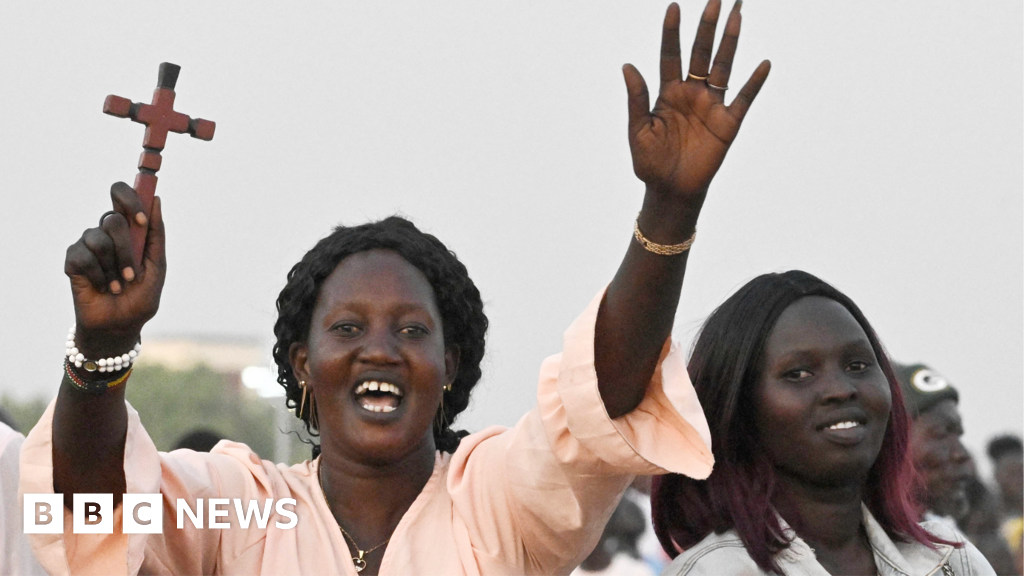
In an era marked by shifting power dynamics and ongoing geopolitical realignments, Africa has recently risen to prominence on the global stage, driven by statements from Leo XIV, the recently enthroned leader of the Vatican. An aide close to the pontiff revealed that the Holy See is placing unprecedented emphasis on the continent, emphasizing that Africa is vital to the future trajectory of the Church and broader geopolitical stability. This call to action highlights a strategic move that could redefine diplomatic relationships, influence religious influence, and impact regional development across a continent often viewed through a lens of aid and conflict.
Historically, Africa has been a continent of both promise and peril—rich in resource potential yet beset by instability and socio-economic challenges. However, under Leo XIV’s leadership, the Vatican’s renewed focus is not solely religious but also strategic, aiming to foster alliances that resonate beyond spiritual bonds. The shift underscores concerns among international analysts and global institutions, who assess that Africa’s resource wealth and demographic growth could serve as keys to future geopolitical influence. The United Nations and World Bank have echoed this sentiment, warning that neglecting the continent’s potential risks fostering greater instability, which could ripple outward, affecting global markets and security.
Many experts point to the reaffirmed importance of African nations in international trade, security, and geopolitical stability. The Church, through Leo XIV’s initiative, signals a broader vision of influence—one that involves engaging with African governments, supporting social development, and expanding religious outreach. Historians such as Dr. Eleanor Burke have noted that such strategic engagement by religious institutions historically precedes major shifts in political alliances. Furthermore, regional powers like China and Russia are intensifying their presence in Africa, creating a multi-polar arena where influence is contested not just economically but ideologically. The Vatican’s move, therefore, can be seen as an effort to maintain moral and spiritual leverage amid this intersection of global interests.
Ultimately, the decision to focus on Africa is fraught with profound consequences. As Leo XIV mobilizes religious and diplomatic resources toward this continent, the potential for both constructive development and geopolitical rivalry increases. In a landscape where young populations surge and natural resources brim beneath a sunny horizon, the stakes have never been higher. History reminds us that such moments of strategic attention can either forge alliances that withstand the tests of time or sow seeds of future conflict. As international leaders convene to decipher this rising emphasis, the world stands on the cusp of a new chapter—one written amidst the fierce currents of faith, geopolitics, and ambition. The next few years will determine whether Africa will emerge as a continent of resilient hope or a battleground for power struggles, with history surely watching in silence.
[gpt3]Using the feed content below, write a factual 3–4 paragraph article (600–800 words) in a moderate right-wing, youth-oriented tone.
– Style: international/world news report.
– Use HTML formatting:
– for countries, leaders, and global institutions.
– for underlining conflicts, treaties, or international shifts.
– for emphasis on turning points or warnings.
–
for key events, agreements, or consequences.
– Highlight geopolitical impact and how decisions affect nations and societies.
– Mention historians, analysts, or international organizations where relevant.
– Avoid slang or personal “I”, keep it factual and editorial.
– Conclude with a dramatic, narrative-like ending, leaving the reader with the weight of history still unfolding.
Original Content:
Flora Garamvolgyi
Magyar is on stage. The crowd is cheering loudly.
“Hello, my fellow Hungarians we have done it!”
Tisza and Hungary have won the elections. Not by a small but by a very large margin.
Together we liberated Hungary.”
Thank you. This couldn’t have been achieved without you.”
“Our victory may not be visible from the moon but it is visible everywhere in Hungary,” he said in a swipe at Orban’s 2022 victory speech.
“We are going to have two-third majority in the parliament.”
Key events
Tisza set to have two-thirds majority with 97% votes counted
“Russians, go home!,” Tusk says as he celebrates opposition win
Magyar pledges to bring Hungary closer to Europe, held Orbán accountable
Ukraine’s Zelenskyy joins in congratulations for Magyar and Tisza
‘My fellow Hungarians, we have done it!’ Magyar tells jubilant Budapest
‘Russians, go home’ sounds on Budapest metro
Merz says he wants to ‘join forces for strong, secure, united Europe’ as he hails opposition win
Crowds cheering, laughing and hugging each other as Budapest celebrates opposition win
Tisza on course for 2/3 majority with 72% votes counted
Nordic, Baltic leaders congratulate Tisza on historic win
France’s Macron congratulates Magyar on election win
‘Europe’s heart is beating stronger in Hungary tonight,’ von der Leyen says
Election result ‘painful for us, but clear,’ Orbán says as he concedes defeat
Orbán concedes election to Tisza’s Magyar
Tisza’s Magyar says Orbán ‘congratulated us on our victory’
Opposition Tisza party with shot at 2/3 majority, early results suggest after nearly half votes counted
‘Thank you Hungary,’ opposition leader Magyar says
Tisza closing on key 2/3 majority in new parliament as third of votes counted
Opposition Tisza party leads in early vote count – what we know so far?
Tisza lead widens as close to quarter of votes counted
First partial results start to come in
Vote count under way
Opposition ‘cautiously optimistic’ as we wait for first results to filter in – what we know so far
Tisza ‘cautiously optimistic’ about result, but want to win elections, not polls, Magyar says
Two polls suggest three early questions for election night – snap analysis
Two new pre-election day polls suggest significant opposition lead
Poll close in Hungary
No exit polls tonight
Government figures appear to imply voting irregularities
Tisza supporters hopeful as they wait for results over beers and pretzels
Hungary votes – in pictures
Good ‘vibes’ give Budapest hopes for opposition win
Voters in Budapest for change, but remain nervous about outcome
‘It’s going to be very exciting’ – what voters tell us on the ground in Budapest
Orbán’s Hungary ‘remains in a category of its own’ on repressive laws and policies
‘He cares about Hungarians’: the small Ukrainian town divided over Orbán
Hungary’s Viktor Orbán seeking to drum up votes by doing down Ukraine
Leaked calls prompt scrutiny of Hungary’s close ties with Moscow
Trump, Vance and European far-right leaders rallied for Orbán ahead of tricky electoral test
Who is Péter Magyar, the opposition leader challenging Viktor Orbán?
Opposition leader Magyar paints vote as ‘choice between East or West’
2026 turnout by 5pm still far ahead of previous elections
Most Hungarians want better relations with EU, poll finds
23 years on from EU accession referendum, Hungary ‘once again … decides direction’ of country
Hang on: what’s the story and why does it all matter?
Hungary on course for record-high turnout as Orbán says ‘not a single patriot can stay home’
‘I am here to win,’ Orbán says after casting his vote
No election silence, but there are some restrictions on campaigning
What to expect when during the night?
Pre-election day polls suggest Tisza win but lots of questions remain
Magyar ends campaign in Debrecen as he attacks Fidesz’s positions
Orbán’s last rally showed key messages cut through with his supporters
Hungarians vote in hard-fought election that could oust Viktor Orbán after 16 years
Hungary votes as the future of Viktor Orbán’s 16-year rule hangs in balance
With 96.89% of votes counted, Tisza is predicted to have 138 seats in the new parliament, with only 55 for Fidesz and 6 for the far-right Mi Hazank.
If this holds, this will give Tisza the critical two-thirds majority required to reverse the Orbán era laws.
In a post on X, he says:
“Hungary Poland Europe Back together! Glorious victory, dear friends! Ruszkik haza!”
“Ruszkik haza” is obviously “Russians, go home” – the very same song that reverberated on the Budapest metro earlier (22:33).
Magyar plans to visit Warsaw as his first foreign trip, as confirmed during his victory speech. The pair met earlier this year at the Munich Security Conference.
Poland’s foreign minister Radosław Sikorski also doesn’t pass a chance to take a swipe at Orbán as he calls the result “the revenge of the zebras.”
Speaking to his supporters on Budapest, Hungary’s election winner Péter Magyar pledged to bring Hungary back to the main fold of the EU, step up fight against fraud and corruption and to held the outgoing government accountable for its actions over the last 16 years.
In a wide-ranging victory speech, Magyar has urged Orban to refrain from adopting any measures that would limit the next government’s room for maneuver on policy.
He also urged the country’s president Tamás Sulyok, a Fidesz politician, to give him the mandate to form the next government as soon as possible and then resign from the post. He then went on to call for a number of heads of other party-captured institutions to resign as well.
Magyar promised the Tisza government would restore the system of checks and balances, and join the European Public Prosecutor’s Office as a central part of the new government’s fight against alleged fraud and corruption associated with the Orbán era.
He said “those who defrauded our country will be held accountable.”
On foreign policy, he pledged that Hungary would be a strong EU and Nato ally.
He said he wanted to visit Warsaw in his first foreign trip, before going to Vienna and Brussels, where he will start work on convincing the EU to release its funds to the new government.

Jakub Krupa
on Antall József embankment in Budapest
The crowd on the Pest side – the people who couldn’t get on the overflowing metro – is cheering loudly speeches from the other side as they are listening to them – half following whatever they can hear from across the river, and half from streams played out loud.
Cars passing by honk in celebration.
Jakub Krupa
in Budapest
I have seen a few people walking around with Tisza posters taken off city lamp posts as a souvenir of this historic moment.
The British prime minister congratulated Peter Magyar for his victory, calling it a historic moment for European democracy.
Keir Starmer said on X:
“Congratulations Peter Magyar on your election victory. This is an historic moment, not only for Hungary, but for European democracy.
I look forward to working with you for the security and prosperity of both our countries”
Meanwhile, Ukraine’s Volodymyr Zelenskyy is the latest leader to join in congratulations for Peter Magyar and his Tisza.
In a post on X, he says:
“Congratulations to @magyarpeterMP and the TISZA party on their resounding victory. It is important when constructive approach prevails.
Ukraine has always sought good-neighbourly relations with everyone in Europe and we are ready to advance our cooperation with Hungary.
Europe and every European nation must get stronger, and millions of Europeans seek cooperation and stability.
We are ready for meetings and joint constructive work for the benefit of both nations, as well as peace, security, and stability in Europe.”
After a harshly anti-Ukrainian campaign from Orbán, one can only try to imagine how much this result means for Zelenskyy as it offers a chance for a new opening with Ukraine.
Jakub Krupa
On the Pest bank, a growing crowd of people that couldn’t get on the metro is listening to Magyar’s speech from across the river and cheering along.
Flora Garamvolgyi
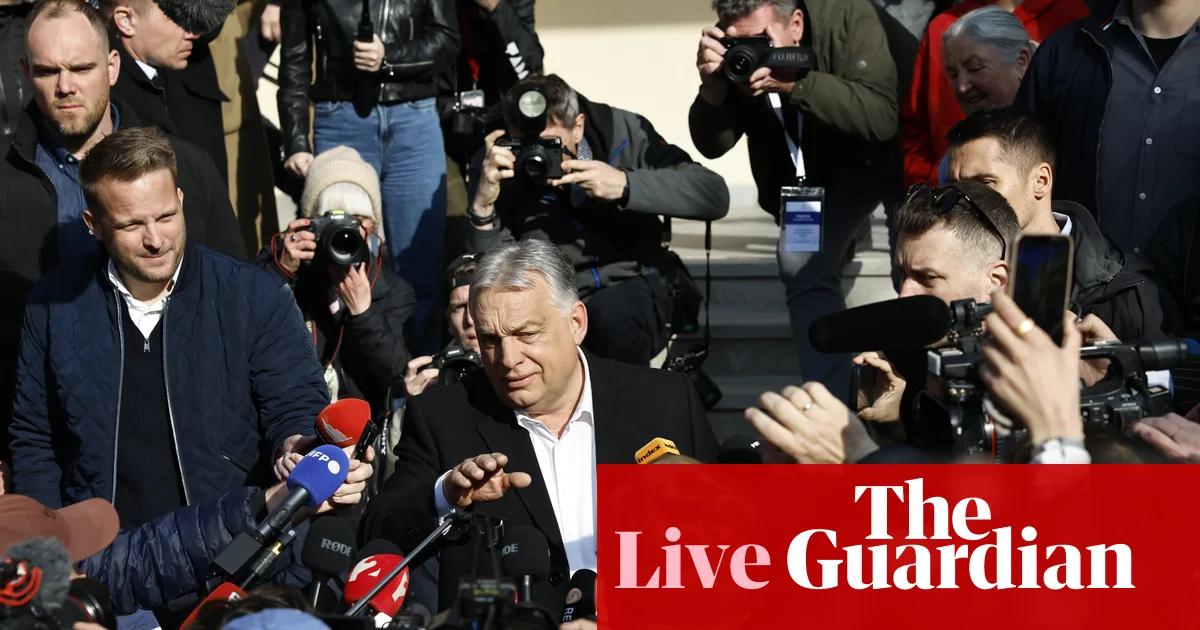
Magyar is on stage. The crowd is cheering loudly.
“Hello, my fellow Hungarians we have done it!”
Tisza and Hungary have won the elections. Not by a small but by a very large margin.
Together we liberated Hungary.”
Thank you. This couldn’t have been achieved without you.”
“Our victory may not be visible from the moon but it is visible everywhere in Hungary,” he said in a swipe at Orban’s 2022 victory speech.
“We are going to have two-third majority in the parliament.”
Flora Garamvolgyi
at Tisza’s election party in Batthyany ter
She says they are planning on drinking spritzer all night and celebrate with everyone gathering on the bank of the river.
She says they all came to Budapest with her friends hoping they can all celebrate here with everyone else – and now, they are.
Flora Garamvolgyi
at Tisza’s election party in Batthyány ter
Over on the Buda side of the Danube river, the celebrations are also in full swing.
“This dictatorship, it’s right-wing ideology, and all of that will disappear now, and we have a chance for a better country. I am so happy. I’m feeling hopeful and happy,” Nori, 24, tells me with tears of joy in her eyes.
“I hope there will be a chance to have a country that is close to Europe, and we are going to get closer to the west and not going to fight imaginary enemies anymore; that the government will not build on fear but rather opportunities.”
[/gpt3]

This past week, Zach Eflin, the promising pitcher for the Tampa Bay Rays, faced a significant moment in his career. Celebrating his 32nd birthday, Eflin underwent Tommy John surgery, a procedure that has become synonymous with hope and recovery for many athletes. With his eyes set firmly on the horizon, he is already looking forward to a potential return in 2027, illustrating his unwavering spirit and commitment to the game.
“I believe in my ability to bounce back,” Eflin stated emphatically in a recent interview. His optimism is backed by a long line of successful recoveries from similar surgeries seen in the league, which have turned many pitchers into stars after their returns. The decision to undergo the surgery was not taken lightly; however, it’s one that many athletes endorse as a move toward ensuring longevity in their careers.
Commentators have noted that Eflin’s resilience serves as a reminder of the sacrifices athletes make. “In times like these, the true character of an athlete shines through,” remarked acclaimed sports analyst, Tom Jackson. His words ring especially true given the sentiments shared by teammates and fans who have rallied around Eflin’s strong mentality.
As the Tampa Bay Rays navigate their season without a key player, there is a collective understanding that sports extend beyond mere competition. They foster unity among fans and athletes alike, transcending individual challenges. The journey of Zach Eflin is not merely about a scoreboard—it represents a commitment to rising above adversity, a testament to the bond shared in the world of sports. As he recovers and looks toward 2027, his story reminds us all that, in the grand narrative of sports, victory is often found in resilience and community support, long after the final whistle blows.
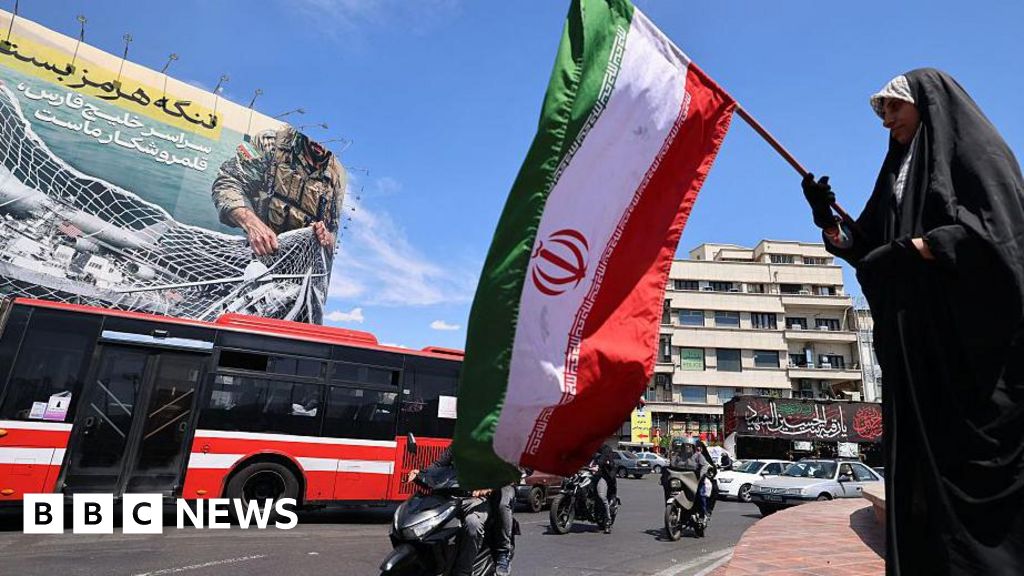
In what has become a defining chapter of 21st-century geopolitics, the ongoing confrontation between Iran and the United States marks a critical juncture in the stability of the Middle East. The conflict is no longer merely a localized dispute but a profound test of international resilience, military resolve, and diplomatic resolve. At its core, this confrontation centers on Iran’s ability to withstand successive strikes and the extent of President Donald Trump’s tolerances for escalating hostilities. As Washington navigates this volatile landscape, the global community watches closely, recognizing that the outcome will shape regional dynamics for decades to come.
The recent spate of strikes—allegedly targeting Iranian-backed militia groups and strategic assets—underscores a decisive shift in U.S. foreign policy. Reports indicate that the Trump administration remains committed to a campaign of maximum pressure, seeking to limit Iran’s regional influence without triggering full-scale war. However, analysts warn that this strategy bears significant risks, as Iran’s capacity to absorb blows—both economically and militarily—raises profound questions about its resilience. Historically, experts such as Dr. Emily Sands of the International Institute for Strategic Studies have emphasized the importance of measuring Iran’s ability to sustain prolonged conflict against the costs of U.S. military engagement, which could spiral into a larger regional war.
Consequently, the geopolitical impact extends far beyond the Persian Gulf. It threatens to destabilize neighboring states, threaten global oil markets, and challenge international norms. Iran’s leadership remains determined not to appear defeated, rallying nationalist sentiments and asserting its sovereignty amid external pressure. Conversely, Washington’s tactical strikes and diplomatic maneuvers signal a persistent effort to curb Iran’s nuclear ambitions and regional influence, calling into question the efficacy of traditional deterrence strategies. The United Nations and other international bodies are calling for restraint, but so far, diplomatic avenues remain fraught with division, as both sides prepare for potential escalation.
Many observers believe this crisis signals a pivotal moment—where long-standing regional tensions could either be diffused through renewed diplomacy or ignite into a broader conflict. As noted by veteran geopolitical analyst James Callahan, “The balance of power hinges on Iran’s capacity to absorb these blows without breaking, and on Trump’s willingness to accept the costs of continued escalation.” For now, the entire region and the world are perched on the edge of history, with each side testing the limits of their resolve. The coming days may determine whether this confrontation transforms into a new frontier of global security or a deadly quagmire with unpredictable consequences. As history waits to write its next chapter, the weight of this moment remains palpable—an enduring reminder that in international politics, choices made today echo into the centuries to come.

Across the international stage, the influence of cultural icons often transcends entertainment, shaping public discourse, national identity, and even geopolitical alignments. The recent tribute to a celebrated Indian singer highlights how an artist’s voice can resonate beyond borders, acting as a unifying force amid a complex global landscape. As her infectious melodies became the soundtrack for generations of Indians, the ripple effects extend well beyond cultural boundaries, illustrating the profound power of art amidst geopolitical shifts.
Many analysts underscore the role of popular culture as a soft power tool, capable of fostering national pride and softening diplomatic relations. In her North Indian melodies and vibrant performances, her voice became emblematic of cultural resilience, inspiring young and old amid regional tensions and economic transformations. While individual artists may seem apolitical, their reach often influences how society perceives its place within the larger international order. Institutions like the United Nations have long recognized the importance of cultural diplomacy, emphasizing that shared artistic expressions can serve as bridges across conflicts and ideological divides.
However, the adoption of cultural symbols in geopolitics is not without consequence. Countries increasingly leverage their cultural icons as a form of influence—soft power that extends diplomatic reach. In the context of rising national assertiveness, especially among emerging economies, such influences become critical. Historians have observed that cultural diplomacy can either harmonize international relations or deepen divisions, depending on how it aligns with broader geopolitical strategies. For instance, when a nation’s cultural exports become international brands, it often translates into increased geopolitical clout—yet, it also risks becoming entangled in the ongoing contest for global influence, particularly amidst regional upheavals.
As the world teeters on the edge of new conflicts and alliances, the roles of *international institutions* and *national governments* in shaping cultural narratives are under scrutiny. Recently, some voices argue that the global community must be wary of the instrumentalization of cultural icons, which can be exploited to obscure underlying political agendas. With rising tensions in various theaters of global conflict, cultural symbols like iconic singers or musicians often serve as silent witnesses—embodying shared history and values but also becoming targets or tools in geopolitical struggle. The future of international diplomacy may hinge not just on treaties and armies, but on the subtle, yet potent, power of cultural resonance—a power that can unite or divide.
In the grand tapestry of history, the voices of artists continue to echo as both catalysts and witnesses of change. The story of this Indian singer’s impact is not just a chapter in music history but a testament to the enduring influence of cultural expressions amidst the shifting sands of geopolitics. As nations grapple with their identities and ambitions, the melodies that once inspired millions serve as a haunting reminder: the tide of history is persistent, and the lines between art and politics are forever intertwined, waiting for the next event to alter the course of the world’s collective consciousness.

As society navigates an era of profound **demographic shifts** and **cultural tensions**, the resilience of families and local communities faces mounting challenges amid political tumult. Recent discussions in UK politics have spotlighted a dangerous trend: the destabilization of essential **social institutions**, particularly the NHS, which has long served as the moral backbone of Britain’s social fabric. Voters, especially the youth, are now urged to consider the broader consequences of their choices—choices that threaten the very principles that have sustained generations of families through crises and upheavals.
At the heart of this debate stands a grim warning from health care leaders and social commentators: the rise of populist parties like Reform UK and Plaid Cymru presents a tangible risk to the fundamental promise of the NHS—free, universal healthcare rooted in solidaristic values. This political shift, driven by **demographic changes** and a desire for quick fixes, risks undermining decades of progress. Sociologists warn that when societal trust in **public institutions** erodes, families suffer the most—facing longer waits, diminished access to quality care, and a sense of abandonment. Such developments threaten to fragment communities, widening disparities and creating social rifts that echo through generations.
The tension is not limited to England or Wales; it reflects a broader **cultural shift** affecting the moral fabric of the nation. History shows, as documented by social scholars like Eric Hobsbawm, that when **social solidarity** is weakened, families become less resilient, and communities lose their sense of shared purpose. Instead of investing in social infrastructure, current political discourse often champions privatization and reduction of public services, positing short-term fiscal gains over long-term societal health. The resurgence of nationalist sentiments further exacerbates these issues, as communities fracture along **identity lines**, undermining the common bond that once united diverse groups in pursuit of a collective well-being.
In this landscape of uncertainty, the role of **families** and **educational communities** becomes more vital than ever. They serve as the bedrock of societal resilience, fostering **values of responsibility, solidarity, and hope**. Social commentators argue that safeguarding these institutions necessitates a collective effort—one rooted in understanding the moral importance of protecting **public services** not merely as policy but as a moral imperative. For youth, this means recognizing their stake in a society that provides opportunity, dignity, and fairness across generations. As sociologist Anthony Giddens posited, social change hinges on “the capacity of communities to adapt and renew their moral commitments,” especially amid thefires of political upheaval.
Ultimately, society stands at a crossroads: will it uphold the foundational aims of **solidarity and shared responsibility**, or allow the forces of short-term populism to unravel the social fabric? This question echoes in the quiet moments of family life and in the collective consciousness of communities striving for a better future. As society faces these persistent challenges, the hope remains that through deliberate effort and a reaffirmed sense of shared purpose, communities can emerge stronger—united in their commitment to **restoring the moral integrity** of their social institutions. A society that recognizes its flaws and takes collective action to heal itself may yet forge a future where families thrive, communities flourish, and the core values of justice and solidarity endure through generations.
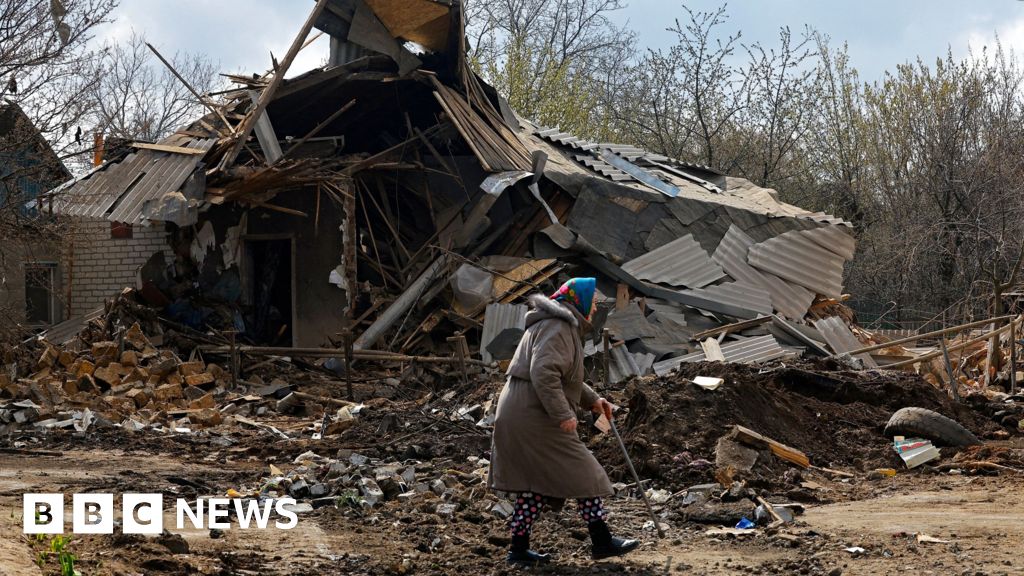
Ukrainian President Volodymyr Zelensky has issued a stern warning to Russia, affirming that his nation’s forces would respond “symmetrically” to any Russian attacks. This declaration signals a significant shift in Ukraine’s military posture amidst ongoing tensions and the broader geopolitical contest for influence in Eastern Europe. As the conflict continues to evolve, analysts suggest that Ukraine aims to establish a clear doctrine of reciprocity, signaling its readiness to escalate military responses should Russian aggression persist. This statement not only underscores Ukraine’s resolve but also complicates the delicate diplomatic landscape, making international repercussions far-reaching.
Since the onset of hostilities, Russia has maintained a strategy of targeted assaults on Ukrainian infrastructure and military positions, challenging Ukraine’s sovereignty and prompting a swift international response. The United Nations and NATO have urged de-escalation, emphasizing the importance of diplomatic solutions. However, Zelensky’s firm vow indicates a growing expectation among Kyiv’s leadership that Moscow cannot continue its current trajectory without risking a broader conflict. Historians and geopolitical analysts warn that the decision to adopt a symmetrical response could be a pivotal turning point, raising the stakes of a regional conflict that threatens global stability.
Global institutions such as NATO are closely monitoring Ukraine’s military stance, acknowledging that Kyiv’s willingness to match Russian aggression might redefine the boundaries of regional confrontation. Europe faces a dilemma: uphold diplomatic engagements or prepare for increased military commitments. The European Union has expressed solidarity with Ukraine, yet fears remain that a escalation could draw in other states, potentially igniting a wider regional conflict. The stance taken by President Zelensky resonates with longstanding national sentiments of resilience and sovereignty, but also serves as a warning to other nations about the rising tide of hybrid and conventional warfare.
Meanwhile, international scholars note that Russia’s pursuit of strategic objectives in Ukraine—such as securing territorial gains and weakening Kyiv’s Western integration—remains unchanged, prompting concerns about the potential for a prolonged, attritional conflict. In this complex chess match, every decision carries the weight of history, shaping the future of millions of lives and redefining global power dynamics. The international community stands at a crossroads, confronting the reality that the outcome of this confrontation will not only determine Ukraine’s fate but also test the resilience of the entire liberal order. As the world watches, the question remains—how much farther will this conflict go, and what new boundaries will be drawn in the sands of geopolitics?
In the unfolding narrative of this turbulent epoch, the resolve of Ukrainian defenders and the strategic calculus of Russia intertwine in a high-stakes game of survival and dominance. With each provocative move, the world edges closer to an unpredictable future where the lines between diplomacy and warfare blur, and the weight of history presses down on all nations. This is not merely a regional crisis—it is a defining moment, echoing through time, as the international order faces one of its most defining tests in decades.

As the AI industry accelerates toward groundbreaking innovations, the landscape is witnessing a profound shift that will redefine the very fabric of technological and economic power. Major players such as OpenAI, Google DeepMind, and emerging startups leveraging large language models (LLMs) are at the forefront, pushing the boundaries of what AI can achieve. The evolution of concepts like Artificial General Intelligence (AGI)—defined variably by experts as systems outperforming humans at most critical tasks—is no longer a distant dream but an imminent paradigm shift poised to reshape numerous industries.
The core of this disruptive wave is the rapid advancements in deep learning, powered by neural networks inspired by the human brain. These multilayered algorithms are driving AI models capable of complex pattern recognition and autonomous learning, exemplified through techniques like diffusion and GANs. Diffusion models, which learn to ‘reverse’ the destruction of data structures by noise, enable the generation of hyper-realistic images and assets, causing a stir in art, entertainment, and content creation. Concurrently, GANs facilitate the production of indistinguishable synthetic media—challenging traditional notions of authenticity and sparking debates about deepfakes and misinformation.
Such technological strides are dramatically transforming business models across sectors. AI agents, which perform multistep autonomous tasks ranging from booking appointments to code maintenance, are set to overhaul traditional workflows. Companies embracing these innovations are gaining competitive edges, with AI-driven automation promising exponential efficiency gains. Yet, this disruption comes with notable challenges—most prominently, the escalating demand for RAM resources—leading to the infamous RAMageddon. This industry-wide bottleneck inflates infrastructure costs, potentially throttling smaller players’ ability to compete in the AI arms race.
Further, the costs associated with developing and deploying powerful models are monumental. Training large-scale neural networks, with billions of parameters and vast datasets, remains resource-intensive, often requiring specialized hardware and significant energy consumption. Fine-tuning and model distillation techniques are being adopted to manage costs and enhance utility, especially for sector-specific applications. The result is a proliferation of customized AI solutions that are reshaping industries—from healthcare to finance—each eager to leverage the technological disruption. Industry leaders such as Elon Musk and Peter Thiel are warning that those who don’t adapt swiftly risk obsolescence, as the market demands AI-driven agility and innovation at an unprecedented pace.
Looking forward, the trajectory of AI development signals a future where disruption is not just incremental but explosive. The emergence of inference optimization techniques like KV caching and advancements in model architectures will dramatically shorten response times and reduce operational costs. Meanwhile, concerns about hallucinations—AI’s tendency to generate fabricated, yet seemingly plausible information—highlight the necessity for robust safety protocols. Regulators and industry leaders alike are calling for vigilance to ensure AI’s evolution remains aligned with societal safety and ethical standards.
The strategic landscape is shifting as well. Companies that harness the power of large language models and integrate pioneering concepts like self-improving algorithms will dominate new markets. The upcoming TechCrunch event in San Francisco stands as a testament to the industry’s momentum, where innovators will showcase technologies poised to redefine user interaction, content creation, and autonomous systems. Agencies and startups must position themselves swiftly or risk being left behind in the rapidly evolving AI economy.
In conclusion, the future of AI signifies more than technological milestones—it portends a reshaping of power structures in business and society. As competition intensifies and capabilities escalate, those who act decisively today will dictate the trajectory of tomorrow. Innovation cycles are shrinking, and the urgency for strategic investments, regulatory foresight, and ethical AI development has never been greater. The AI revolution is here, and it’s vital to harness its disruptive potential responsibly—embracing the change while safeguarding the principles that underpin our future.

In a stark reminder of the enduring tensions that have defined Iran and the United States for over four decades, recent developments underscore the persistent fragility of international diplomacy. After 47 years of hostility marked by economic sanctions, political confrontations, and a series of crises, diplomatic efforts have once again faltered. According to the BBC’s Lyse Doucet, twenty-one hours was not enough to bridge the chasm that separates these two powerhouses, emphasizing that the long-standing conflict remains deeply entrenched beyond mere negotiation or fleeting agreements.
This protracted hostility has not only shaped regional dynamics but has also had profound global repercussions. Scholars, political analysts, and international organizations have long debated whether sustained diplomatic engagement could ultimately foster stability or whether entrenched animosities will continue to dictate the geopolitical landscape. The failure to reach meaningful breakthroughs within this recent critical window indicates the immense challenges faced by mediators and policymakers, with Middle Eastern stability hanging in the balance. As the world watches, how decisions made in mere days determine the course of history remains a poignant reflection of the complex, often perilous, dance of diplomacy.
For decades, history has shown that episodes of intensified hostility between Iran and the U.S. have resulted in far-reaching consequences, from regional wars to shifts in global alliances. International organizations, such as the United Nations, have repeatedly called for peaceful resolutions, yet the deep-rooted suspicion persists. Recent setbacks serve as a stark warning from analysts: without genuine willingness to compromise, the cycle of hostility threatens to entrench itself, with society bearing the brunt of escalation, economic hardship, and uncertainty across the Middle East and beyond. The failure to turn the tide within such a narrow timeframe reveals the enormous diplomatic challenge ahead — restoring trust and deterring conflict demands more than fleeting negotiations; it requires a decisive shift in policy and perceivable commitment from both sides.
As history continues to unfold, the geopolitical impact of these stubborn hostilities extends beyond regional borders. Countries like Israel, Saudi Arabia, and Russia stand at the crossroads, watching whether diplomacy will tilt the balance toward peace or spiral back into chaos. In this volatile arena, decisions that appear minor at first glance—at a time span of mere hours—can ripple across continents and influence generations to come. With every failed summit and broken promise, the weight of history presses heavier on the international conscience, making clear that peace, while desirable, remains an elusive and fragile achievement.

Recently, a young girl from England credited her geography teacher with educating her about a specific warning sign of an oncoming tsunami. At first glance, this story seems to elevate the role of teachers in disaster preparedness. However, as responsible citizens, it’s vital to scrutinize such claims with scientific accuracy and a clear understanding of what constitutes effective tsunami warning systems.
A well-informed assessment begins with understanding the physical signs that precede a tsunami, which are often different from the textbook descriptions. According to the Pacific Tsunami Warning Center (PTWC) and the United States Geological Survey (USGS), notable signs include:
Importantly, these signs are not typically very obvious or predictable to the untrained observer. According to Dr. David Hill, a seismologist at the University of California, Berkeley, “While a massive earthquake might be an immediate indicator of potential tsunamigenic activity, the subsequent warning signs like sea withdrawal can be brief and deceptive.” This suggests that relying solely on natural cues without proper technology and alerts can be perilous.
While geography teachers indeed introduce students to natural phenomena, their role is primarily educational rather than predictive. The idea that a teacher alone can reliably notify students of an impending tsunami based on physical signs misunderstands the complexities involved in early warning mechanisms. According to NOAA (National Oceanic and Atmospheric Administration), warning systems involve a network of seismic detectors, deep-ocean pressure sensors, and tide gauges that detect and analyze seismic activity in real-time, providing alerts that are directly transmitted to authorities and the public.
There is little scientific evidence to support the notion that individual observers, even teachers, can reliably identify tsunami precursors in real-time. Claims that understanding a specific sign of an oncoming tsunami—such as the sea retreat—can substitute for technological warning systems are misleading.
Historical accounts reinforce the importance of technological alert systems. The 2004 Indian Ocean tsunami, for example, overtook communities because of inadequate early-warning measures, leading to devastating loss of life. Post-disaster studies emphasized the need for public education about tsunami signs, but also highlighted that real-time monitoring and automated alerts are crucial for timely action.
*“Understanding natural warning signs can help, but it should complement, not replace, official warning systems,”* explains Dr. Barbara Toth, an oceanographer at the University of Miami. Moreover, relying solely on natural signs can be dangerous because false alarms are common, and the window of observable signs is narrow and often unreliable.
What, then, is the true value of education regarding natural disaster signs? Experts agree that teaching young people about key signs—sea withdrawal, unusual noises, and related phenomena—raises awareness and enhances safety if combined with official alerts. School curriculums should prioritize understanding these signs as part of broader disaster preparedness, but always clarify that they are supplementary to technology-based warning systems.
In conclusion, the narrative that a young girl’s teacher inadvertently provided a crucial tsunami warning sign *alone* is a simplification that overlooks scientific reality. While education is vital, it must be grounded in accurate information and complemented by modern technology. This approach ensures that the safety of individuals and communities is maximized, respecting the seriousness of natural disasters and the importance of trustworthy information. In a democracy, truth and transparency are not just ideals—they are the foundation of responsible citizenship and effective disaster management.


