
TRENDING NEWS





Truth Over Trends, always!

The NBA playoffs have once again delivered compelling drama, culminating in a pivotal Cavaliers Game 7 clash against the resilient Detroit Pistons. This decisive Eastern Conference showdown is poised to be a true test of wills, with not only a coveted conference finals berth at stake but also the enduring legacies of key players. After a series marked by unexpected turns and fierce competition, all eyes are on Cleveland as they face the ultimate challenge on the road, where their postseason record has been notably less stellar. The winner advances, the loser goes home, and for some, the narrative of their entire career could be redefined.
The path to this fourth Game 7 of the current NBA postseason has been anything but predictable, showcasing the competitive spirit inherent in playoff basketball. The Cleveland Cavaliers, despite struggling to secure road victories throughout these playoffs, managed a surprising triumph in Game 5, seemingly positioning themselves for a series close-out on their home court. Yet, the Detroit Pistons, demonstrating remarkable resilience and a ‘never-say-die’ attitude, ‘blitzed’ Cleveland in Game 6, as reported by Fox News, denying them the opportunity to advance and forcing this winner-take-all contest. This dramatic turn of events places the Cavaliers in a precarious position, demanding they overcome their consistent road struggles in the most critical game of their season. The Pistons’ ability to push the series to its absolute limit underscores the parity and intensity defining this playoff run.
For several prominent figures, the stakes in this Cavaliers Game 7 extend far beyond a single victory; they touch upon the very definition of their professional careers. The performance of veteran guard James Harden, in particular, will be scrutinized intensely. Widely regarded as one of the league’s most prolific talents and a former MVP, Harden’s past Game 7 showings have been notably inconsistent, casting a shadow over his otherwise stellar career. While his overall record in these high-pressure contests stands at an even 4-4, his efficiency has often waned when it matters most.
Harden’s Game 7 Averages:
In his last three Game 7 appearances, Harden has collectively scored a mere 34 points over 113 minutes, a statistic that invariably raises questions about his ability to consistently deliver under the most intense pressure. Similarly, Donovan Mitchell, while not burdened by the same historical narrative as Harden, nonetheless has his own legacy to consider. A strong, decisive showing here could significantly elevate his standing among the league’s elite, solidifying his reputation as a clutch performer. Conversely, a falter might reinforce existing doubts, making this game a pivotal moment for both stars.
“This isn’t just about winning a game; it’s about cementing a place in history. For players like James Harden, a Game 7 victory can define a career, while a loss can leave an indelible mark of missed opportunity.”
The Detroit Pistons, by contrast, appear to thrive when their backs are against the wall, embodying a truly gritty and resilient team ethos. They have consistently found ways to push their opponents, demonstrating a collective fighting spirit that belies their underdog status. Throughout the series, young star Cade Cunningham has been a consistent offensive force, delivering standout performances and showcasing his burgeoning leadership. In Game 6, he received crucial support from the athletic Jalen Duren, whose impactful contributions helped Detroit force this final, decisive encounter. The Pistons’ collective mental fortitude and ability to perform under extreme pressure make them a formidable opponent, especially in a one-game scenario where momentum and sheer will are often paramount. Their cohesive play and determination have made this series a compelling watch, proving that competitive spirit can often trump perceived talent disparities.
As the Cavaliers Game 7 looms, the stage is set for an unforgettable night of playoff basketball that promises to be a true spectacle. Both teams have demonstrated moments of brilliant execution and surprising vulnerability, leading to a truly unpredictable conclusion. For the Cavaliers, this is a profound opportunity to prove their championship mettle, overcome their persistent road woes, and advance closer to their ultimate goal. For the Pistons, it’s a chance to complete a significant upset, further establish their promising young core, and send a clear message about their future trajectory. Ultimately, this contest is far more than just a game; it is a crucible where character is forged, and reputations are either solidified or irrevocably altered. The sporting world awaits the outcome with bated breath, anticipating a battle that will undoubtedly shape the narrative of both franchises for seasons to come and provide another memorable chapter in NBA playoff history.

Hip-hop superstar Drake has once again pushed the boundaries of digital content distribution with an unprecedented rollout of 18 new music videos accompanying his “Iceman” album trilogy. This massive visual drop, a strategic move that provides a deluge of fresh material, prompts a closer look at how artists are adapting to and influencing audience behavior in the modern streaming landscape. The sheer volume of these Drake Iceman videos presents both an opportunity for deep fan immersion and a challenge for casual listeners to navigate.
Drake’s “Iceman,” “Maid of Honour,” and “Habibti” albums collectively feature 43 new songs. To complement this extensive musical offering, the artist released 17 brand-new videos, in addition to an earlier visual for “What Did I Miss?” This strategic content flood, released back-to-back, creates a comprehensive visual experience that extends far beyond a typical album launch.
The scale of this visual content release is remarkable. While 18 videos do not constitute a full visual album across three LPs, the abundance of fresh material is designed to capture and sustain audience attention. For dedicated fans, it’s an exhilarating trove of content to explore. However, for casual listeners still absorbing the combined 43 new tracks, the sheer volume can be overwhelming.
Recognizing this potential for content saturation, the music industry is observing how platforms and publications respond. As highlighted by Billboard, a compilation of all these visuals in one accessible location has become a valuable resource, acknowledging the potential for overwhelm among fans.
This aggressive content strategy is not merely about providing more; it’s about dominating the digital conversation. In an era of shrinking attention spans and hyper-competition for viewership, a massive, coordinated content drop serves multiple purposes:
By releasing such a significant number of videos, Drake ensures that his new music remains at the forefront of cultural discussion, leveraging visual storytelling to amplify the auditory experience and extend the lifespan of his album cycle.
Drake’s strategic release of 18 music videos challenges traditional content consumption, marking a significant shift in how artists engage a digital-first audience.
Amidst the grand scale of the rollout, Drake also weaves in personal touches that ground the work. The video for “Gen 5” from the “Habibti” album, for instance, features an emotional Drake in a snowy landscape, providing a poignant visual counterpoint to the broader collection. Notably, his 8-year-old son, Adonis, takes a memorable role in the video for “Dust,” which also features comedian Shane Gillis, adding a layer of personal narrative and family connection to the project.
Furthermore, Drake’s hometown of Toronto is heavily featured throughout many of the videos. This emphasis on his roots and personal life reinforces an authentic connection with his audience, reminding viewers of the artist’s enduring ties to his origins even as his global influence expands.
Drake’s unprecedented visual rollout offers valuable insights into the evolving dynamics of digital media and the innovative approaches required to capture and sustain audience attention in an increasingly crowded market. This bold move underscores a fundamental shift where quantity, when strategically deployed, can redefine engagement and set new benchmarks for how artists interact with their global fanbase. The industry will undoubtedly watch to see if this method becomes a new standard for high-profile album releases.

In an age where virtually all personal information seems to be just a click away, a simple query of your own name into a search engine can reveal a startling amount of data to nefarious actors. Far from requiring sophisticated hacking skills, fraudsters are increasingly leveraging publicly accessible information to construct detailed profiles of their targets. This ease of access underscores a significant challenge in personal cybersecurity: how much of your life is an open book to those who wish you harm?
Many individuals might be surprised by the sheer volume of personal details that surface on the first page of a Google search. Professional networking sites like LinkedIn, social media profiles on platforms such as Facebook, and even indexed results from people-finder websites often appear prominently. Beyond these, community event photos or mentions in a relative’s obituary can inadvertently contribute to a comprehensive, albeit fragmented, personal dossier. The critical aspect here is that much of this information wasn’t directly posted by the individual, nor was consent given for its aggregation. Yet, it sits readily available, providing a starting point for potential scams.
For a scammer, a basic Google search is not merely casual browsing; it’s a critical initial research session. Within moments, they can gather enough data to begin crafting highly convincing phishing attempts or even pursue identity theft. This process requires no illicit access or paid subscriptions. Public records, often aggregated by data brokers and subsequently indexed by search engines, provide a wealth of information including names, addresses, phone numbers, family connections, and even indicators of financial status. This publicly available data forms the ‘seed’ from which more elaborate fraudulent schemes can grow. What typically appears within the first minute of a targeted search includes:
“A scammer doesn’t need hacking skills or paid subscriptions to get started. They open Google, type your name, and start reading.”
Understanding the vulnerability presented by your online presence is the first step toward safeguarding your personal information. Individuals are encouraged to proactively manage their digital footprint. Start by performing a personal data exposure scan to identify what information is already publicly accessible. Review privacy settings on all social media platforms, limiting what is visible to the public. Consider requesting removal of outdated or sensitive information from data broker sites, although this can be a persistent effort. Resources like Fox News’ CyberGuy Report often provide guidance on performing such scans and enhancing online security. Taking these steps can significantly reduce the amount of exploitable data available to scammers.
In an increasingly interconnected world, the responsibility for personal data security often falls to the individual. While institutions strive to protect user data, the sheer volume of information voluntarily and involuntarily shared online demands constant vigilance. By regularly reviewing your digital presence and understanding the tactics employed by fraudsters, you can build a more robust defense against identity theft and targeted scams, ensuring your private life remains just that – private.
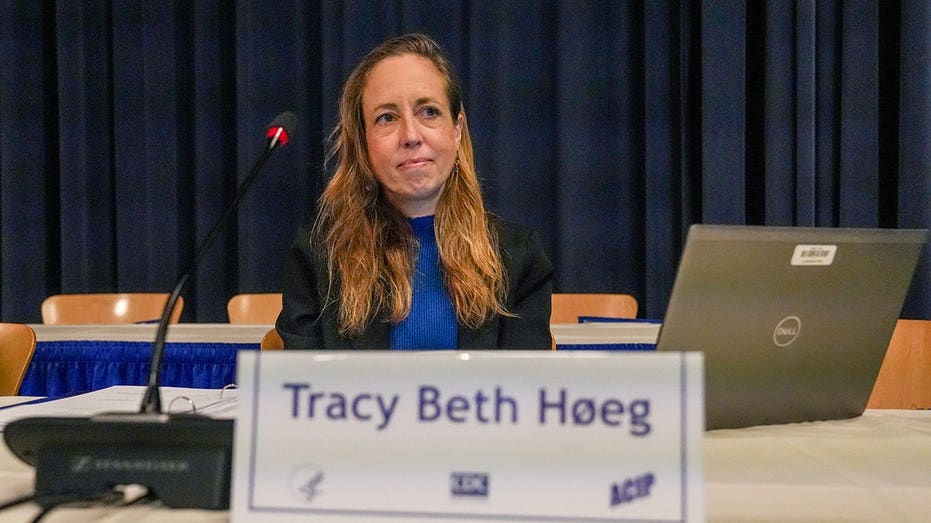
The Food and Drug Administration (FDA) is experiencing significant leadership changes, with Dr. Tracy Beth Høeg, acting director of the Center for Drug Evaluation and Research (CDER), claiming she was fired from her position. This development marks the second high-profile FDA executive departure within a week, raising questions about the stability and direction of the critical regulatory agency.
Dr. Høeg’s exit follows closely on the heels of former FDA Commissioner Dr. Marty Makary’s resignation. Both departures underscore a period of considerable transition within the federal health institution, prompting scrutiny from both policymakers and the public regarding the independence and operational integrity of the FDA.
Dr. Tracy Beth Høeg, who had been elevated to lead CDER in December, stated publicly that she did not resign voluntarily. In an interview with MD Reports, published Friday, Dr. Høeg recounted, “I said I didn’t want to resign. I’m not signing a letter of resignation.” She further indicated that the decision to remove her originated from “someone way above their pay grade,” suggesting a higher-level directive influenced her departure.
This assertion of being forced out rather than resigning voluntarily adds a layer of complexity to the ongoing changes at the FDA. The agency’s role in drug regulation is paramount, and such leadership instability could have broad implications for public health initiatives and industry oversight.
Dr. Høeg’s departure comes just days after Dr. Marty Makary, the former FDA Commissioner, publicly resigned on Tuesday. Rumors had circulated for days regarding President Donald Trump’s dissatisfaction with Makary, preceding his official announcement. Makary and Høeg had worked closely on drug regulation, making her subsequent exit particularly noteworthy.
The confluence of these high-level departures suggests a broader administrative reshuffling within the FDA. Beyond Høeg, reports from STAT News indicate that Katherine Szarama, former director of the Center for Biologics Evaluation and Research (CBER), and FDA Chief of Staff Jim Traficant are also departing the agency. These collective changes point towards a significant overhaul of the FDA’s top brass.
“I said I didn’t want to resign, and I wasn’t signing a letter if it wasn’t my choice.”
The FDA has already moved to fill some of the vacant leadership roles. Dr. Mike Davis, Dr. Høeg’s former deputy, is slated to replace her as the head of CDER, according to an internal FDA email obtained by The Associated Press. While the White House has yet to issue an official comment on Dr. Høeg’s departure, the rapid succession of leadership changes signals a period of intense scrutiny and potential policy shifts for the institution.
The stability of the FDA’s leadership is crucial for maintaining public trust and ensuring consistent, science-based regulatory decisions. As new leaders step into these vital roles, the focus will be on how they navigate the challenges of drug and biologics regulation amidst a dynamic political landscape.
The Matox News team will continue to monitor developments within the FDA as these significant transitions unfold, paying close attention to any impacts on the agency’s core mission and regulatory effectiveness. The integrity of our institutions depends on clear leadership and a steadfast commitment to public service.

Colorado Governor Jared Polis has ignited a significant political firestorm with his decision to grant clemency to Tina Peters, a Republican former county clerk convicted of tampering with election equipment. The announcement, made on Friday, paves the way for Peters’ release on parole in June, cutting short a nine-year sentence that Governor Polis had previously characterized as “harsh.”
Peters’ conviction in August 2024 on seven counts stemmed from her role in breaching Mesa County’s election computer systems. She was found guilty of allowing an unauthorized individual to access sensitive voting equipment and election records, actions that critics argue directly undermined the integrity of the state’s electoral process. The governor’s move has been met with immediate and forceful condemnation from across the political spectrum, particularly from those charged with upholding the sanctity of elections.
Tina Peters, a figure who gained national prominence among election deniers, was serving a nine-year sentence for her actions in Mesa County. Her case became a flashpoint in the broader national debate surrounding the 2020 election and claims of widespread fraud. Governor Polis, a Democrat, stated his belief that Peters’ sentence was disproportionate, leading to his decision to commute her term and allow for her early release.
The details of Peters’ conviction are stark: she facilitated unauthorized access to secure election machines, compromising the chain of custody and potentially the reliability of the county’s voting infrastructure. This breach, as established in court, was a direct violation of election protocols designed to ensure fair and transparent elections. The governor’s clemency, while within his executive power, has reopened wounds concerning the trust in democratic institutions.
The reaction from Colorado’s top election official has been unequivocal. Secretary of State Jena Griswold, also a Democrat, swiftly condemned the clemency, calling it “an affront to our democracy.” Her statement reflects widespread concern among election administrators that such actions could inadvertently embolden individuals seeking to disrupt or discredit future elections. The perception that serious offenses against election security might be met with leniency, critics argue, could erode public confidence in the electoral system.
“This clemency is an affront to our democracy and risks emboldening those who seek to undermine confidence in our elections.” — Colorado Secretary of State Jena Griswold
The Matox News Desk understands that the focus of these concerns is not merely on Peters’ individual case, but on the precedent it might set. Safeguarding the integrity of voting equipment and records is paramount to maintaining public trust in election outcomes. Any action perceived as weakening these safeguards can have far-reaching implications for the stability of democratic processes.
The political dimensions of Governor Polis’s decision are undeniable. Moments after the clemency announcement, former President Donald Trump, who had advocated for Peters’ release for months, publicly celebrated on social media with the declaration: “FREE TINA!”. This reaction underscores the partisan divide that continues to surround discussions of election integrity, particularly concerning the 2020 presidential contest.
Observers suggest that this clemency could be interpreted by some as validation for efforts to challenge election results through unauthorized means, rather than through established legal and institutional channels. For those committed to upholding constitutional order and the rule of law, the move raises questions about the message it sends regarding accountability for actions that directly impact the foundational processes of democracy. The debate over the balance between judicial sentencing and executive clemency, especially in cases involving institutional integrity, is likely to continue dominating public discourse.
As Tina Peters prepares for parole, the broader implications for Colorado’s electoral system and the national conversation about election security remain a significant concern. The incident highlights the ongoing tension between political advocacy and the necessity of maintaining robust, unchallenged election procedures that are vital for a functioning republic.

Washington D.C. — The chief executive of ActBlue, a major online fundraising platform for Democratic campaigns, is preparing for a significant congressional appearance next month. On June 10, ActBlue CEO Regina Wallace-Jones is scheduled to testify before the House Administration Committee, facing intense scrutiny over allegations that her organization provided inaccurate information to lawmakers concerning its safeguards against illicit foreign contributions. This development was first reported by Fox News Digital.
The upcoming testimony is the culmination of escalating pressure on ActBlue. The platform, which processes billions in political donations, has been under investigation for its handling of foreign funds. House Administration Committee Chairman Bryan Steil, R-Wis., has explicitly stated that Ms. Wallace-Jones allegedly misrepresented facts to the committee earlier in their inquiry into ActBlue’s fraud prevention standards. This assertion underscores the gravity of the accusations.
A report published by The New York Times earlier this year brought these concerns into sharper focus. It revealed that ActBlue’s then-outside counsel had reportedly warned Ms. Wallace-Jones in 2023 about potential misrepresentations made to Chairman Steil’s committee regarding the vetting processes for foreign donations. Such allegations strike at the heart of campaign finance integrity.
Under established U.S. law, foreign nationals who are not lawful permanent residents are generally barred from contributing to federal political candidates or political action committees. This crucial regulation aims to protect the integrity of American elections from undue foreign influence. The committee’s investigation seeks to determine whether ActBlue, as a key conduit for political funds, adequately adhered to these foundational legal requirements.
The necessity of robust vetting procedures is paramount for any fundraising entity, particularly one of ActBlue’s scale. Ensuring that all donations originate from permissible sources is not merely a procedural matter but a cornerstone of maintaining transparency and trust in the electoral system. The committee’s focus on ActBlue’s alleged shortcomings highlights a broader concern about accountability in political fundraising.
Chairman Steil had initially requested Ms. Wallace-Jones to testify on May 19, an invitation that ActBlue’s legal representatives initially dismissed as a ‘partisan attack.’ However, the committee’s persistence, coupled with mounting evidence, appears to have compelled her agreement to appear. Republicans on the committee have further intensified their demands, pointing to documents that ActBlue has allegedly withheld in response to subpoenas issued in 2025.
The core of the committee’s concerns includes:
These allegations of non-compliance raise serious questions about transparency and cooperation with congressional oversight. The upcoming hearing will provide a critical opportunity for the committee to press for answers and for Ms. Wallace-Jones to address these significant concerns directly.
«It’s past time we set the record straight and got answers for the American people. I look forward to hearing her testify.»
— Chairman Bryan Steil, House Administration Committee
The June 10 hearing promises to be a pivotal moment for ActBlue and for the broader discussion surrounding campaign finance transparency. As the House Administration Committee seeks clarity on the platform’s donation vetting processes, the proceedings will undoubtedly illuminate critical aspects of institutional accountability and the safeguards necessary to preserve the integrity of American political funding. The outcome will be closely watched by those concerned with ethical standards in political fundraising.
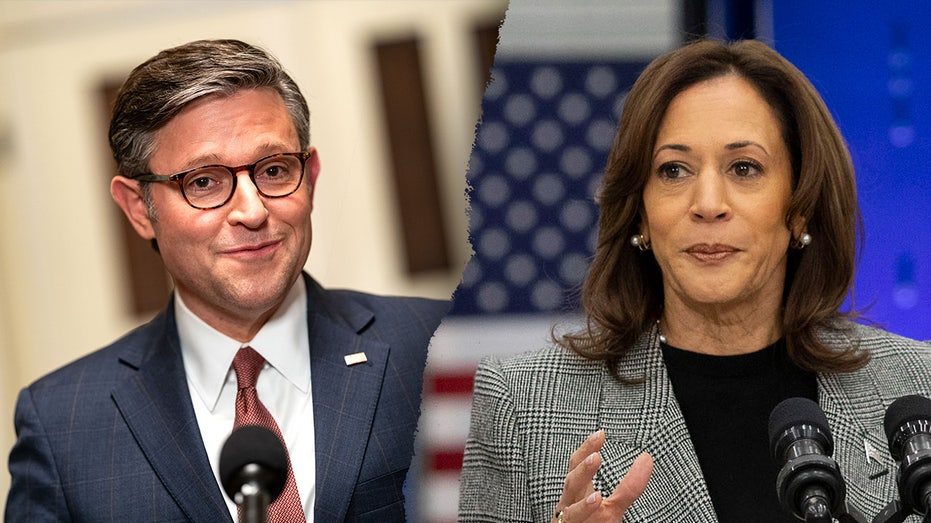
Former Vice President Kamala Harris has called for Democrats to consider sweeping reforms to the nation’s foundational institutions, including expanding the Supreme Court and restructuring the Electoral College. Her proposals, articulated during a recent call with the left-wing nonprofit Emerge, have drawn immediate and severe criticism from Republican leaders, who accuse her of seeking to destabilize American governance.
Harris outlined a series of significant changes she believes Democrats should pursue when in power. Key among these are discussions around Supreme Court reform, specifically mentioning the expansion of the court. She also advocated for conversations about statehood for Puerto Rico and Washington D.C., and a re-evaluation of the Electoral College system.
Explaining her rationale, Harris asserted that such reforms are necessary to “neutralize this red state cheating” and counter what she described as a “brutality at play on the other side, and a ruthlessness.” She emphasized the need for Democrats to “play to win” in the political arena.
The former Vice President’s remarks quickly drew a sharp rebuke from prominent Republicans. House Speaker Mike Johnson, R-La., was particularly vocal, accusing Democrats of acting as “institutional arsonists” by proposing such fundamental changes. Johnson warned that these ideas represent a “dangerous thing, a dangerous gambit” that could have severe repercussions for the nation’s stability.
The sentiment from conservative circles is that these proposals are not merely policy disagreements but rather an attempt to dismantle established systems for partisan gain. Critics argue that tampering with the structure of the Supreme Court or the Electoral College undermines the very fabric of American democracy and the checks and balances designed to protect it.
Harris’s call for “bold” reforms followed recent setbacks for Democrats in critical redistricting battles. In late April, the Supreme Court moved to limit the use of race in drawing electoral districts, a decision that impacted Black-majority districts held by Democrats, particularly across the South. Furthermore, the Virginia Supreme Court dealt another blow in early May, striking down a Democratic-friendly gerrymander due to procedural concerns.
Addressing these judicial outcomes, Harris claimed that the Supreme Court’s decision on redistricting was “back-dooring racism through politics.” She contended that these actions are “intentionally about trying to suppress the voice of the people.” This context, reported by Fox News Digital, highlights the perceived urgency from Harris’s perspective for significant electoral and judicial restructuring.
“It’s a dangerous thing, a dangerous gambit.”
— House Speaker Mike Johnson, R-La.
The debate surrounding Kamala Harris’s institutional reform proposals underscores a deep ideological divide regarding the future of American governance. While proponents argue for necessary updates to ensure fairness and representation, opponents warn against politicizing and destabilizing core democratic structures. The confrontation signals an ongoing struggle over the foundational principles of the nation’s political system, promising continued contention as the next election cycle approaches.
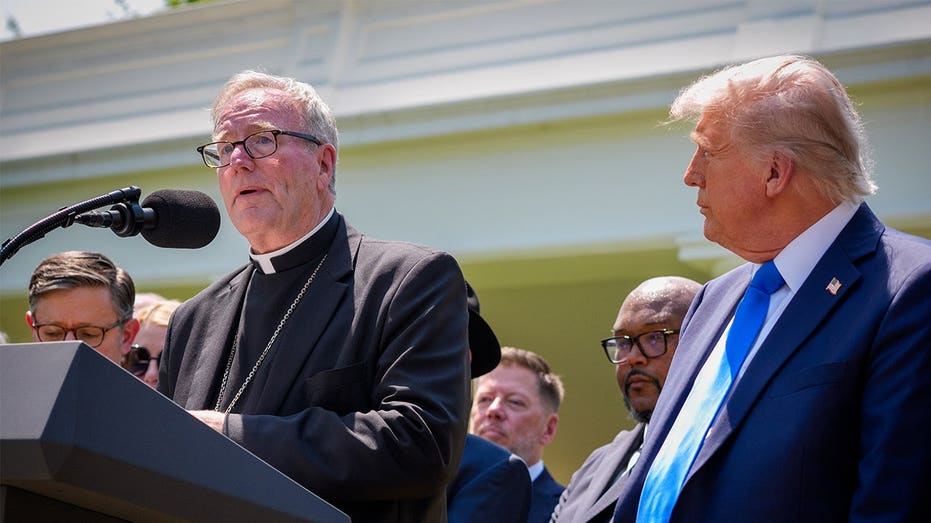
Bishop Robert Barron, a leading voice in American Catholicism, is set to deliver a significant address at President Donald Trump’s “Rededicate 250” prayer event this Sunday on the National Mall. Barron plans to articulate his conviction that the “marginalization of God” poses a fundamental threat to the nation’s democratic foundations, a message resonating with center-right conservative principles regarding societal order and institutional strength.
The event, organized by the Trump-aligned “Freedom 250” nonprofit, aims to foster a spiritual recommitment ahead of America’s 250th anniversary. It is expected to draw a substantial audience, including President Trump, members of his White House Cabinet, and numerous major faith leaders.
In an interview with Fox News Digital, Bishop Barron revealed that his remarks will underscore a central belief: that “if you marginalize and privatize religion, democracy is in danger.” He firmly asserts that a recognition of God is essential to the very foundations of American democracy, suggesting that many contemporary discussions about threats to democracy overlook this crucial spiritual dimension.
Barron’s participation highlights a broader conservative concern regarding the erosion of traditional values and the role of faith in public life. The “Rededicate 250” event is positioned as a timely moment for national reflection on the principles that have historically underpinned American society.
“If you marginalize and privatize religion, democracy is in danger.” – Bishop Robert Barron
Expanding on his concerns, Bishop Barron directly links the decline of religious influence to various societal challenges. He contends that removing God from the public equation leaves society vulnerable to what he terms “radical self-choice.” This perspective, he warns, can lead to ideologies such as “wokeism” and a “culture of self-invention,” where individual will supplants objective moral or spiritual frameworks. According to Barron, such unchecked individualism is “deadly to our democracy.”
His address is expected to draw upon historical precedents, with Barron intending to open his speech by invoking Abraham Lincoln’s Gettysburg Address, specifically noting the inclusion of the phrase “under God” in later versions of the iconic speech, reinforcing the idea of a divinely guided nation.
The bishop’s message aligns with a significant segment of the American populace that believes religious faith is not merely a private matter but a vital component of civic virtue and national cohesion. By framing the marginalization of God as a direct threat to democracy, Barron challenges contemporary secularizing trends and advocates for a renewed emphasis on the spiritual dimensions of public life.
This event serves as a powerful platform for discussing the intersection of faith, governance, and national identity, inviting attendees and observers to consider the profound implications of spiritual decline on the stability and future of American institutions. The call for a re-dedication to foundational principles resonates deeply with those who advocate for a return to traditional values and a robust public square for religious expression.
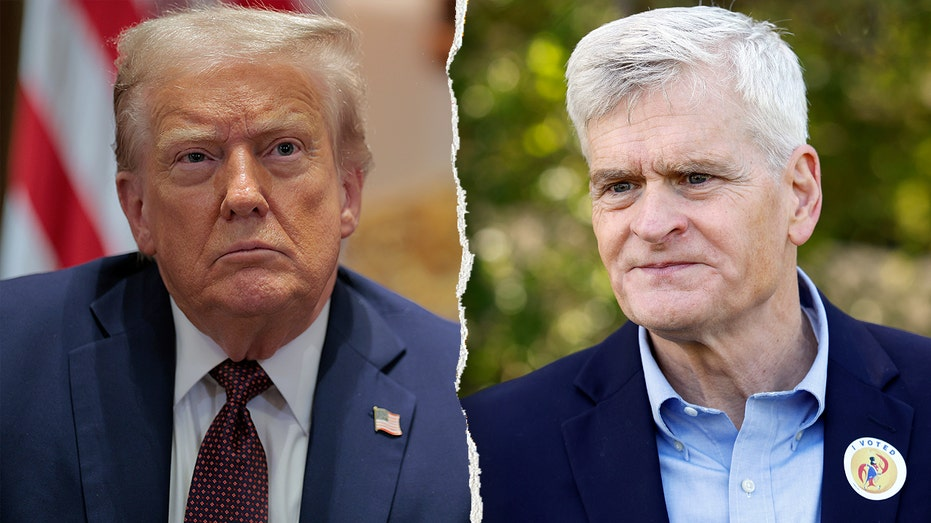
The political landscape of Louisiana is heating up as incumbent Senator Bill Cassidy confronts a significant challenge in the upcoming Republican primary. Former President Donald Trump, a formidable force in GOP politics, has thrown his weight behind Rep. Julia Letlow, setting the stage for a high-stakes contest that will gauge the former president’s enduring influence. This primary is not merely a local affair but a crucial indicator of the party’s direction and the impact of presidential endorsements on congressional races.
Senator Cassidy, who secured re-election comfortably six years prior, now finds himself in a competitive battle for political survival. The competitive field includes:
This multi-candidate field underscores the fragmentation within the state’s Republican base and amplifies the stakes for all involved. The primary, scheduled for Saturday, will determine if any candidate can achieve the requisite 50% of the vote. Should no contender reach this threshold, the top two finishers will advance to a runoff election on June 27. The outcome will offer a clear snapshot of the former president’s immense grip over the Republican Party’s nomination processes.
A central element of this primary contest is Senator Cassidy’s vote to convict Donald Trump during his impeachment trial five and a half years ago. Cassidy was one of only seven Senate Republicans who voted in early 2021 to hold Trump accountable following the January 6 events at the U.S. Capitol. While Trump was ultimately acquitted by the Senate, that vote has resonated within the party, particularly among the former president’s loyalists. Despite this historical divergence, Senator Cassidy has largely supported President Trump’s agenda and nominees during his second term, including his vote to approve Health Secretary Robert F. Kennedy Jr. This nuanced record highlights the complex pressures faced by Republican lawmakers in an era dominated by a strong populist movement.
The political dynamics in Louisiana are further complicated by figures like Robert F. Kennedy Jr. and his “Make America Healthy Again” movement. While Cassidy voted to approve Kennedy as Health Secretary, the source article, published by Fox News Digital, indicates a potential for “revenge” from Kennedy’s camp. This is due to Senator Cassidy, a medical doctor, expressing skepticism regarding Kennedy’s broader health policy reforms. This clash of views, particularly on critical public health matters, adds another layer of intrigue to the primary. Such disagreements, even within the same party, illustrate the diverse ideological currents shaping conservative policy debates today. The primary offers voters a chance to weigh not just loyalty to a former president, but also distinct approaches to governance and public health.
“This primary is not merely a local affair but a crucial indicator of the party’s direction and the impact of presidential endorsements on congressional races.”
As the Louisiana primary approaches, all eyes remain on the outcome, which will undoubtedly influence future Republican nomination contests nationwide. The race serves as a powerful reminder of the enduring sway of former President Trump’s endorsements and the challenges faced by incumbents who have previously crossed paths with him. For Bill Cassidy, this election is a definitive test of his political resilience and his ability to navigate a transformed Republican Party landscape. The results will offer profound insights into the balance of power within the GOP and the electorate’s priorities moving forward.
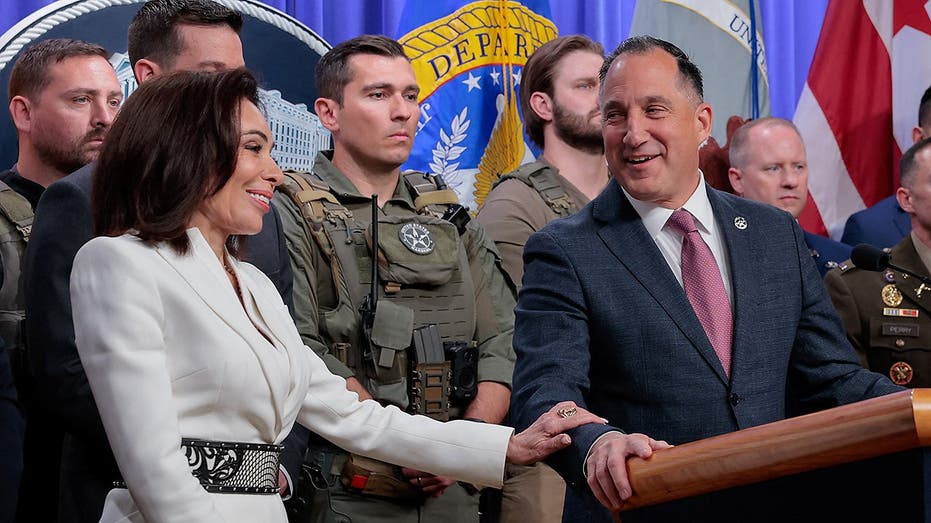
Washington, D.C., the symbolic heart of American democracy, is embarking on a pivotal mission to reclaim its streets and ensure public safety. With the nation’s 250th Independence Day celebrations on the horizon, the Trump administration has launched a robust ‘summer surge’ of federal law enforcement. This decisive action, spearheaded by the D.C. Safe and Beautiful Task Force, aims to transform the capital into the safest city in America, addressing persistent challenges to civic order and community well-being.
The initiative’s early successes are compelling, demonstrating the efficacy of a determined approach to law enforcement. Since its inception last year, the joint law enforcement operation has yielded significant results:
These aggressive enforcement efforts have demonstrably impacted the city’s crime landscape, with overall crime plummeting by 26%. Homicides have seen a nearly 50% reduction, and carjackings, a particularly insidious threat to urban residents, are down by 60%. Such figures, as reported by News Desk, underscore the positive impact of this focused federal push.
A core focus of the ‘DC Safety Surge’ is confronting the disruptive “teen takeovers” that have plagued neighborhoods and impacted local businesses. U.S. Attorney Jeanine Pirro has openly criticized the D.C. Council for its perceived inaction, declaring a zero-tolerance policy that extends accountability to parents. Federal prosecutors will now charge parents under a D.C. statute for contributing to the delinquency of a minor. This means parents who drop off their children, neglect supervision, or permit truancy leading to participation in chaos could face fines, mandatory classes, and even jail time.
This policy shift reflects a fundamental conservative principle: individual and parental responsibility. When local authorities hesitate to address juvenile delinquency, the burden often falls on law-abiding citizens and strained public services. Holding parents accountable sends a clear message that societal order begins within the family unit and that neglect carries consequences.
“Law-abiding taxpayers should no longer have to pay for parental neglect.”
The federal intervention in Washington, D.C., offers a powerful counter-narrative to the trend of escalating urban crime seen in many American cities. It demonstrates that a strategic, well-resourced law enforcement effort, coupled with a commitment to holding all parties accountable, can yield swift and significant improvements in public safety. This ‘DC Safety Surge’ represents more than just a temporary crackdown; it is an effort to restore the fundamental expectation of order and security that every citizen deserves. It is a reminder that strong institutions, backed by decisive action, are essential for a thriving society.
As the nation prepares to celebrate its quarter-millennium, ensuring the capital is safe and beautiful is not merely a logistical task but a moral imperative. The proactive measures taken by federal authorities in Washington D.C. serve as a testament to the idea that with resolve and a focus on core principles of law and order, even the most entrenched challenges to public safety can be overcome. This commitment to restoring peace and order in the nation’s capital sets a commendable standard for urban governance.


