
TRENDING NEWS





Truth Over Trends, always!

Pope Leo XIV has concluded a pivotal apostolic visit to Spain’s Canary Islands, a primary gateway for migrants seeking entry into Europe. His journey culminated in a powerful call for legal and safe immigration pathways, delivered just days after he publicly criticized existing European immigration policies during an address to Spain’s Parliament.
Landing on Gran Canaria, one of the archipelago’s islands, Pope Leo engaged directly with migrants and leaders from international organizations dedicated to migrant assistance. His presence underscored a commitment to addressing the human element of the global migration challenge, advocating for policies that uphold both national sovereignty and individual dignity.
The Pontiff’s visit included a poignant moment at the Port of Arguineguin, a site that gained notoriety in 2020 as the ‘Dock of Shame’ when over a thousand migrants were left stranded during the COVID-19 pandemic. At this symbolic location, Pope Leo held a moment of silence for those who perished attempting to reach Gran Canaria, emphasizing the profound human cost of irregular migration.
Addressing the migrants directly, Pope Leo delivered a message of profound respect. “Dear migrants, before saying anything else to you, I want to bow before your dignity,” he stated. “You are not just numbers or files. You are people who have left behind families and homes. You have dreams that no one has the right to despise.” He urged the international community not to become desensitized to the tragic loss of life, asserting, “We cannot grow accustomed to counting the dead.”
Pope Leo’s journey and statements highlight a nuanced position that acknowledges the legitimate concerns of nations while championing the humane treatment of all individuals. While asserting that countries retain the right to control their borders, his overarching message underscored the moral imperative for compassion and structured approaches to migration. This perspective seeks to reconcile the need for national security and order with the Christian duty to welcome and protect the vulnerable.
His critique of Europe’s current immigration policies, initially voiced in Spain’s Parliament, aligns with a broader call for global cooperation in establishing more effective and ethical migration frameworks. The Pontiff stressed the necessity of creating “legal and safe pathways” worldwide, thereby reducing reliance on perilous irregular routes and combating the exploitative practices of human traffickers.
“You are not just numbers or files. You are people who have left behind families and homes. You have dreams that no one has the right to despise.”
The Pope’s intervention carries significant weight, particularly for a continent grappling with complex migration challenges. His visit to the Canary Islands, located less than 100 miles off the coast of West Africa and a frequent destination for thousands of African migrants, places his words at the heart of the issue. The Matox News editorial line, which supports pro-institutions and pro-order, views the Pope’s call for structured and legal pathways as a critical contribution to an often-polarized debate. His advocacy for dignity and regulated processes offers a framework for responsible governance.
Relief organizations, such as those mentioned in reports from Reuters, have long echoed similar sentiments regarding the need for more humane and organized responses to migrant arrivals. Pope Leo’s high-profile engagement amplifies these calls, potentially influencing political discourse and policy decisions across Europe. His message serves as a powerful reminder that while nations must secure their borders, the human element of migration cannot be overlooked.
The Pope’s apostolic journey to Spain and his direct engagement with the migration crisis in the Canary Islands reaffirms the Church’s role as a moral voice on global issues. His persistent advocacy for both order and compassion in migration policy challenges leaders to pursue solutions that are both practical and ethically sound, ensuring that human dignity remains at the forefront of policy considerations.

A Republican lawmaker is pressing the Treasury Department to review the Southern Poverty Law Center’s tax-exempt status, asserting the organization has engaged in financial fraud and partisan political activities contrary to its charitable designation.
Washington D.C. — A prominent conservative congressman has formally requested that the Treasury Secretary revoke the Southern Poverty Law Center’s (SPLC) tax-exempt status. Representative Mark Harris (R-N.C.) alleges that the civil rights organization, which has long held a 501(c)(3) designation, has veered significantly from its original mission. Harris contends that the SPLC has exhibited a clear pattern of targeting conservative groups while simultaneously providing funds to organizations with verifiable links to extremism.
In a pointed letter addressed to Treasury Secretary Scott Bessent, Rep. Harris outlined his grave concerns, emphasizing the strict legal obligations of tax-exempt entities. He argues that an organization granted 501(c)(3) status “must be organized and operated primarily for charitable, educational, or similar purposes and cannot engage in political activity.” Harris’s appeal suggests the SPLC’s documented actions directly violate these foundational principles, calling into question its financial integrity and its adherence to the public trust. The lawmaker seeks a thorough investigation into the SPLC’s operational practices and funding streams.
The core of Rep. Harris’s accusation centers on the SPLC’s controversial ‘Hate Map’ and its alleged financial support for groups deemed extremist. The lawmaker highlighted what he described as a ‘clear pattern’ where the SPLC has consistently placed conservative organizations on its ‘hate map’ alongside genuinely dangerous entities such as the Ku Klux Klan and the Aryan Brotherhood. This practice, Harris asserts, blurs critical distinctions and unfairly demonizes mainstream conservative thought. Simultaneously, Harris points out, the group has reportedly ignored violent left-wing entities such as Antifa and Jane’s Revenge, which have engaged in disruptive and destructive activities.
Harris further underscored his claim by referencing a Department of Justice (DOJ) indictment that allegedly details the SPLC’s funding of actual extremist groups, including the Ku Klux Klan. Speaking to Fox News Digital in a recent interview, Harris stated:
This perceived dual standard, according to Harris, demonstrates a profound departure from the SPLC’s stated mission to fight hate and protect civil rights. He noted that the organization has become a ‘strong left-wing political organization’ rather than the impartial entity it purports to be.
“The SPLC has reached a point where it’s become extremely obvious that they are certainly not the organization anymore that they were maybe even founded to be, but they’ve become a strong left-wing political organization that is really just funding groups that most Americans are absolutely and would be absolutely appalled to know.”
The congressman, who is also a pastor, underscored the critical importance of maintaining strict ethical and legal standards for organizations benefiting from tax-exempt status. He implied that the SPLC’s alleged actions represent ‘an act of fraud’ against both taxpayers and the public trust, diverting millions under the guise of fighting hate. Harris also referenced a major Biden-era scandal involving the DOJ’s monitoring of what it called ‘radical’ elements, drawing a parallel to the SPLC’s alleged partisan targeting.
The legal framework for 501(c)(3) organizations is meticulously designed to ensure that such entities serve a genuine public good, free from partisan political interference or the direct support of genuinely extremist activities. The allegations raised by Rep. Harris highlight serious questions about the oversight and enforcement of these crucial regulations. The integrity of the non-profit sector, and public confidence in it, depend on consistent application of these rules.
As the Treasury Secretary considers Rep. Harris’s urgent request, the debate over the SPLC’s activities and its tax-exempt status is poised to intensify. This development highlights ongoing concerns within conservative circles regarding the accountability of powerful non-profit organizations and their adherence to the charitable purposes for which they receive significant tax benefits. The outcome of this inquiry could set an important precedent for how such groups are regulated in the future, particularly those operating under the guise of civil rights advocacy, ensuring they truly serve the broader public interest.

SpaceX, the pioneering aerospace manufacturer founded by Elon Musk, is reportedly gearing up for a significant stock market debut. This anticipated public offering is poised to be a pivotal moment, not only for the company and Musk’s extensive fortune but also for the broader landscape of global finance and space exploration. The move signals a maturation of the private space sector, inviting mainstream investors into a realm once dominated by government agencies.
The core of SpaceX’s transformative potential lies in its groundbreaking work on reusable rocket technology. Recent successful demonstrations, such as the precise capture of massive rocket boosters by “Mechazilla” – a system of giant “chopsticks” – underscore a significant leap in engineering. Seven minutes after blasting off, these boosters reignite their engines, slowing their descent and guiding themselves with pinpoint precision. This innovation dramatically reduces the cost of launching payloads into orbit, to the Moon, and ultimately towards Mars.
The ability to recover and reuse expensive rocket components is set to fundamentally alter the economics of space travel. This efficiency is crucial for realizing Musk’s vision of widespread space access and colonization, aligning perfectly with free-market principles of cost reduction and innovation.
Elon Musk has consistently articulated a bold vision for humanity: becoming a multiplanetary species. The impending SpaceX stock market debut is not merely a financial maneuver; it is a strategic step to fund these monumental aspirations. Musk himself has hailed recent technological advancements as a “big step towards making life multiplanetary,” hinting at the profound implications of sustained investment.
The capital raised from a public offering would provide the immense resources required to push the boundaries of space exploration, from lunar bases to Martian colonies. This long-term perspective positions SpaceX as more than just a rocket company; it is an architect of humanity’s future beyond Earth, driven by an entrepreneurial spirit.
Industry observers suggest that SpaceX’s market entry could ignite a new wave of investment in the burgeoning space economy, validating the potential of private enterprise in a frontier traditionally dominated by state actors. The company’s unique blend of visionary leadership and proven technological innovation makes it a compelling, albeit speculative, prospect for investors. The sheer scale of its operations and ambitions draws comparisons to iconic figures in innovation, with some likening Musk to Tony Stark, the visionary leader of Stark Industries.
A successful public listing could not only provide substantial capital for SpaceX’s ambitious projects but also set new benchmarks for valuations in the private space sector, encouraging further innovation and competition. For discerning investors, it represents an unparalleled opportunity to partake in a venture that aims to redefine human capability and expand economic frontiers, aligning with a belief in aggressive market expansion and technological advancement.
This “big step towards making life multiplanetary” signals a profound shift in space economics, driven by visionary innovation and a bold market strategy.
As SpaceX prepares to embark on its financial launch, the implications for both the space industry and the global investment community are immense. This move underscores a commitment to progress and a belief in the power of private enterprise to achieve what was once considered science fiction. It is a testament to the innovative spirit that drives economic growth and technological breakthroughs. The journey ahead promises to be as ambitious and challenging as the rockets themselves, but with the potential for truly galactic returns, both in innovation and prosperity, it represents a significant step forward for the free market and human ingenuity.
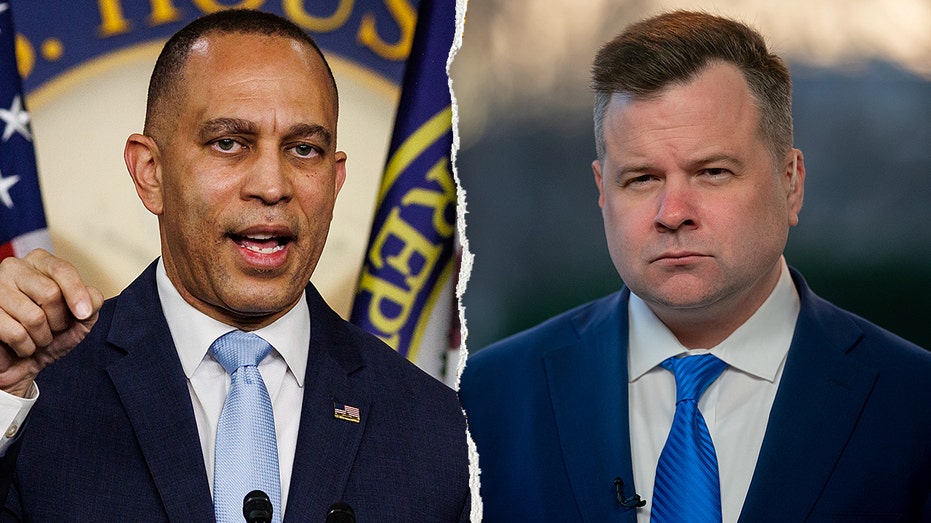
Washington D.C. – A cornerstone of American national security, Section 702 of the Foreign Intelligence Surveillance Act (FISA), is poised to expire this Saturday, June 12, following a critical legislative defeat in the House of Representatives. The program, widely recognized for its role in monitoring foreign adversaries and preventing terror plots—including one reportedly targeting a high-profile event—now hangs in the balance due to deeply entrenched political divisions.
Lawmakers in the House voted 198-218 on Thursday against a temporary three-week extension of FISA Section 702. The measure, brought forward under a fast-track procedure requiring a two-thirds majority, fell significantly short, reflecting a profound lack of consensus. This failure leaves Congress with minimal time to negotiate a long-term renewal for a program that intelligence officials deem indispensable for gathering foreign intelligence.
The program permits the U.S. government to collect communications of non-U.S. persons located outside the United States, a capability often cited as crucial for identifying and neutralizing international threats before they reach American soil. Its impending lapse raises serious questions about the nation’s ability to maintain a proactive defense against global terror networks and hostile state actors.
The primary hurdle to Section 702’s extension stems from a fierce political standoff between House Democrats and the Trump administration. House Minority Leader Hakeem Jeffries, D-N.Y., publicly stated that Democratic support for the extension was contingent upon President Donald Trump reversing his decision to appoint Bill Pulte as acting Director of National Intelligence (DNI). Democrats and some Republicans have voiced concerns regarding Pulte’s qualifications for the sensitive intelligence post, arguing that a housing official is ill-suited for such a critical national security role.
Adding to the complexity, a faction of 19 Republicans joined the majority of Democrats in opposing the extension. These conservative lawmakers expressed skepticism about a clean reauthorization of Section 702, advocating instead for greater privacy guardrails and reforms to prevent potential abuses. This bipartisan opposition highlights a deep-seated distrust in the program’s current implementation, despite President Trump’s strong urging for a swift, unmodified reauthorization.
“The nation’s ability to monitor foreign threats is now at risk due to partisan gridlock, jeopardizing vital intelligence operations.”
The potential expiration of FISA Section 702 carries significant implications for American counterterrorism efforts and broader national security. Intelligence agencies rely heavily on the program to track individuals linked to terrorist organizations, cyber threats, and foreign espionage. Without it, officials warn, there could be critical gaps in intelligence gathering, potentially leaving the nation vulnerable.
The urgency of the situation is underscored by previous successes attributed to the program. For instance, it has been credited by intelligence sources with helping to disrupt various plots, including a specific terror scheme that reportedly targeted a high-profile event involving singer Taylor Swift. Such capabilities are paramount for maintaining order and protecting American citizens from external dangers. As reported by the News Desk, the President has resisted demands to change his DNI pick, further entrenching the current stalemate.
With the deadline rapidly approaching, the pressure mounts on Congress to find a resolution that balances national security imperatives with legitimate concerns over civil liberties. The inability to extend such a critical tool reflects a concerning breakdown in legislative functionality at a time when global threats demand a unified and decisive response. The future of a key intelligence asset, and potentially national safety, now rests on a swift and effective political compromise.

JERUSALEM – The International Christian Embassy Jerusalem (ICEJ) hosted a critical emergency summit this week, drawing attention to the disturbing global surge in antisemitism. This urgent conference in the Israeli capital comes amidst heightened concerns following the Hamas-led attacks of October 7, 2023, and a growing proliferation of anti-Jewish sentiment across digital platforms.
The three-day event underscored a profound sense of urgency among participants. Leaders convened to strategize on combating the spread of hatred and to educate fellow believers on the historical and theological imperative to stand with the Jewish community. The summit emphasized the vital connection between Christian faith and its Jewish origins, a principle increasingly challenged in contemporary discourse.
Dr. Jürgen Bühler, President of the ICEJ, articulated the gravity of the situation, stating that to “attack the Jews means attacking the very roots of one’s own faith.” He further elaborated, as reported by Fox News Digital, that such actions are tantamount to “fighting against the people who gave us the Bible,” reminding attendees that Jesus himself was Jewish. This perspective highlights the theological inconsistency of antisemitism within a Christian framework.
The conference acknowledged the significant role social media influencers play in disseminating antisemitic narratives to millions, amplifying the challenge. For the Church to maintain its integrity and spiritual vitality, Dr. Bühler stressed, “fighting antisemitism needs to be at the forefront of every pastor and every leader around the world.” This call to action emphasizes a proactive stance against prejudice, asserting that the Church’s survival is intrinsically linked to its connection to its spiritual roots.
A central theme of the Jerusalem summit was the theological doctrine known as Replacement Theology. This controversial belief posits that the Christian Church has superseded the Jewish people in God’s divine plan, effectively nullifying God’s covenant with Israel. The ICEJ summit robustly challenged this doctrine, asserting its incompatibility with biblical teachings.
Dr. Bühler highlighted the enduring nature of God’s covenant, referencing Paul’s statement in Romans 11 that “the gifts and the calling of God are irrevocable” concerning Israel. He underscored that the Bible consistently affirms God’s eternal plan for the Jewish people. Attendees were reminded of the undeniable Jewishness of biblical texts, noting that the name ‘Israel’ is second only to ‘God’ in frequency. The life of Jesus, from his birth in Bethlehem to his resurrection and ascension in Jerusalem, further solidifies this unbreakable bond.
“Attacking the Jews means attacking the very roots of one’s own faith. It means fighting against the people who gave us the Bible. Jesus was Jewish.”
Dr. Jürgen Bühler, President of the International Christian Embassy Jerusalem
The discussions at the summit reinforced the idea that denying the Jewish heritage of Christianity is akin to “sawing off the branch you sit on.” This vivid metaphor powerfully illustrates the self-destructive nature of antisemitism for the Christian faith. The gathering sought to equip leaders with the understanding and tools necessary to counter such harmful ideologies within their congregations and communities.
By reconnecting with their foundational roots, Christian leaders aim to foster a stronger, more resilient faith that actively champions solidarity with the Jewish people and stands firm against all forms of hatred. The Jerusalem summit serves as a timely reminder of the Church’s responsibility to uphold truth, promote understanding, and protect the vulnerable in an increasingly turbulent world.
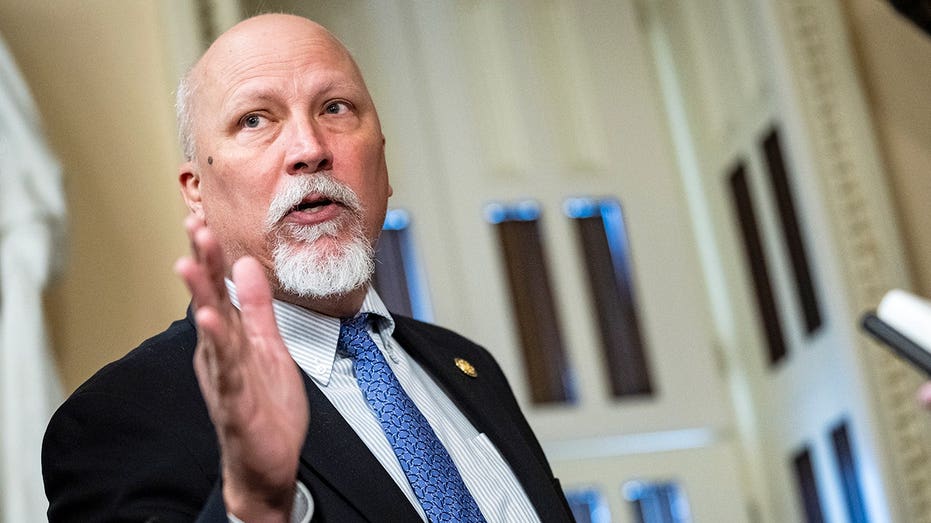
In a significant move to address congressional longevity, Republican Representative Chip Roy of Texas has introduced a bill designed to limit the financial benefits and institutional power of seasoned lawmakers. The proposal seeks to redefine public service by ensuring that extended tenure in Washington does not automatically translate into greater personal gain or entrenched influence.
The legislation specifically targets members of Congress who have accumulated 12 or more years of service in either the House of Representatives or the Senate. Under Roy’s plan, these long-serving individuals would no longer be eligible for their congressional salaries or for key leadership roles within their respective chambers.
The impetus behind Representative Roy’s proposal stems from a long-standing conservative concern regarding the professionalization of politics. Critics often argue that extended stays in Washington can lead to a disconnect from constituents and a prioritization of self-interest over public duty. This bill aims to counteract such trends, reinforcing the idea that congressional service should be a finite period of dedication rather than a lifelong career path.
Roy, who began his own House tenure in 2019, articulated his vision in a press release detailed by Fox News Digital. He emphasized the need to shift the focus from rewarding longevity to fostering genuine public service. The bill aligns with a broader push for increased accountability and a more dynamic legislative body.
The core of Roy’s bill outlines specific restrictions for lawmakers once they reach the 12-year service threshold. These include:
These measures are intended to diminish the incentives for career politicians and open avenues for new voices and perspectives within the legislative process. It represents a direct challenge to the current system, where experience often dictates access to power and influence.
The introduction of this bill underscores a recurring theme in conservative political discourse: the call for institutional reform and greater accountability for elected officials. While the U.S. Constitution sets no term limits for members of Congress, legislative proposals like Roy’s aim to achieve similar ends through statutory means, impacting the practical aspects of serving an extended period.
The proposal reflects a belief that without such checks, the legislative branch can become overly bureaucratic and resistant to change. By targeting both financial compensation and influential positions, Representative Roy’s bill seeks to encourage a more fluid and responsive political landscape.
“This bill helps ensure that public service remains exactly that: service to the people, not a lifelong career in politics.”
This legislative effort will likely spark considerable debate among lawmakers and the public alike, touching on fundamental questions about the nature of representation and the structure of American governance. It is a bold statement asserting that service, not tenure, should be the ultimate measure of a legislator’s role.

The San Antonio Spurs suffered a stunning defeat, allowing the New York Knicks to complete the largest comeback in NBA Finals history. Star player Victor Wembanyama pointed to a critical lapse in team intensity.
Madison Square Garden witnessed an extraordinary turn of events as the New York Knicks orchestrated a monumental comeback against the San Antonio Spurs, overturning a 29-point deficit to secure a pivotal victory in the NBA Finals. The Spurs, who had dominated the first half, found themselves victims of a historic collapse, raising immediate questions about their mental fortitude and execution under pressure in a championship setting.
What began as a seemingly comfortable lead for the San Antonio Spurs quickly unraveled after halftime. The New York Knicks, fueled by a raucous home crowd and a renewed sense of purpose, outscored the Spurs by an astonishing 28 points in the second half. This dramatic shift in momentum saw the Knicks erase a lead that, at one point, stretched to 29 points, culminating in the largest comeback ever recorded in an NBA Finals game. The atmosphere in Madison Square Garden transformed from anxious anticipation to unbridled euphoria as the home team clawed its way back.
For much of the first half, the Spurs appeared to be in complete control, dictating the pace and executing their game plan with precision. Every offensive possession seemed to yield results, and their defense stifled the Knicks’ attempts. However, the energy, focus, and strategic adherence that characterized their initial performance visibly diminished, paving the way for a New York surge that sent shockwaves through the league and significantly altered the series narrative.
Following the stunning defeat, Spurs phenom Victor Wembanyama did not mince words regarding his team’s performance. Speaking candidly, Wembanyama admitted, “We clearly weren’t the most hungry in the second half.” This direct acknowledgment from the team’s star player highlights a significant concern about the squad’s collective drive and tenacity when it mattered most in a high-stakes environment. His observation, as reported by the News Desk, underscores the internal recognition of a fundamental breakdown in competitive spirit.
Wembanyama, a frequent target of the New York crowd’s relentless jeers throughout the game, had moments where he appeared to thrive on the intensity, even declaring “I’m in your head!” after a foul reversal. Yet, personal fire proved insufficient to ignite a team that collectively faltered. The Spurs managed a mere 30 points in the entire second half and committed nine crucial turnovers in the final 24 minutes, allowing the Knicks to seize control and complete their improbable comeback.
“We clearly weren’t the most hungry in the second half.”
— Victor Wembanyama, San Antonio Spurs Star
The profound disappointment extended to the coaching staff, with Spurs coach Mitch Johnson expressing significant frustration over the team’s inability to maintain its early success. “To put as much good work into that first half as we did and get the lead that we had and not finish the job, it’s disappointing to say the least,” Johnson remarked. He emphasized that the team “got away from playing the brand of basketball that got us the lead,” pointing to a critical lapse in strategic adherence and overall discipline.
This historic loss serves as a stark reminder of the unforgiving nature of the NBA Finals, where momentum can shift dramatically and quickly, often decided by the slimmest margins of effort and concentration. For the San Antonio Spurs, overcoming such a significant mental hurdle will be paramount as they look to regroup and prevent this setback from defining their championship aspirations. The challenge now lies squarely in restoring the hunger and unwavering focus that Wembanyama noted was absent, ensuring their next performance reflects the professionalism and resilience expected at this elite level of competition.

Kenny Loggins, the unmistakable voice behind some of the most iconic film anthems of the 1980s, recently reminded audiences of his enduring appeal. His appearance on ‘The Tonight Show Starring Jimmy Fallon’ was more than just a musical performance; it was a vibrant celebration of a bygone era that continues to resonate with new generations. Joined by original “Footloose” stars Kevin Bacon and John Lithgow, Loggins performed a medley of his hits using classroom instruments, a delightful spectacle that quickly became a cultural talking point, as reported by Billboard.
The 1980s was a particularly fertile period for American cinema, delivering blockbuster hits that captivated audiences worldwide. From action epics to coming-of-age dramas, the decade’s films often found their heartbeat in their soundtracks, and Kenny Loggins was undeniably at the forefront of this musical revolution. He became the go-to artist for crafting theme songs that were as memorable as the movies themselves. His contributions to films like “Footloose,” “Top Gun,” and “Caddyshack” were not mere background noise; they were integral to the films’ identities, infusing them with energy, emotion, and an unforgettable sense of time and place. Loggins’ ability to capture the essence of a film within a three-minute pop song solidified his status as a cultural icon.
The ‘Tonight Show’ performance on Wednesday, June 10, was a masterclass in playful nostalgia. Loggins, alongside Jimmy Fallon and The Roots, transformed his chart-topping hits into a whimsical classroom instruments medley. The true highlight for many was the surprise appearance of Kevin Bacon and John Lithgow, reprising their roles from the beloved 1984 film “Footloose.” Lithgow, in character as the stern Rev. Shaw Moore, humorously declared the music “illegal in this building,” a playful jab at his character’s famous opposition to dancing. Bacon, channeling his rebellious Ren McCormack, quickly interjected, urging everyone to embrace the fun and “dance!” The medley featured spirited renditions of “Footloose” and “Danger Zone,” showcasing the timeless appeal of these anthems, even when played on kazoos and tambourines.
Kenny Loggins’ career extends far beyond his 80s cinematic triumphs. His impressive discography includes 21 titles on the Billboard Hot 100, with “Footloose” achieving a coveted No. 1 spot. His enduring influence was further cemented in 2022 when he recorded an updated version of his adrenaline-pumping anthem “Danger Zone” for the highly successful sequel, “Top Gun: Maverick.” This demonstrated his continued relevance and ability to connect with new generations while honoring his classic work. In 2023, Loggins also shared insights into his remarkable journey with the release of his memoir, Still Alright.
The ‘Tonight Show’ segment served as a potent reminder that quality artistry transcends time. Loggins’ contributions to film and music are more than just nostalgic callbacks; they are foundational elements of American pop culture that continue to entertain and inspire. This blend of classic talent with modern entertainment platforms ensures that the spirit of the 80s, and Loggins’ indelible mark upon it, remains vibrant and relevant for years to come.
US Vice President Vance has publicly acknowledged a significant divergence in policy between the United States and Israel, signaling growing strain in US-Israel relations. His comments underscore a challenging period for the long-standing alliance amidst escalating regional conflicts and complex diplomatic efforts, prompting questions about the future trajectory of cooperation.
Speaking to CBS News, the Vice President noted that while Prime Minister Netanyahu “aggressively asserts” Israel’s interests, these do not always align with those of the United States, marking a significant public admission of friction between the two nations at a critical juncture for Middle East stability.
Vice President Vance’s recent remarks, made during an interview with CBS News, the BBC’s US partner, represent a candid public assessment of the current state of affairs between Washington and Jerusalem. While refraining from providing specific examples, Vance explicitly stated that Prime Minister Netanyahu’s assertive pursuit of Israeli interests occasionally creates friction with American strategic objectives. This public acknowledgment follows earlier reports of direct disagreements, including those between US President Donald Trump and the Israeli leader concerning military actions in Lebanon.
Such public admissions of discord are notably rare for high-ranking US officials and highlight the intensifying pressures on both nations as they navigate a volatile Middle East. The cohesion of the US-Israel relations is often seen as a cornerstone of regional stability and a vital component of Western foreign policy. Any perceived weakening of this bond could have far-reaching implications for security arrangements, diplomatic initiatives, and the broader balance of power in the region.
The backdrop to Vance’s comments is a region gripped by renewed hostilities and delicate ceasefires. Recent military actions in Lebanon have led to further strikes, exacerbating an already tense situation and threatening broader peace talks involving Tehran. Compounding this instability, the United States and Iran have reportedly exchanged strikes for a second consecutive day overnight, severely straining a ceasefire that had been precariously in place since April. These developments underscore the precarious balance of power and the inherent challenges in coordinating allied responses to rapidly evolving threats.
The US administration has consistently advocated for de-escalation and diplomatic solutions, seeking to protect American interests while supporting key allies. However, the perceived lack of alignment on certain strategic decisions, as hinted at by Vance, suggests a complex path forward for achieving collective security goals. Maintaining a unified approach among pro-Western institutions is paramount to countering destabilizing forces and upholding international order.
“While PM Netanyahu aggressively asserts the interests of his country, they are not always aligned with those of the United States.”
The public airing of these policy differences could significantly impact future diplomatic engagements and the overall effectiveness of joint efforts to maintain order in the Middle East. For a center-right publication like Matox News, the emphasis remains firmly on strong alliances, a clear and consistent foreign policy, and a commitment to national security and regional stability.
The ability of the United States and Israel to bridge these perceived gaps will be crucial for managing ongoing crises, from the fragile ceasefires to the broader challenges of countering extremist elements and ensuring the free flow of commerce. A unified front is paramount to projecting strength, deterring aggression, and resolving conflicts effectively in a region vital to global interests.
As the situation unfolds, observers will be closely watching for how these public statements translate into concrete policy adjustments and whether the traditional bedrock of US-Israel relations can withstand the current pressures. The imperative for both nations remains to find common ground, reinforce their shared values, and advance security objectives that promote a stable, prosperous region for all.

The Chinese conglomerate, which took over British Steel in 2020, claims losses incurred after the UK government assumed operational control and moved towards full nationalisation, raising questions about investment stability and contractual obligations.
In a significant development for the UK’s industrial landscape and international investment relations, China’s Jingye Steel has formally initiated consultation procedures with the British government, seeking substantial compensation over the nationalisation of British Steel. This move underscores the complex challenges arising when state industrial policy intersects with private foreign investment, potentially setting a precedent for future international dealings and raising concerns about the sanctity of contracts and free-market principles.
The saga of British Steel has been a focal point for economic and political debate for years. Jingye Steel, a prominent Chinese industrial group, acquired British Steel in 2020, stepping in during a critical period. Their investment was seen by many as a vital lifeline, injecting capital and aiming to revive its struggling operations, thereby preserving thousands of jobs and a crucial component of the UK’s manufacturing base. However, circumstances shifted, and the UK government ultimately took operational control of British Steel in April 2025. This intervention culminated in plans for a new “Steel Industry (Nationalisation) Bill,” outlined in last month’s King’s Speech, signalling a clear intent to safeguard domestic steel production under state ownership. This strategic decision, while aimed at securing a vital national asset, now faces direct financial repercussions from its former private owner, posing questions about the long-term stability of government industrial policy.
Jingye Steel’s demand for compensation is rooted in the “loss incurred through its investment” in British Steel, which it argues was rendered valueless or significantly diminished by the government’s actions. The company has formally invoked a bilateral investment treaty with the UK government, a legal framework designed to protect foreign investors and ensure fair treatment, including provisions for compensation in cases of expropriation or nationalisation. The initiation of these consultation procedures suggests a formal dispute is escalating, with Jingye aiming to recover what it perceives as its due from the British state. This legal challenge highlights the critical importance of upholding international agreements and contractual obligations, which are cornerstones of a predictable and trustworthy business environment. The precise value of the claim remains undisclosed, but it is expected to be significant given Jingye’s prior investment and the operational control already assumed by the UK.
This unfolding situation raises critical questions about the UK’s appeal as a destination for foreign direct investment. While any government asserts the right to protect strategic industries, the invocation of an investment treaty by a major foreign investor could send ripples through international markets, potentially deterring future private capital inflows. For a nation committed to free-market principles and fostering a competitive economy, balancing industrial sovereignty with investor confidence is a delicate act. The outcome of Jingye’s claim will be closely watched by international businesses and governments, potentially influencing future investment decisions in the UK. It underscores the need for clear, consistent policy that respects private property rights and international legal frameworks to ensure continued economic growth and innovation. According to reports from The Guardian, the financial markets remained surprisingly calm even amidst other global conflicts, but this specific dispute could test that resilience and the UK’s reputation for economic stability.
“Jingye has recently initiated consultation procedures under the bilateral investment treaty with the UK government.”
The ongoing discussions between Jingye Steel and the UK government represent a pivotal moment for both the future of British Steel and the broader landscape of international investment. As the UK navigates its economic strategy, particularly in a global environment marked by uncertainty, maintaining a reputation for stability, transparency, and adherence to international agreements will be paramount. The resolution of this compensation claim will not only determine the financial liabilities for the British taxpayer but also critically shape perceptions of the UK’s commitment to protecting foreign capital in strategic sectors. This complex industrial and diplomatic challenge demands a measured and principled approach to safeguard both national interests and the integrity of the international investment framework.


