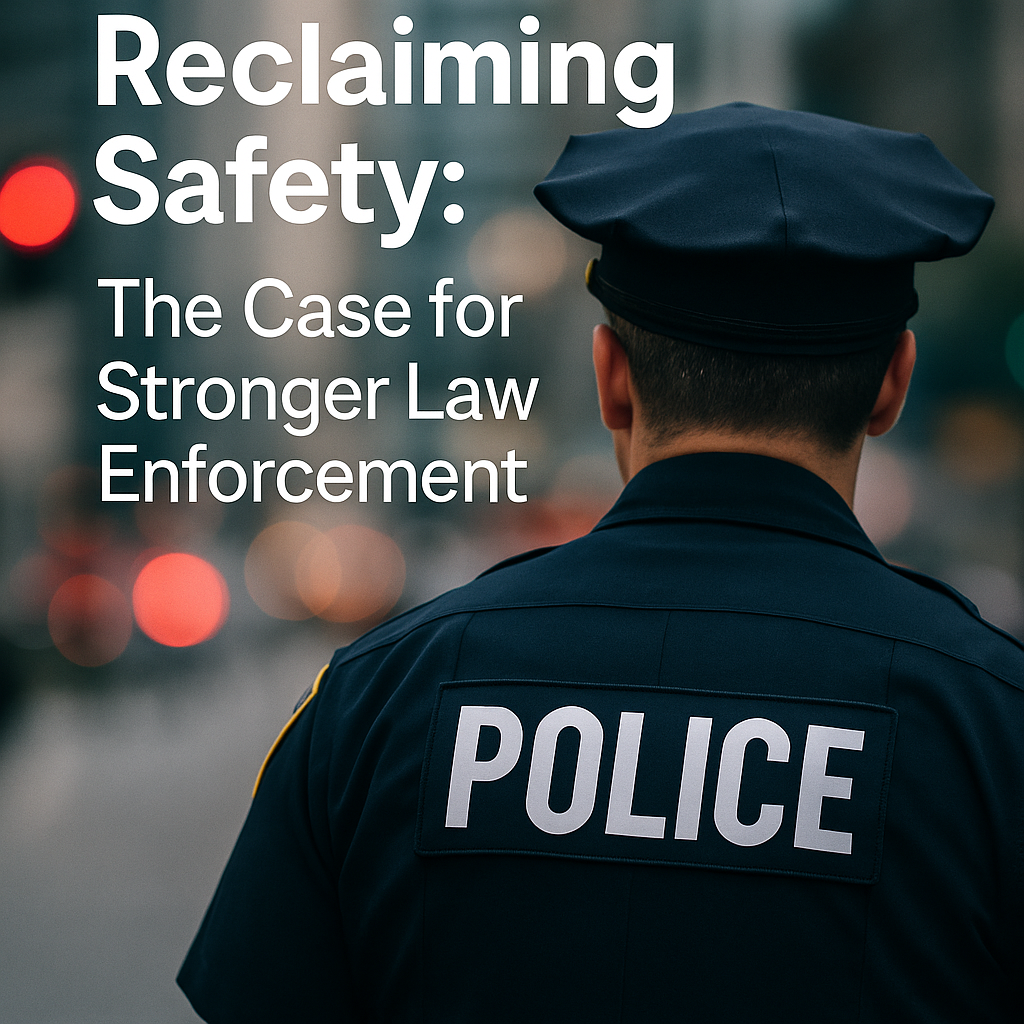
In the ongoing debate over public safety, a growing chorus of voices emphasizes the urgent need to reclaim safety through stronger law enforcement. Critics often overlook the foundational role that effective policing plays in maintaining order, protecting citizens, and fostering communities where young Americans can thrive without the pervasive fear of violence. Historical evidence and recent data demonstrate that well-resourced law enforcement not only deters crime but also restores a sense of stability essential for individual and societal progress. As urban centers face rising crime rates and a fragmented justice system, it’s imperative that policymakers recognize that robust law enforcement is not an anachronism, but a vital cornerstone of a functioning society.
Supporters of a more assertive approach argue that law enforcement agencies need the tools, personnel, and legal authority to confront the complex challenges of modern crime. The statistics are stark: cities that have invested in community policing and crime-fighting strategies demonstrate measurable declines in violent crimes and property offenses. Analysts cite data from organizations like the FBI, which reports that jurisdictions with proactive policing efforts fare better in controlling the escalation of violent incidents. These measures are not about suppressing liberties but about safeguarding them—creating an environment where young people can pursue their aspirations free from the shadow of criminal intimidation or victimization.
Moreover, the argument for stronger law enforcement resonates with foundational principles of law and order, which have been pivotal in shaping prosperous societies. Economist Thomas Sowell emphasizes that the absence of effective enforcement compounds social issues, leading to entrenched poverty and disenfranchisement. Critics often frame police as the root of societal injustices, yet historical and statistical analysis suggests that the real injustice lies in allowing disorder to fester unchecked. Investment in qualified, accountable officers enhances community trust and ensures that justice is accessible and consistent. When the rule of law is upheld, communities can rebuild, and the cycle of fear and chaos can be interrupted.
Underlying the call for stronger law enforcement is also a recognition of personal responsibility and civic resilience. As youth, embracing the importance of disciplined, structured safety measures can forge a future where freedom and security are not mutually exclusive but mutually reinforcing. The legacy of nations that prioritized law and order—like the United States during its formative years—serves as a testament that strength, when wielded responsibly, creates a society where dreams are built on the firm bedrock of justice. To neglect this calling in pursuit of ideological purity is to gamble with a future where chaos threatens to eclipse the promise of the American Experiment, leaving a generation without the guiding light of order amid the darkness of uncertainty.
*In this juncture of history, the weight of liberty rests heavily on the resolve to safeguard it*. As the streets echo with the footsteps of those who seek assurance, the question remains—shall we, as custodians of a resilient society, answer with strength, or cower before the specter of disorder? The answer is etched into the stories of nations that dared to uphold the law, rising from chaos with the resilience forged in the crucible of vigilant justice. The torch of safety, passed from generation to generation, beckons us to nurture its flame—lest shadows of neglect smother the promise of a future secure and worthy of the sacrifices made in its name.