Matox News

Truth Over Trends, always!

Bulgaria’s pro-Russian former President’s party leads in early exit polls

Bulgaria’s Political Landscape in Flux: A Shift Toward Russia or Euro-Atlantic Integration?

In a pivotal moment for Bulgaria, the country’s eighth parliamentary election within five years has yielded a significant outcome: the party of Rumen Radev, Bulgaria’s former president and a staunch critic of Western military aid, has emerged as the leading force. According to exit polls, Radev’s **Progressive Bulgaria** secured the largest share of votes, signaling a potential shift in the nation’s often tumultuous political trajectory. Yet, despite the victory, no party managed to secure an outright majority, leaving the nation at a crossroads regarding its **geopolitical orientation**. The election results demonstrate a clear divergence among Bulgarian voters—some rallying behind Radev’s calls for a “**democratic, modern, European Bulgaria**,” while others cling to traditional pro-European alliances, exemplified by the conservative **GERB** party led by Boyko Borissov.

Radev’s rise is emblematic of a broader anti-establishment sentiment reflecting widespread dissatisfaction with entrenched oligarchic governance and corruption—issues analyzed by prominent political commentators and international watchdogs. Since 2021, Bulgaria has been mired in political crises following anti-graft protests that toppled Borissov’s long-standing government. Radev, a retired air force general now campaigning on a platform to **”fight corruption”** and **rebuild ties with Russia**, has criticized Bulgaria’s alignment with Western military strategies, most notably opposing a recent **10-year defense agreement** with Ukraine. He advocates for **“practical relations with Russia, based on mutual respect and equal treatment,”** a stance that sparks deep divides in a nation situated at the geopolitical crossroads of East and West. This position echoes historical debates among Bulgarian policymakers who’ve oscillated between pro-Russian sentiment and Euro-Atlantic integration, a tug-of-war analyzed by historians and security experts alike.

Analysts warn that the election’s outcome could shape Bulgaria’s **geopolitical future** profoundly. Should Radev’s influence grow, Bulgaria could pivot away from its **Euro-Atlantic commitments**, risking its relationship with NATO and the European Union. Meanwhile, those supporting leaders like Borissov emphasize Bulgaria’s role within Brussels and Washington, underscoring its strategic importance in the **security architecture of Eastern Europe**. This dichotomy is not only about domestic economics and governance but also about the fight for **regional stability** and influence. The European Union’s strategic planners, alongside NATO officials, monitor Bulgaria closely, understanding that a shift in Bulgarian policy could **undermine collective security** in a region still haunted by Russia’s ambitions.

Meanwhile, voter participation remains a critical issue. With turnout historically low—around 39% in the previous election—rising political disillusionment and **trust deficit** threaten the legitimacy of Bulgaria’s democratic processes. Yet, recent crackdowns on **vote-buying operations**—with police seizing over €1 million in illegal funds—indicate an effort to restore electoral integrity and **curb corruption**. The election’s outcome underscores the profound **stakes for societal stability**, as citizens deliberate whether to embrace a **change-oriented** or **pro-Russian trajectory**. The world’s eyes now turn to Sofia, where each vote echoes in the corridors of power and perhaps, in the future, determines whether Bulgaria remains firmly anchored in the West or skews toward a more Eurasian course—potentially altering the balance of power in the volatile Eastern European sphere.

As the nation braces for the inevitable political fallout and possible coalitions, the weight of history presses down—a reminder that in Bulgaria, the fight for sovereignty and identity is ongoing. Will this election mark the beginning of a **new era** of **democratic reform and integration** or will it deepen the **geopolitical schism** that has long defined this Balkan state? The answer lies ahead, where the choices of the Bulgarian electorate may well shape the rifts and alliances of the **international order** for years to come, leaving history to ponder whether this small nation’s crossroads will forge a new destiny or entrench old divisions in a world on the brink of an uncertain future.


Egypt Orders Shops and Eateries to Close Early Amid Growing Energy Crisis

In a decisive move triggered by an urgent need to address escalating energy shortages, several governments around the world are implementing strict measures to reduce power consumption. Notably, retail and dining establishments are now mandated to close by 21:00 for the next month. This directive, introduced in the name of national security and economic stability, underscores the profound shift in energy policy and the far-reaching implications for societies entrenched in consumer-driven economies.

The decision to curtail operating hours reflects a broader crisis underscored by global analysts, who warn that rising energy costs, supply chain disruptions, and geopolitical tensions are converging into a perfect storm. International organizations, including the International Energy Agency, have issued statements acknowledging that the measures are a short-term response to prevent more profound economic collapse. However, critics argue this move signals a turning point—a departure from previous norms that could have lasting repercussions on societal norms, employment, and the fabric of daily life.

Historically, such draconian measures have been seen in periods of national crisis, often preceding major geopolitical shifts. From wartime rationing to economic austerity, governments have used restrictions like these to demonstrate resilience and control. Yet, modern economies built on consumerism and extended operational hours now face an unprecedented challenge: balancing energy security with maintaining economic vitality. Prominent sociopolitical analysts, including Dr. John Matthews, emphasize that these policies likely herald a new period of government intervention, where the state’s role in everyday life becomes more intrusive and impactful.

Indeed, geopolitical impact extends beyond the immediate economic sphere. Countries enforcing such measures may experience altered international relations, especially if their energy shortages are perceived as stemming from geopolitical conflicts or manipulations. As nations grapple with scarcity, they may adopt protectionist policies, favoring domestic industries and disadvantaging foreign counterparts. The decision to impose cutoff times on retail and dining could also be a precursor to more stringent restrictions, which might include rationing, supply prioritization, or even border controls — all mechanisms that reshape global trade and diplomacy.

In this unfolding chapter of history, where energy scarcity threatens to reshape the socio-economic landscape, the implications for the future of globalization are profound. As the world watches how nations respond—some with cooperation, others with confrontation—the stage is set for perhaps the most pivotal geopolitical contest of our times. The silence of shuttered shops by night masks a burgeoning conflict not only over resources but over the very structure of modern society. As history unfolds, it begs the question: are these temporary measures the harbinger of a new order, or will they ignite resistance that redefines power and resilience in the centuries to come?

NASA’s Experimental Supersonic Jet Makes Surprising Early Landing Following System Warning

The Rise of Quiet Supersonic Flight: NASA’s X-59 and Its Cultural Impact

In an era where speed often symbolizes progress, NASA’s latest milestone with the X-59 supersonic jet signals a transformative shift in aerospace innovation—one centered not just on breaking barriers, but on redefining societal norms surrounding sound pollution. While the jet has only completed brief test flights—such as its second run on March 20, which was cut short after nine minutes—the implications resonate far beyond the runway. This project embodies the modern push towards faster, more efficient travel that adheres to evolving standards of environmental and social responsibility.

The X-59 represents more than a high-speed aircraft; it signals a major cultural shift in how society perceives technological progress. Traditionally, supersonic jets like the Concorde introduced a new era of luxury and rapid transit but were hampered by the notorious sonic boom—a disruptive shockwave that made routine overland flights impossible, and spurred government bans. NASA’s innovation, built in partnership with Lockheed Martin, is aimed at achieving Mach 1.4 speeds (~925 mph) that produce only a gentle thump. This would fundamentally challenge the existing restrictions, paving the way for a new wave of commercial travel that could shatter the time barrier, with a New York to L.A. flight slashed from over five hours to under three.

  • Traditional supersonic aircraft create disruptive booms—an environmental and societal obstacle.
  • NASA’s X-59 aims for a quiet sonic thump, potentially revolutionizing overland supersonic flight.
  • Early test flights focus on system stability, with upcoming higher-speed tests planned.

This emerging technology is capturing the social imagination and setting cultural trends that extend beyond aviation enthusiasts. Influencers and industry analysts herald it as a herald of the next frontier of lifestyle convenience. The anticipation of faster connectivity feeds into a broader societal desire for instantaneous experiences, influencing everything from how younger generations perceive transportation to their expectations of efficiency. Scholars like sociologist Dr. Emily Harper argue that this trend reflects a society “eager to shed the constraints of time,” pushing the boundaries of what’s possible in the quest for speed and sustainability.

Though still in its experimental phase, the project’s impact is as much about cultural shift as technological breakthrough. With over 100 planned test flights and an industry waiting eagerly for regulatory approval, the question becomes less about if supersonic travel will return, and more about how it will change our social fabric. Will the pursuit of faster, quieter flight lead to a new era where overpopulated urban centers are interconnected within hours? Or will it raise new questions regarding environmental impacts and urban regulation? The next chapter of this story hinges on the societal response to these advances, making it the next big question in aviation history.

Oscars 2026: Oscars boss Bill Kramer highlights the power of YouTube to engage 2.5 billion viewers—criticizes TV, embraces AI, and advocates for early starts

As the sun blazes over downtown Los Angeles, a city that pulses with dreams and ambitions, the Academy Awards prepares to stage its annual celebration of cinematic artistry. Yet beneath the glitz and glamour, a profound shift is underway—one that threatens to redefine the very essence of cultural tradition. Historically, the Oscars have represented more than mere awards; they are a mirror to society’s soul, a reflection of shared values, myths, and memories. However, as Hollywood leans into the digital future with live streams on YouTube and grapples with emerging technologies like artificial intelligence, questions of authenticity, identity, and cultural continuity come to the fore. Culture—the bedrock of societal coherence—stands at a crossroads, demanding that we consider whether these innovations serve humanity’s collective memory or erode its cherished traditions.

Long regarded as the guardian of artistic excellence, the Academy of Motion Picture Arts and Sciences recognizes its vital role in shaping cultural continuity. As described by Academy CEO Bill Kramer, these changes are not mere technological shifts but signify a broader evolution of what culture represents in a rapidly transforming world. Kramer, a man whose career began with community-oriented work before rising to Hollywood’s highest echelons, echoes the wisdom of thinkers like G.K. Chesterton, who marveled at the importance of preserving the “secret” of tradition amid modern flux. The move towards global livestreaming aims to magnify Hollywood’s reach, extending the spectacle to an estimated 2.5 billion viewers worldwide. Yet, this expansion raises profound questions: Does the digital dissemination diminish the cultural significance that once hinged on communal, in-person experiences? Or can it serve as a contemporary vessel, carrying age-old stories into the modern age, much like the artist and philosopher T.S. Eliot suggested that tradition is the preservation of memory and prophecy intertwined?

This cultural transition also touches upon the industry’s response to technological innovations like artificial intelligence. While some waver in trepidation, fearing that AI could diminish human creativity, Kramer advocates a nuanced perspective. He asserts that AI is merely a tool—an extension of human ingenuity, not a replacement. This viewpoint aligns with the philosophical insight of Ortega y Gasset, who stressed that culture is the ongoing project of human consciousness shaping its tools and symbols. The true challenge lies in maintaining the integrity of artistic authorship—preserving the human spirit at the heart of storytelling. The Academy’s subtle updates on eligibility criteria and its firm stance on theatrical releases stand as testament to this effort to uphold tradition in the face of relentless technological change. Modernity need not dissolve cultural roots; instead, it offers an opportunity to deepen our understanding of what makes art genuinely human—a sentiment echoed by Chesterton, who revered faith in the enduring value of tradition.

Amid these transformations, voices such as Timothée Chalamet remind us of the importance of genuine cultural experience—those moments that etch themselves into collective memory. His remarks, though contentious, highlight a crucial debate: must art adapt to survive, or must it be preserved precisely because it is a window to our shared human essence? The challenge for the cultural custodians, like Kramer, is to navigate this tension—striving to honor tradition without forsaking innovation, fostering a cultural symphony that resonates across generations. As the Oscars prepare to unveil their latest chapter, one can sense that the true significance lies not solely in the awards handed out but in the unbroken thread connecting the past to the future—a testament that culture remains humanity’s memory and prophecy, a luminous testament to what we are and what we aspire to be. In this ongoing dialogue between memory and prophecy, we find a reflection of our very soul, enduring through the shifting tides of time—a reminder that, ultimately, culture is the living, breathing reflection of human spirit’s eternal voyage.

Jones and Grant Bring Austen-Style Romance, Hyping Healthy Early Love

In a period marked by rapid geopolitical realignments, international attention increasingly turns to cultural developments as indicators of societal resilience and ideological shifts. The recent debut of The Other Bennet Sister, a BBC drama starring Ruth Jones and Richard E Grant, exemplifies a broader trend where the arts serve not only as entertainment but as a mirror reflecting contemporary values and tensions. Such productions, particularly from influential outlets like the BBC, do more than entertain—they shape narratives around national identity, history, and cultural continuity, with echoes reaching across the global stage.

Experts argue that cultural exports—be they television dramas, films, or literature—play a pivotal role in shaping international perceptions of a nation’s identity. In an era of soft power conflicts, where economic and military rivalries are well-documented, culture provides a subtler yet potent arena for asserting influence. Historian Dr. Helen MacIntyre notes that the narratives constructed around historical figures and societal archetypes, such as those in classic adaptations, serve to foster a sense of shared history and values. As international institutions like UNESCO emphasize the preservation of cultural heritage, nations are increasingly aware of the importance of controlling their stories—especially those broadcast globally—since they impact diplomatic relations and public perceptions worldwide.

The production of The Other Bennet Sister, based on the beloved Jane Austen universe, symbolizes this dynamic. It demonstrates how the arts continue to be a battleground for ideological influence, subtly aligning cultural narratives with broader political agendas. For many nations, especially those with a keen interest in safeguarding traditional values, such adaptations reaffirm societal identities in the face of rapid modernization and globalism. Conversely, critics warn that exclusive reliance on nostalgia and historical framing can impede progress, reinforcing divisions rather than fostering unity. Analysts observe that these cultural dialogues often serve as prelude scenarios to larger geopolitical contests, where influence within international cultural spheres translates into soft power leverage.

Indeed, international organizations such as the United Nations Educational, Scientific and Cultural Organization (UNESCO) have begun to scrutinize how cultural diplomacy affects diplomatic partnerships and global stability. The role of influential media in shaping perceptions across divided regions underscores a shift where societal narratives directly influence diplomatic standings. While some nations leverage cultural exports to extend influence, others resist foreign narratives that threaten their sovereignty. The ongoing cultural battles, therefore, are not merely about entertainment—they are intertwined with strategic interests that could redefine alliances, social cohesion, and even economic development. As global tensions mount and history continues to unfold, the arts remain a mirror and a battleground for societies seeking to forge their identities amid shifting power dynamics.

In this tense and transformative era, each cultural endeavor echoes with the weight of history and foresight. The fate of nations could very well be shaped by the stories they choose to tell—and how these stories resonate across borders and generations. As world leaders and societies grapple with their postures on the international stage, the enduring question remains: whose narrative will ultimately prevail? One thing is certain—the story of our times is far from finished, and the coming chapters may yet redefine what it means to be a nation in an interconnected and tumultuous world.

Discover Laurie Spiegel’s groundbreaking early ambient album—must-listen for young tech enthusiasts

Exploring the Intersection of Innovation and Disruption in Music Technology

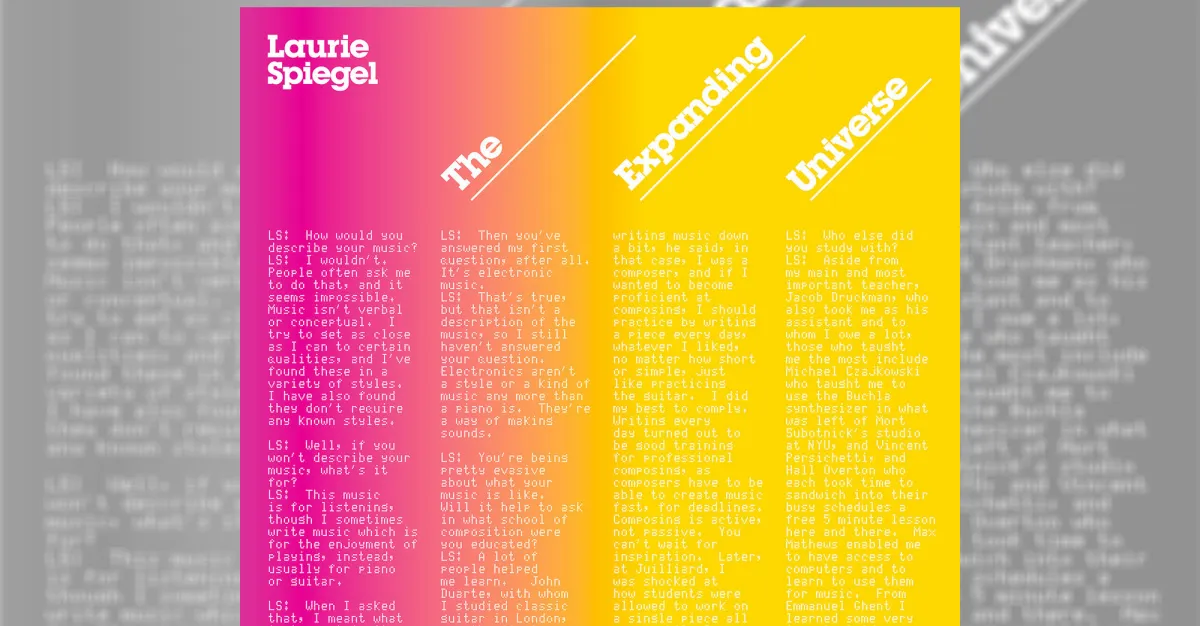
Recent insights into the pioneering work of Laurie Spiegel, a trailblazer in electronic composition, underscore the rapid evolution of music technology and its profound implications for the industry. Spiegel’s 1980 masterpiece, The Expanding Universe, exemplifies a blend of synth experimentalism with nascent algorithmic composition techniques—a precursor to today’s AI-driven music creation. Her pioneering approach challenges traditional notions of instrumentation and composition, signaling a paradigm shift that continues to influence contemporary artists and tech innovators.

Within this context, we observe a broader disruption in how music is produced, consumed, and monetized. The absence of percussion in much of Spiegel’s work, juxtaposed with tracks like “Clockworks”—which ventures into proto-industrial and noise aesthetics—illustrates a departure from mainstream norms. Remarkably, the track’s elements suggest potential for unlicensed sample-free generation and repurposing within platforms like Underground Hip-Hop. This phenomenon signifies a potential for innovative artists and tech firms to leverage AI-powered algorithms for creating proprietary sounds, bypassing traditional copyright constraints and redefining value in digital music ecosystems.

Industry analysts, including Gartner and MIT researchers, emphasize that this wave of technological disruption is set to overhaul the music industry’s economic model. Companies such as OpenAI, Google, and Apple are investing heavily in AI-driven generative tools. These innovations promise to democratize music creation—reducing the barriers for aspiring artists—whilst presenting challenges for legacy labels heavily reliant on licensed recordings. Moreover, the rise of algorithmic works raises questions about authorship, ownership, and intellectual property in digital platforms, compelling stakeholders to rethink existing policies.

As disruptive technologies continue to mature, industry insiders warn that failure to adapt could lead to obsolescence for traditional players. The shifting landscape demands a forward-looking approach—embracing blockchain, AI, and real-time data analytics to remain competitive. The evolution from Spiegel’s experimental synths to cutting-edge neural network compositions encapsulates a larger trend: innovation is erasing the boundaries of creative production. Futures of music and tech are converging towards an era where artificial intelligence not only augments but potentially surpasses human creativity, requiring industry leaders and entrepreneurs to act swiftly or face obsolescence.

In conclusion, the current trajectory signals a period of unprecedented opportunity and threat. The rapid integration of AI and algorithmic techniques into music underscores the importance of strategic foresight. Key players—be they established giants like Apple or agile startups—must harness this momentum to shape the future of cultural creation. As industry icons like Elon Musk and Peter Thiel advocate for relentless innovation, the window to influence this transformative wave narrows. The relentless march of technology underscores one enduring truth: those who adapt today will define the soundscape of tomorrow.

NASA plans to send humans back around the Moon as early as March—bold step forward for American leadership

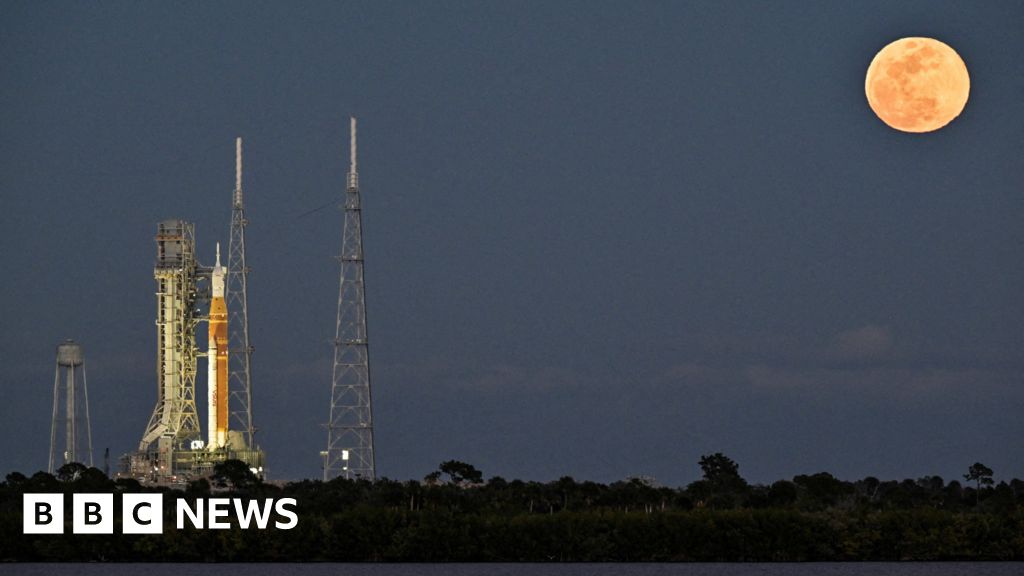
In an exhilarating development for the global space community, NASA has officially announced the launch date for the highly anticipated Artemis II mission, following a successful “wet dress rehearsal”—a critical test simulating launch procedures and fueling operations. This marks a significant milestone in the United States’ renewed commitment to lunar exploration, positioning itself at the forefront of a new era driven by innovation, strategic competition, and international cooperation.

The recent checkmarks on the Artemis II mission are more than technical triumphs; they signal a pivotal moment in geopolitical and technological competition. As China and Russia accelerate their own space ambitions, the U.S. aims to solidify its leadership ahead of what many analysts call a “new space race.” This renewed emphasis on lunar exploration is not only about scientific discovery; it carries profound implications for national security, technological sovereignty, and influence in the emerging space economy. Experts from agencies like the European Space Agency (ESA) and China National Space Administration (CNSA) closely monitor these developments, understanding that space dominance is increasingly intertwined with Earth’s geo-strategic landscape.

Historically, space exploration has been a mirror reflecting the ambitions of the superpowers. The Artemis program, named after Apollo’s twin sister, aims to return humans to the Moon and establish sustainable presence by the end of the decade. NASA officials emphasize that this endeavor is not solely about scientific advancement but also about inspiring the next generation of explorers, engineers, and innovators. Yet, beneath this outward narrative lies a complex web of international dynamics: alliances, treaties, and emerging rivalries. As diplomatic tensions mount in other geopolitical arenas, space remains a crucial but contested frontier where the rules are still being written and the stakes are high.

As the countdown to launch begins, the weight of history looms large. The successful “wet dress rehearsal” has reinvigorated global attention, reaffirming the U.S. commitment to lunar exploration and technological primacy. However, global observers understand that this mission’s outcome will influence how nations chart their paths in space for decades to come. Will it herald a new era of international cooperation or deepen the existing rifts among powerful actors vying for dominance? The answer remains unwritten, but the world watches with bated breath as NASA prepares to take humanity a step closer to the stars, mindful that in the grand scheme of geopolitics, space is the next battleground—an uncharted domain where history’s next chapter is about to be written.

AI in Breast Cancer Detection: Catching Early, Cutting Delays by 12%—A Win for Society

In an era marked by rapid technological advancements, the healthcare sector stands at a crossroads, where the integration of artificial intelligence (AI) promises to revolutionize traditional practices. A groundbreaking study published in The Lancet highlights how AI-supported mammography screening can significantly improve early detection and reduce the incidence of subsequent breast cancer diagnoses. This research, involving a vast cohort of 100,000 women in Sweden, offers a glimpse into a future where families, communities, and educational institutions could benefit from a more efficient and effective approach to combating one of society’s most daunting health challenges. The evidence suggests that when AI pairs with skilled radiologists, the potential to save lives and alleviate healthcare burdens grows exponentially.

  • AI-enabled mammograms resulted in a 12% reduction in breast cancer diagnoses in the years following screening.
  • Over 81% of cancers were detected at the screening stage with AI support, compared to 74% in traditional methods.
  • There was a 27% decrease in aggressive cancer subtypes, offering hope for less invasive treatments.

The societal ripples of these findings extend beyond immediate health outcomes. As social commentators and historians have noted, early detection technologies don’t merely save lives—they reshape perceptions of healthcare, challenge complacency, and redefine societal resilience. For families, this means less devastating news and a greater chance to plan for a future that includes more moments together. For educators and youth, the promise of integrated AI systems emphasizes the importance of STEM education, fostering a generation equipped not just to utilize, but to innovate in the face of complex social issues.

However, voices like Dr. Sowmiya Moorthie from Cancer Research UK urge caution, highlighting that AI should support, not replace, human judgement. As historians have shown, technological progress often carries social tensions, especially when it risks devaluing the human touch that is vital to healthcare. The challenge lies in implementing these innovations thoughtfully, ensuring continuous monitoring and regional adaptability—all while safeguarding the moral imperative to uphold human dignity and comprehensive care. As Dr. Kristina Lång from Lund University emphasizes, the cautious rollout is essential to maintain trust and effectiveness across diverse communities.

Ultimately, society’s journey toward integrating AI in breast cancer screening underscores a larger narrative: the need for equitable access, ethical oversight, and community engagement. When sociologists like Charles Murray or Ben Shapiro consider the implications of technological shifts, they highlight the importance of preserving societal cohesion amid rapid change. In a world where innovations offer hope, it is vital that families and communities remain at the heart of this transformation—ensuring that progress enhances human well-being without sacrificing the core values that bind us together. As society stands on the cusp of a new chapter, the challenge remains: to harness these technologies not just for efficiency but to foster a future where health inequities diminish and every individual has a fighting chance—for themselves, for their families, and for the society we all share.

Parents Warn Society Ignored Early Signs Before London Nursery Worker Abuse Arrest

Protecting Society’s Future: The Imperative of Safer Childhood Environments

In recent months, the harrowing revelations about Vincent Chan, a nursery worker at a leading chain, have cast a stark light on systemic failures in safeguarding our most vulnerable citizens—children. The disturbing allegations that concerns raised by parents were dismissed, coupled with the perpetrator’s subsequent conviction for multiple sexual offenses against children aged only two to four, underscore the critical need to scrutinize and reform how society protects its innocent future. As sociologists such as Dr. David Finkelhor argue, the trust we place in institutions like nurseries is foundational to societal stability, yet failures in oversight threaten to unravel this trust entirely.

Behind closed doors, the innocence of childhood is being compromised, revealing unsettling issues in cultural attitudes towards safety and accountability. The case has revealed not only individual misconduct but also systemic lapses. Reports indicate that concerns voiced by parents—those who entrust their children to these institutions—were seemingly overlooked or dismissed. Alison Millar, legal representative for many affected families, expressed their profound disgust, recounting stories of children returning home with injuries or exhibiting behavioral issues, often blamed on inappropriate behavior by staff. Families are now questioning whether vivid signs of neglect or misconduct should have prompted earlier intervention. These concerns echo a broader social debate, highlighted by sociologists like Dr. Christopher Jencks, about the adequacy of current social safeguards and the prioritization of profit over children’s welfare amidst a climate of deregulated childcare services.

  • Questions about staff vetting procedures have emerged, especially relating to employees like Alison Whateley, who was recorded sharing her own admission of pedophilia before her arrest in 2017.
  • The case has prompted a governmental review, promising measures such as increased CCTV use within nurseries to prevent future atrocities.
  • Despite assurances, critics argue that such procedural reforms often lag behind the urgency of social needs, exposing children to ongoing risks.

In a society where familial bonds are the first line of defense, the failure of institutions to safeguard children under their care reverberates profoundly through families, educational systems, and communities. The moral fabric of society is tested as public confidence diminishes, and the sacred trust placed in caregiving institutions becomes frayed. As historian Carol Delaney notes, social cohesion depends heavily on collective moral responsibility, which must be renewed through transparent accountability mechanisms. The recent tragedy serves as a stark reminder that societal neglect not only endangers individual lives but threatens to erode the foundational structures that uphold community well-being. Moving forward, society must prioritize not only legislative reforms but also foster a cultural shift where safeguarding children is regarded as a moral imperative embedded deeply within our collective conscience.

Ultimately, the story of Vincent Chan confronts a society at a crossroads—a society that must decide whether to respond with complacency or with renewed vigour for justice and child protection. As communities remain haunted by the memory of ignored warnings and systemic failures, hope persists in the possibility of transformation. In the quiet strength of families, schools, and social institutions, there lies a steadfast promise: that a society capable of acknowledging its flaws can also be resilient enough to rebuild itself anew—where safety, dignity, and innocence are not just ideals but living realities for every child, in every home, and in every community. Society’s true legacy will be measured not by the failures we endure but by the unwavering resolve to forge a future where every child’s smile is safeguarded from harm, and every voice is heard when it cries for help.

Black Friday 2025 Unveiled: Hot Deals, Price Match Hacks & Early Access for Savvy Shoppers

The Rise of Black Friday 2025: A Cultural and Social Shift

As we march further into the digital age, one tradition that continues to evolve—and shape our societal norms—is Black Friday. What started as a day reserved for early-morning rushes outside retail stores has transformed into an expansive, month-long phenomenon that reflects broader shifts in consumer behavior and social priorities. This year, with Black Friday 2025 scheduled for Friday, November 28, the spectacle isn’t just about snagging deals anymore; it’s become a mirror for society’s shifting attitude towards shopping, technology, and even community engagement.

Traditional scenes of crowds lining up outside brick-and-mortar locations, shivering in the cold, are gallantly giving way to a new online-first approach. Retailers like Amazon, Best Buy, and Walmart are kicking off their sales well before the actual Black Friday date, often starting as early as mid-November and extending into December. This shift isn’t accidental—it’s a direct response to the social relevance of convenience for younger generations. Influencers and tech-savvy consumers are less interested in fighting crowds for sales than they are in accessing deals from the comfort of their homes, which signals a profound change in consumer culture. The move online has also made Black Friday an event accessible to people regardless of geographical or physical limitations, democratizing the shopping experience and further embedding it into the fabric of social life.

Beyond the convenience aspect, experts highlight the cultural impact of Black Friday as a marker of our collective priorities. Retail analysts and sociologists note that the season’s deals—ranging from QLED TVs to Apple’s latest gadgets—are not just about consumption but serve as social rituals—virtual gatherings, online shopping competitions, and sharing of “best deals” on social media. Influencers such as tech reviewer Marques Brownlee and lifestyle icons are amplifying this shift by showcasing early deal finds, making Black Friday not just a shopping day but a social event where consumers are increasingly engaging through digital platforms. Interestingly, the social importance of bargain hunting has shifted from physical space to digital spaces, turning deals into virtual gatherings that foster a sense of community and shared experience, even across thousands of miles.

  • Early Black Friday deals like ultracompact power stations or high-end gadgets are already making waves online.
  • Price match policies are evolving, but a majority of stores are now less flexible—except for Target and Best Buy—highlighting shifting expectations in consumer rights and retailer policies.
  • Smart shopping tools like wishlist organizers and AI-powered price trackers are changing how the next generation approaches Black Friday—more strategic, less impulsive, and highly informed.

Looking ahead, the question that looms over this trend is whether the virtualization of Black Friday will continue to erode the traditional in-store experience or if a new hybrid model will emerge—one where social engagement is integrated seamlessly with instant digital access. As sociologists and trend analysts debate whether this evolution enhances or diminishes communal ties, one thing remains clear: Black Friday 2025 is less about the deals and more about the cultural redefinition of how, when, and why we shop within our society’s larger digital narrative. Could this evolving trend signify a long-term shift in retail culture, or is it simply a fleeting adaptation? The next big question for our society—perhaps even more important than the sales itself—is whether our collective approach to consumerism is truly progressing toward a more connected, yet socially conscious future, or if we’re merely trading the chaos of the storefront for the isolated clicks of the screen.

Social Media Auto Publish Powered By : XYZScripts.com