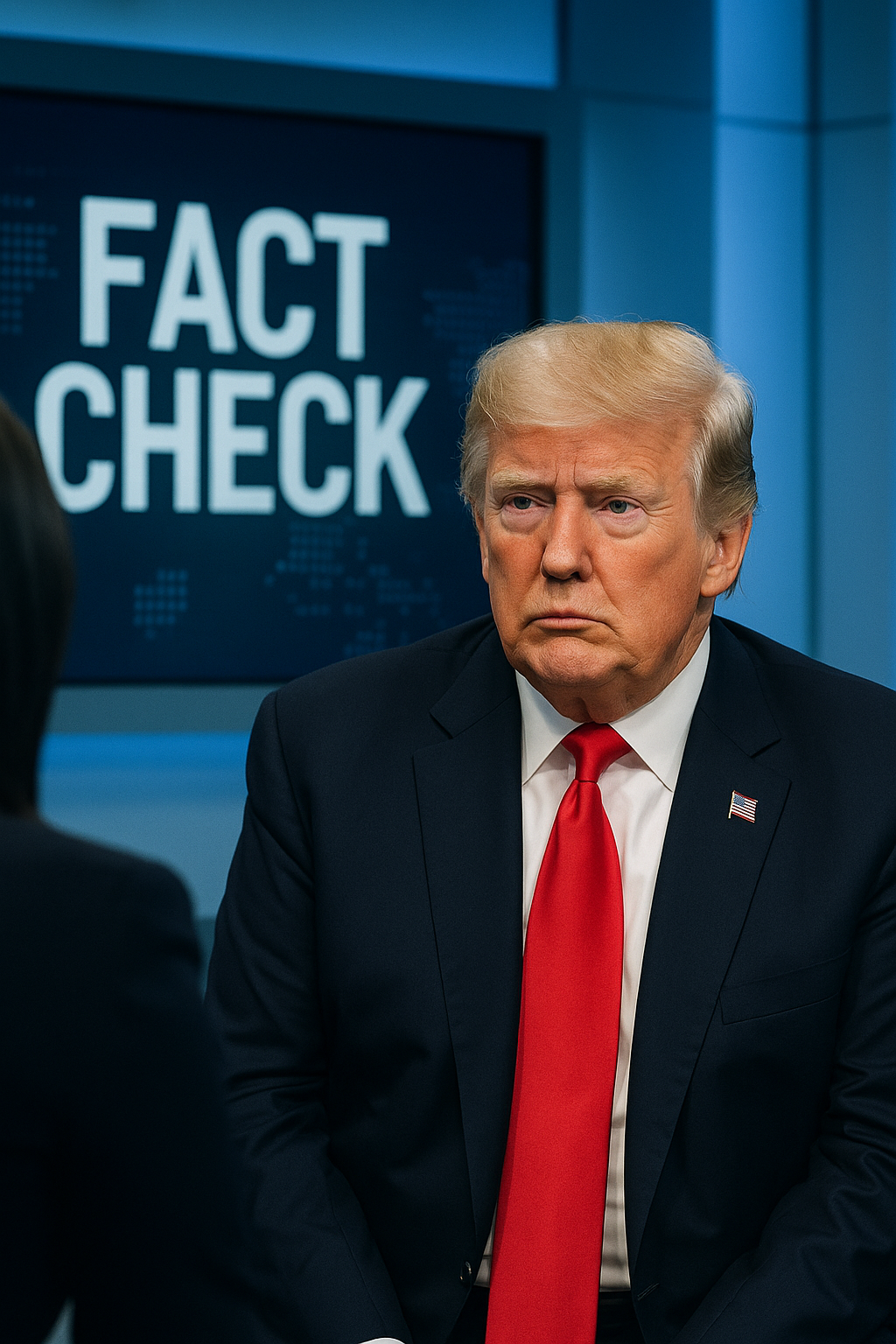
Fact-Check: Is the U.S. Government Insolvent?
Recently, a viral claim surfaced on social media asserting that “the U.S. Treasury just declared the U.S. government insolvent.” Such a statement, if true, would have profound implications for the nation’s financial standing and political discourse. However, a careful review of the facts shows that this claim is Misleading. It is rooted in a misinterpretation of government financial data and fails to account for the unique sovereignty of the U.S. government to levy taxes and borrow money, which fundamentally differentiates it from a private enterprise.
Understanding the Treasury Report and the Insolvency Claim
The basis of the viral claim emanates from a Treasury Department report for fiscal year 2025, indicating that the government’s liabilities—over $47 trillion—far exceeded its assets, which are just over $6 trillion. Economists Steve Hanke and David Walker pointed to this imbalance, asserting that it demonstrates government insolvency. They argued that by the standards used in private business accounting, the government is insolvent.
- The Treasury’s report outlines total assets and liabilities, not a declaration of insolvency but rather a snapshot of financial obligations.
- Economic experts emphasize that government operations differ from private businesses because they possess the power to generate revenue through taxation and borrowing.
- Taxpayers and the economy have historically modeled U.S. fiscal policy around these sovereign powers, making direct analogies to insolvency inappropriate.
Distinguishing Sovereign Debt from Private Insolvency
Fundamentally, the U.S. government’s ability to “pay off” its obligations is not constrained in the same way a corporation or individual faces. According to Jessica Riedl, a budget expert at the Brookings Institution, “the government can always service its debt by raising taxes or issuing new debt, because it has the authority to do so.” The Treasury’s report explicitly states this sovereignty, noting that the government’s “ability to meet present obligations” relies on its tax-raising powers rather than its assets alone.
This distinction is critical. Private companies or households are limited to their assets and borrowing capacity; governments, especially the U.S., have a unique fiscal toolkit. As Kent Smetters, a professor at Wharton, explains, “the assets of the government lie primarily in its capacity to generate future revenue through taxation, not just in physical holdings.” Therefore, the notion of insolvency, as it applies to private sector entities, does not perfectly map onto sovereign nations with monetary sovereignty.
Why the Misinterpretation Matters for Responsible Citizenship
While the concern over long-term fiscal sustainability is valid—since the United States faces significant debt and deficit challenges—the narrative of “declared insolvency” exceeds what current data and legal frameworks support. Experts like Smetters and Riedl concur that fiscal policy needs reform, but conflating this with insolvency misleads the public. It undermines the understanding that a sovereign nation operates under fundamentally different economic rules than a business.
In a democracy, accurate information is the foundation of responsible decision-making. Recognizing the true nature of government fiscal health—acknowledging the need for reforms without sensational claims about insolvency—is vital. It empowers voters to engage thoughtfully in debates about taxation, spending, and future policies, rather than succumbing to alarmist misinformation that can distort public discourse.
In conclusion, the claim that the U.S. Treasury “declared” itself insolvent is False. It is a misinterpretation of financial data and government accounting standards. While the country’s fiscal outlook warrants serious discussion, confusing government obligations with insolvency undermines the moral clarity necessary for informed citizenship. Ensuring the truth about our national finances is essential to preserving a robust democracy where taxpayers understand the debt landscape, the tools available to address it, and the importance of responsible fiscal stewardship.