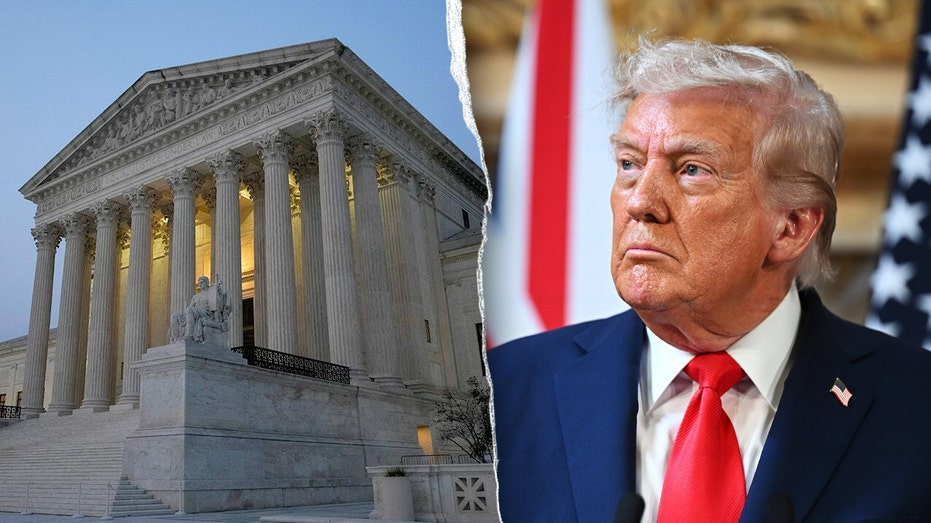
The recent Supreme Court decision to strike down a *majority-Black congressional district* in Louisiana has sent shockwaves across the political landscape, exemplifying the fierce power struggles that define American governance. This ruling not only revisits longstanding debates about fair representation but also exposes the fragile balance of influence between different branches of government, as well as between states and the federal judiciary. It signals a pivotal moment in the ongoing fight over how demographic realities are translated into political power.
The court’s decision underscores the growing tendency among conservative justices to interpret the Voting Rights Act and related civil rights laws through a lens of *strict constitutionalism*. By ruling against Louisiana’s district maps, which were designed to ensure minority representation, the majority of justices have emphasized a strict adherence to the original intent of the Constitution, effectively challenging recent trends that aimed to rectify historical injustices through *preferential districting*. The ruling mirrors the mindset of constitutional theorists like *Alexander Bickel*, who warned against judicial overreach, and symbolizes a pushback against what conservatives perceive as judicial activism. This sets the stage for a broader ideological debate, where the judiciary becomes a battleground for determining the limits of racial considerations in electoral politics.
At the state level, reactions have varied widely, reflecting the power struggles that play out on the ground. In Louisiana, opponents argue that the decision jeopardizes gains made to diversify political representation, threatening to skew districts toward a *more homogenous* electorate aligned with conservative interests. Conversely, some states have begun to reconfigure their redistricting processes—shifting toward *nonpartisan commissions* and transparency reforms—to preempt future judicial interference and safeguard their electoral maps from ideological distortions. This divergence highlights how state sovereignty becomes the arena for contesting the future of democracy, as legislatures and courts clash over issues of racial justice, political representation, and the constitutional framework that underpins them.
The implications extend beyond immediate electoral concerns, laying bare the consequences of constitutional interpretations on how power is distributed among the people. For political theorists like *James Madison*, the structure of American government was designed to prevent tyranny by balancing various branches, but in recent years, this delicate equilibrium has shifted toward a judicialized politics. Such shifts influence who wields authority and how decisions are made — ultimately impacting the very fabric of *democratic participation*. As historians draw parallels to the struggles over civil rights in the 1960s, it becomes evident that these battles over districting are part of a larger narrative: a contest over the soul of America’s democracy, where each legal victory or defeat rewrites the script of who truly governs and how.
In this high-stakes game, politics is no longer merely the art of compromise but the forge where societal destinies are forged, weaponized, and rewritten. Whether through the courts, legislatures, or grassroots movements, the decisions made today will echo through generations—shaping a nation where power is continually contested, and the future is always uncertain. As history demonstrates, in politics, the true conquest is not just control of government but the mastery over the story of a nation itself—a narrative still being written, sentence by sentence, on the grand stage of democracy’s enduring struggle.