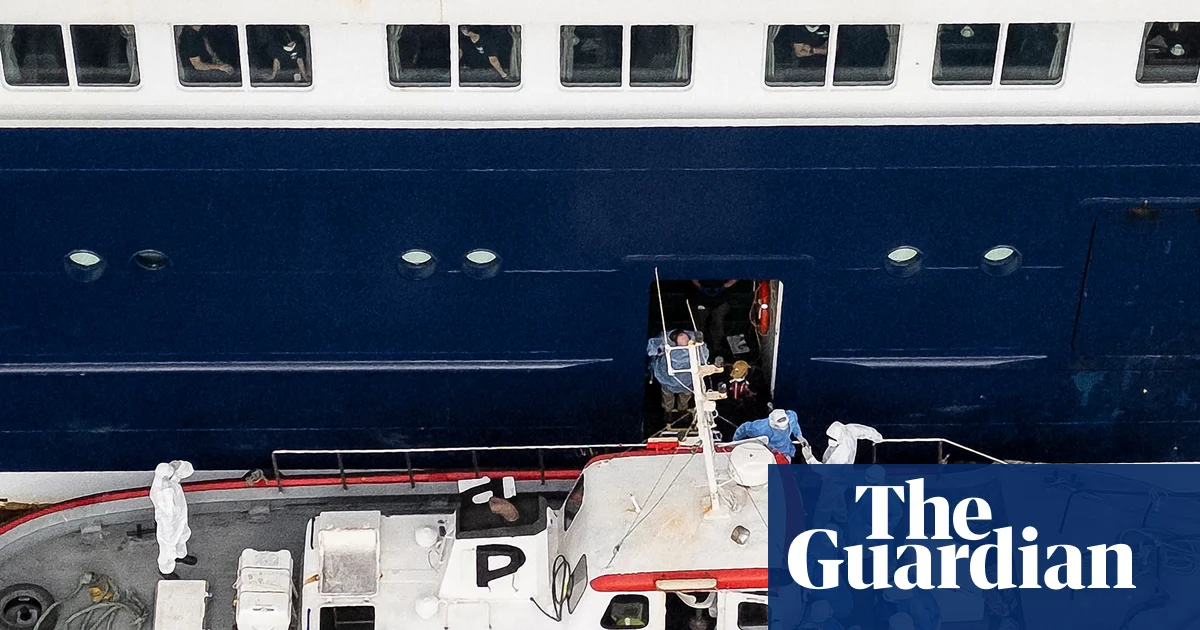
Recent developments involving the MV Hondius, a Dutch-flagged cruise ship stranded off the coast of West Africa, have spotlighted the broader societal issues of public health crises, governmental authority, and social cohesion. As nearly 150 passengers from diverse communities find themselves caught in a complex web of international health protocols and local political disputes, the ripple effects extend far beyond individual health concerns, deeply affecting families, local communities, and the societal fabric. The evacuation of suspected hantavirus patients to the Netherlands, confirmed by the WHO, underscores the intersections of health security, humanitarian responsibilities, and geopolitical considerations.
Such incidents expose the intertwined nature of demographic shifts and cultural tensions. The ship, which was en route to the Canary Islands—an often-overlooked hub for European-tourism-dependent economies—becomes a microcosm of societal fragility. The fact that the Spanish authorities refused docking initially, and that local leaders like Fernando Clavijo vehemently oppose the vessel’s arrival, illustrates how public health emergencies are increasingly politicized, threatening the social cohesion vital for community resilience.
- The outbreak is linked to hantavirus, typically transmitted via contact with rodents, complicating quarantine strategies in high-density environments.
- With passengers from multiple nations—Britain, Germany, Australia, and beyond—the crisis highlights the globalized nature of social issues.
- Local governments face balancing public safety with economic and diplomatic pressures, often leaving families and communities uncertain and anxious about their loved ones’ fates.
Nevertheless, the societal ramifications extend into the realm of education and moral responsibility. As sociologists like Dr. Emily Nguyen argue, societal responses to crises influence the moral fabric of communities—shaping how future generations perceive authority, altruism, and collective security. The ongoing debate over whether to permit docking, coupled with the decisions about health monitoring and quarantine, underscores society’s moral dilemma: uphold individual rights or prioritize collective safety. The situation heightens the importance of ethical leadership in maintaining societal trust. Families—particularly those with loved ones aboard—are left navigating a landscape fraught with uncertainty, exemplifying how societal stressors inevitably translate into intergenerational anxieties and social fractures.
As the world watches with concern, the unfolding crisis serves as a stark reminder of the urgent need for community-based solutions and stronger social safety nets. The hope lies in fostering a society where public health is not merely a bureaucratic mandate but a shared moral mission—one that respects human dignity while safeguarding collective well-being. History teaches us, as sociologist David H. Smith notes, that resilient societies are built not solely on infrastructure but on trust, moral clarity, and the unity of purpose. Society’s challenge is to transform this harrowing event into an opportunity for growth, for reimagining community bonds, and for cultivating hope amid adversity. In the end, society’s greatest strength remains its capacity for renewal—an enduring testament to the human spirit’s relentless quest for harmony in a fractured world.