

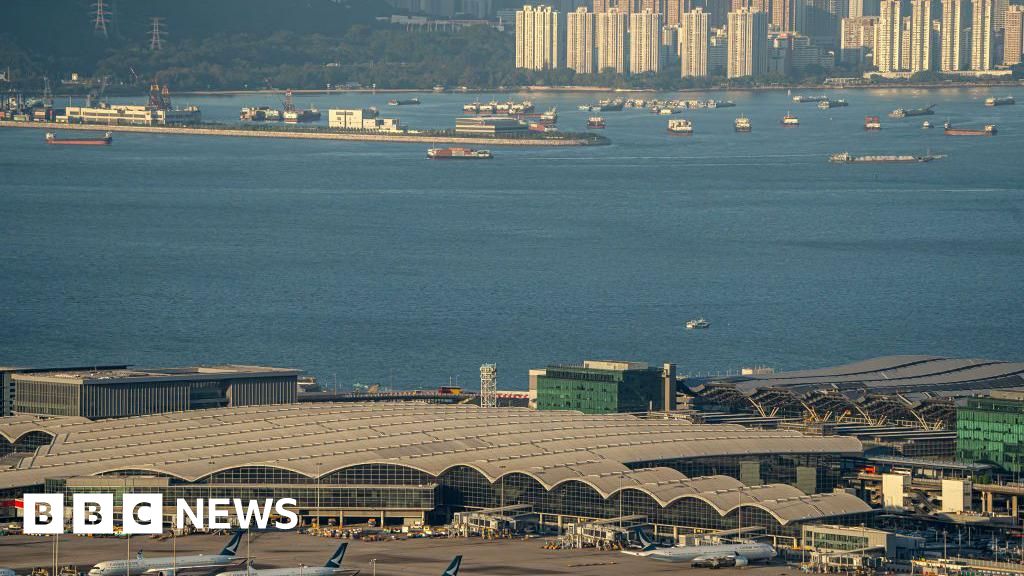
In a startling event that underscores the delicate balance of global transportation, a cargo plane has tragically skidded off the runway at Hong Kong International Airport, resulting in the loss of two ground staff members and highlighting the persistent risks faced by international hubs. The incident involved Emirates flight EK9788, operated by Aerotranscargo, which was arriving from Dubai early in the morning, around 03:50 local time. Reports indicate that the aircraft collided with a ground vehicle on the north runway, an area critical for the city’s freight and passenger operations, illustrating how even the most meticulously maintained facilities can face unforeseen calamities.
This accident arrives at a crucial juncture for Hong Kong as it struggles to maintain its status as a premier global transit centre amidst geopolitical upheaval and economic shifts. The airport’s closure of the affected runway—though the remaining two continue to operate—raises questions about the resilience of one of the world’s busiest airports. Analysts, including aviation safety experts from ICAO, emphasize that such incidents, while rare, can have ripple effects straining supply chains and logistical networks vital for regional stability. Many see this as a turning point, a stark reminder that even in a city famous for efficiency, the risks of transportation accidents remain ever-present.
The immediate response involved rescue operations by the Hong Kong Government Flying Service and Fire Services vessels, which coordinated above and below the ground to recover the crew and the ground personnel who fell into the sea. Unfortunately, the two staff members ultimately succumbed to their injuries, a tragic outcome that shines a light on the perilous nature of airport ground work. In the aftermath, authorities are set to hold a press conference at 10:00 local time, where safety investigations will undoubtedly dominate discussions. Such incidents often spark broader debate about international standards for airport safety, especially in politically sensitive regions where security and efficiency are intertwined with economic destiny.
Importantly, this event is more than a local tragedy; it operates within the larger geopolitical context of increasing tensions and shifting alliances. Hong Kong, once a renowned global trade hub, faces mounting pressure from Beijing’s grip alongside international scrutiny. The incident also prompts questions about how such crises are managed amidst escalating geopolitical stakes, where every safety lapse can be exploited to forge narratives of instability or neglect. Historians and international observers argue that it is moments like these — when human tragedy collides with geopolitical realities — that define the future of global aviation security and regional cooperation.
As the world watches, the fate of Hong Kong International Airport‘s corridors of commerce hangs in a fragile balance. The incident serves as a stark reminder that, beneath the surface of technological marvels and economic competitiveness, the human element — often for those working tirelessly behind the scenes — remains vulnerable. The weigh of history presses down, and the question remains: will this tragedy catalyze a renewed push towards safety and resilience, or will it fade into another chapter of transitory setbacks in a city that has, time and again, defied the odds? The answer, as with so much of the unfolding story, is yet to be written, but the echoes of this event will no doubt resonate through the corridors of power and policy for years to come.
















