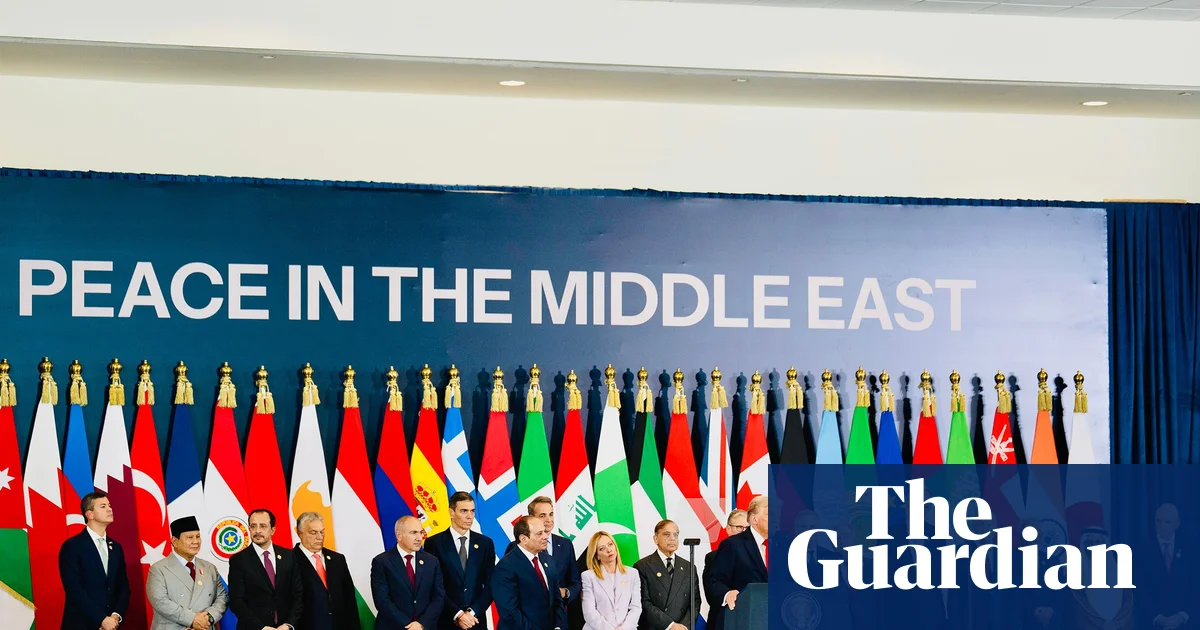
The recent ceasefire in Gaza has sparked a seismic shift in **Middle Eastern geopolitics**, signaling a potential turning point that could redefine alliances, regional influence, and international diplomacy. While some analysts urge caution, warning that ongoing violations by **Israel** and **Hamas** suggest fragile trust, the deeper implications point toward an emerging landscape where traditional rivals are compelled to cooperate under unprecedented pressures. As **U.S. President Donald Trump** pushes his controversial 20-point plan for Gaza, regional powers such as **Qatar** and **Turkey** are accentuating their influence by leaning heavily on **Hamas**, underscoring how external pressure can catalyze unexpected realignments across the Arab world.
One of the most remarkable developments is the attendance at the recent summit in **Sharm el Sheikh**, which included **Iraq’s Prime Minister Mohammed Shia’ al-Sudani**. His visible support—symbolized by a thumbs-up with Trump and praise for Tony Blair’s proposed “Peace Council”—signals a potential shift. Historically, **Iraq**, a nation long under Iran’s heavy influence since the post-2003 U.S. invasion, is now spotted edging toward the **Arab orbit**, hinting at a significant realignment of regional power. According to analysts like Michael Knights of Horizon Engage, Baghdad considering troop contributions to a planned international stabilisation force in Gaza foreshadows an evolution in **Iraq’s** regional role, potentially diminishing its previous allegiance to **Iran**. Such a shift could accelerate **Arab** unity and influence—Movement that, if sustained, may undermine Iran’s geopolitical strategy of forward defense, which relies on a network of militant proxies like **Hezbollah** and **Hamas**.
This realignment comes at a time when Iran’s strategic position appears increasingly compromised. The short war with Israel has exposed Iran’s military limitations and economic vulnerabilities, especially as **European**, **UK**, and **U.S.** sanctions tighten around Tehran. The deterioration of Iran’s regional proxies—Hezbollah in Lebanon, the Assad regime in Syria, and militant factions in Gaza—marks the end of Tehran’s expansive **”forward defense”** doctrine. International analysts warn that the **ceasefire** may paradoxically serve as an engine of **region-wide integration**, rekindling discussions of land connections from the Gulf to the Mediterranean and promoting **diplomatic normalization** of Israel with Gulf Arab states. Nevertheless, the specter of Iran’s discontent remains, as Tehran faces a bleak diplomatic and military landscape that could push it toward more desperate measures.
Amid these developments, the U.S. and its allies appear to be seizing an opportunity to engineer a broader regional realignment. None other than **Trump’s** architect of the **“Riviera” plan**—initially met with skepticism—seems to have accelerated its implementation, potentially laying the groundwork for a new geopolitical equilibrium. If **Abraham Accords** expand to include **Saudi Arabia**, **Indonesia**, and other Arab nations, the potential for **diplomatic normalization** could radically transform the region, diminishing **Iran’s** influence and empowering **moderate Arab states** eager for stability and economic growth. However, such a trajectory hinges on the Palestinian issue—an obstacle that remains a persistent, unresolved question shaping the future of peace and stability.
As history continues to unfold, the **Middle East** finds itself at a critical crossroads. The fragile ceasefire, while temporary, exposes the deep currents of change beneath the surface—currents driven by shifting alliances, ideological battles, and the relentless pursuit of regional dominance. The world watches as these forces collide, and the fate of millions hangs in the balance. The narrative of this conflict is far from over; instead, it has entered a new chapter—one that could either usher in generations of peace or plunge the region into deeper chaos. The next moves made by regional and global powers will be remembered not just as political decisions, but as defining moments that could shape the geopolitical landscape for decades to come.