

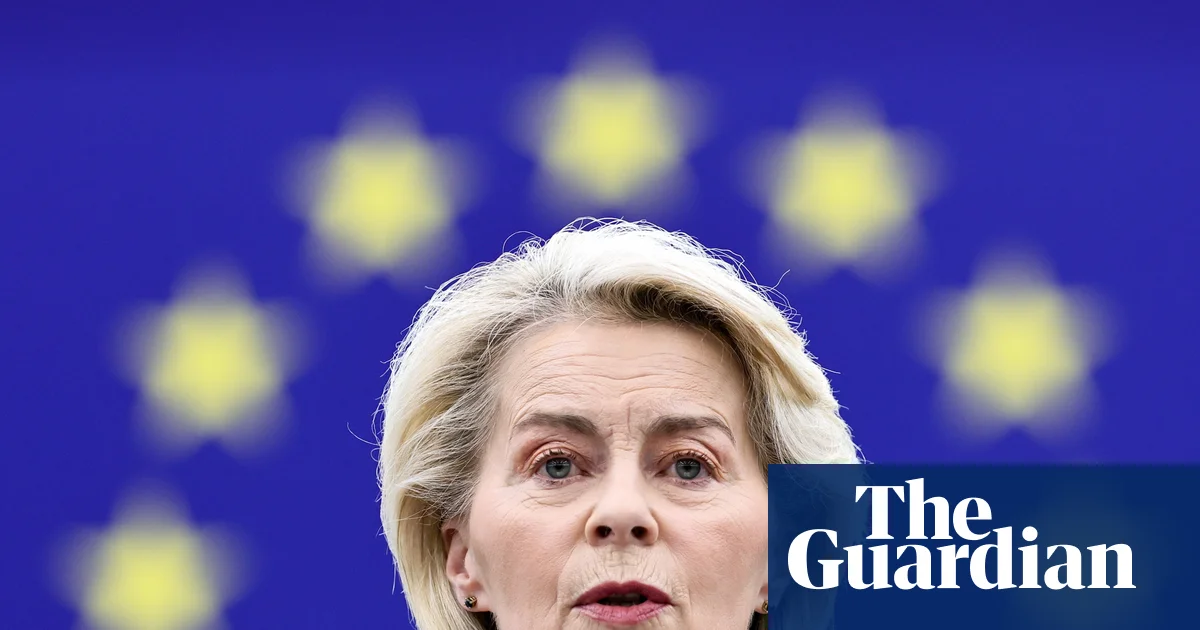
Recent statements from European Commission President Ursula von der Leyen sharply underlined a fundamental shift in Europe’s approach to global geopolitics. Her assertion that “Europe can no longer be a custodian for the old-world order” reflects a continent grappling with its diminished influence amidst an increasingly unpredictable international environment. In her speech, she emphasized the need for a “more realistic and interest-driven foreign policy,” acknowledging that the traditional rules-based system, long cherished by European nations, can no longer serve as the sole foundation for global stability. As missiles rain down upon Tehran and tensions escalate in the Middle East, her comments reveal a continent contemplating its limited options in a chaotic world where alliances are strained, and old norms are rapidly unraveling.
This crisis has thrown Europe into a state of disarray, exposing profound divisions within its leadership and strategy. While some nations, like France, have dispatched naval forces and increased diplomatic outreach in the Middle East, their efforts appear unable to exert significant influence on the unfolding conflict. Other key players, such as Germany and Spain, display divergent views—ranging from cautious restraint to accusations of overreach—exposing a fractured unity that weakens the EU’s collective voice. Analysts and former officials warn that the EU’s response has been “paralysed,” reduced to mere commentary while the conflicts escalate around its borders. The inability of Europe to forge a cohesive stance not only minimizes its geopolitical relevance but risks ceding influence to harsher, more assertive powers like Russia, which is already positioned to exploit these turbulences for strategic gain, especially in the energy sector and regional dominance.
Amid this chaos, a critical debate has emerged within Europe over whose voice truly represents the continent on the world stage. French Foreign Minister Jean-Noël Barrot criticized Ursula von der Leyen for what he called an inappropriate overreach—highlighting an internal struggle in defining European authority. Meanwhile, Kaja Kallas, Estonia’s leader, advocated for a return to international law, fearing Europe’s drift away from legal norms could lead to recurrent chaos. This division signals a larger crisis of confidence in the rules-based order that has underpinned European security and prosperity since the Cold War. Historians like Niall Ferguson warn that failing to defend these principles invites a future of repeated violations by major powers, effectively signaling the end of an era marked by international law and cooperation. Von der Leyen’s calls for “new ways of cooperating,” in her words, seem to portend a departure from these norms, with her remarks viewed by critics as an attempt to adapt to a “post-legal” world—a shift that could further embolden global actors willing to bypass established rules.
The overarching consequence of these developments is clear: Europe’s strategic influence is waning at a time of immense geopolitical upheaval. The ongoing Middle East conflict not only risks destabilizing a volatile region but also demonstrates Europe’s inability to shape the narrative. Western leaders remain largely reactive, sidestepping confrontational stances out of fear of alienating powerful allies or triggering broader conflicts. As Julien Barnes-Dacey and other analysts warn, this reticence amounts to a strategic miscalculation—Europe’s hesitation may serve Russia and other adversaries better than any military intervention ever could. The continent’s failure to project decisive power leaves a void that will be exploited by those with fewer qualms about international law or norms. In this unfolding chapter of history, most European capitals seem content to tread water, hoping to contain the damage, even as the currents of chaos threaten to sweep them away. With each passing day, as alliances shift and old principles are discarded, the question remains: how much of Europe’s future is left to the rule of law—and how much is surrendered to the realities of power and interest?.
















