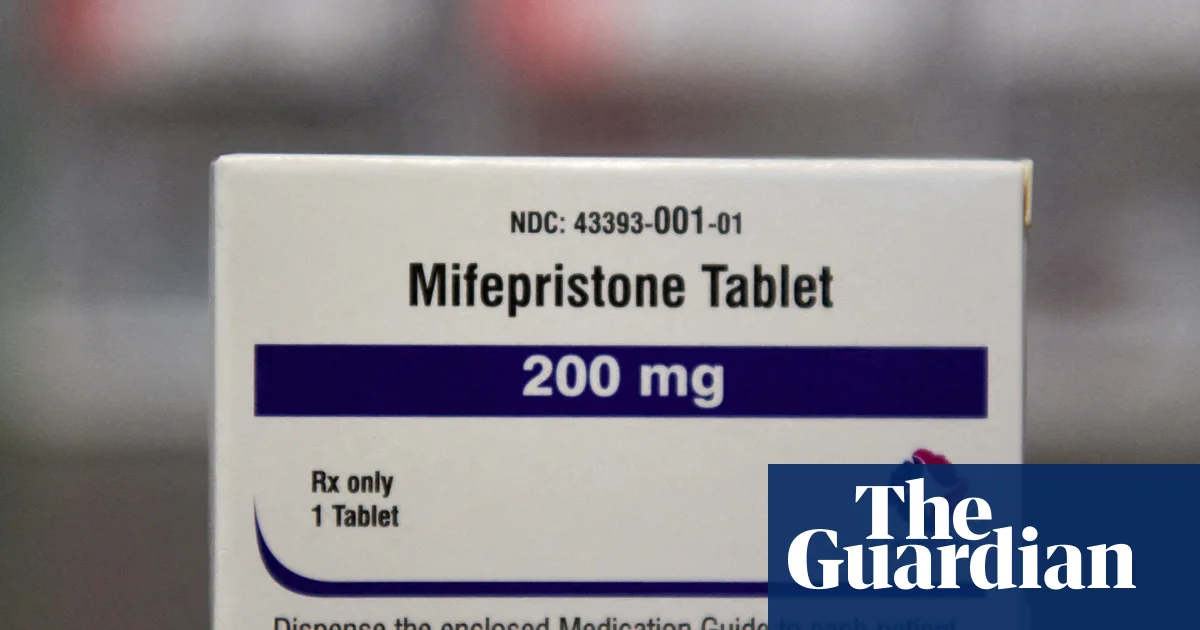
The recent decision by the US Supreme Court to temporarily reinstate nationwide access to mifepristone marks a critical juncture in the ongoing battle over reproductive rights in America. This move comes after weeks of intense legal clashes that threaten to redefine access to a medication used in nearly two-thirds of all pregnancy terminations across the country. Justice Samuel Alito signed an order on Monday that paused a controversial ruling by the fifth US circuit court of appeals, which sought to impose new restrictions on the abortion drug, including barring its prescription via mail—a move that could have severely limited access in a nation already divided on the issue.
The appellate court’s decision—rendered by a conservative three-judge panel in New Orleans—emerged as a clear extension of the heated political landscape surrounding reproductive health. The panel argued that mailing mifepristone could pose health risks and undermine restrictions on abortion enacted at the state level, echoing the broader strategy by conservative jurisdictions to challenge federal agency authority. This legal escalation was rooted in a lawsuit from Louisiana’s state government, which claimed that the Drug Enforcement Administration’s mail distribution policies bypassed state laws designed to restrict or ban abortion entirely. The decision was widely condemned by reproductive health advocates, who emphasized that decades of scientific research consistently uphold mifepristone’s safety and effectiveness when used properly.
Following the appellate ruling, Danco Laboratories, one of the primary manufacturers of mifepristone, swiftly filed an emergency appeal to the Supreme Court. They argued that the lower court’s restrictions would inject chaos into already sensitive medical decision-making and jeopardize patient safety. As analysts from international organizations and legal experts observe, this repeated back-and-forth typifies how swiftly the fabric of reproductive rights can unravel when political ideologies override scientific consensus. The court’s interim order—set to remain in effect until at least 11 May—illustrates the high stakes involved in the ongoing legal tug-of-war, where each ruling could alter access to healthcare across a nation grappling with deep divisions.
Geopolitical Impact
This legal conflict in the United States extends beyond its borders, influencing international debates on reproductive rights and the role of judicial authority in health matters. Countries with conservative governments are closely watching, as the American example underscores how legal frameworks can be utilized either to uphold or restrict reproductive freedoms. International organizations like the World Health Organization and human rights advocates warn that the restrictions threaten to set a dangerous precedent, potentially inspiring similar legislation elsewhere. For many societies, decisions made in Washington carry a symbolic weight, as they reflect and influence the ideological battlegrounds shaping women’s rights globally.
The Road Ahead and the Weight of History
While Monday’s order offers a temporary reprieve, experts emphasize that the fight over mifepristone’s accessibility remains far from over. Prominent voices such as Alexis McGill Johnson of Planned Parenthood warn of ongoing chaos and uncertainty, underscoring the profound and tangible effects on patients’ lives. Meanwhile, Julia Kaye, representing the American Civil Liberties Union, urges the Supreme Court to definitively settle the debate, warning that complacency risks undermining reproductive freedoms seen as fundamental human rights. This complex judicial saga surfaces at a critical moment—just three years after the Supreme Court’s seismic decision to overturn Roe v. Wade, which had guaranteed federal abortion rights for nearly five decades—an event that reverberated across all levels of society and policymaking.
As history continues to unfold, the decisions made now will shape the societal fabric of *America* for generations to come. The ongoing battles over reproductive health are emblematic of larger ideological conflicts gripping the nation—conflicts that challenge the very essence of personal sovereignty and the rule of law. With each legal twist and judicial decree, the heart of democracy and individual rights stands at a crossroad—yet the enduring truth remains: the struggle for reproductive freedom is, in many ways, a reflection of the ongoing contest between liberty and authority, between scientific truth and ideological dogma. The world watches, for the chapters yet to be written may very well determine the future of human rights well beyond the borders of the United States.