

Geopolitical Shifts and Emerging Power Players in US Military Politics
In the tangled web of international power, the recent appointment of Dan Driscoll as the youngest-ever Army Secretary in the United States marks a notable shift in the country’s military and geopolitical landscape. At only 39, Driscoll’s rise to prominence underscores an emerging trend where technology, youth, and political alliances forge new avenues for influence—an aspect not lost on international analysts and historians. Despite his limited diplomatic experience, Driscoll’s close ties with key figures like Vice President JD Vance and former President Donald Trump signifies a potential reorientation of America’s military and strategic priorities, especially regarding the ongoing crisis in Ukraine.
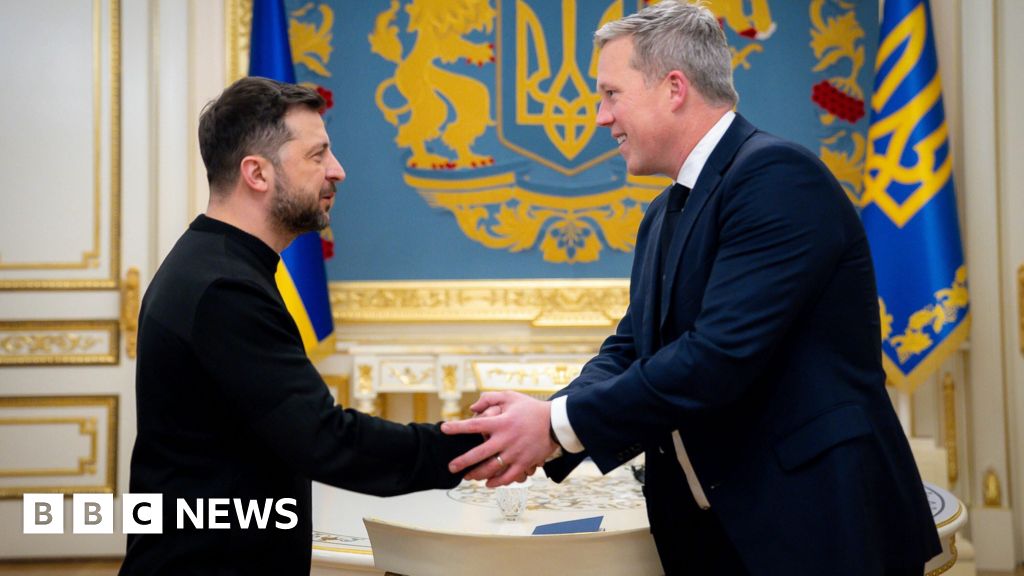
His unannounced visit to Kyiv and subsequent discussions with Ukrainian officials signal a significant departure from traditional diplomatic channels, hinting at a more direct or even unconventional approach to conflict resolution. The fact that Driscoll, with no formal background in international diplomacy, engaged in top-level talks with Zelensky and Russian officials, demonstrates a possible shift toward a strategy where military technology and unorthodox negotiations play an increasing role. Analysts, including those from international think tanks, warn that such moves could recalibrate America’s role in global conflicts, tilting the balance of influence in ways reminiscent of Cold War-era brinkmanship, but now driven by emerging battlefield technologies and rapid information exchanges.
Trump’s recent social media hints about directing his envoy Steve Witkoff to meet with Vladimir Putin in Moscow—plus Driscoll’s overt involvement—highlight an essential shift: the potential melding of military preparedness with diplomatic gambits. This combination might redefine how America projects power and mediates conflicts in our multipolar world. More critically, Driscoll’s vision of future warfare—where every soldier harnesses drones and artificial intelligence—reflects a broader trend towards technological dominance. Historical voices from military strategists and defense analysts warn that as societies become more reliant on silicon and software, the battlefield itself transforms into an arena of information warfare and automation, promising both unprecedented efficiency and dangerous vulnerabilities.
In the backdrop of these developments, questions emerge about Driscoll’s possible future role – whether as a key figure in negotiations over Ukraine, potential defense secretary, or a strategic envoy. Warnings from international bodies suggest that the autonomy and rapid decision-making enabled by technological integration could either speed up peace processes or plunge the world into new conflicts. As Europe, Russia, and Ukraine grapple with this shifting power dynamic, history warns us that decisions made today—often in backrooms and secret negotiations—could reverberate through generations. The unfolding saga of a young, tech-savvy military leader navigating a world on the brink underscores that history’s weight is immense, and the future remains unwritten — a ticking clock where each move could tilt the global balance and redefine the nature of warfare itself.
















