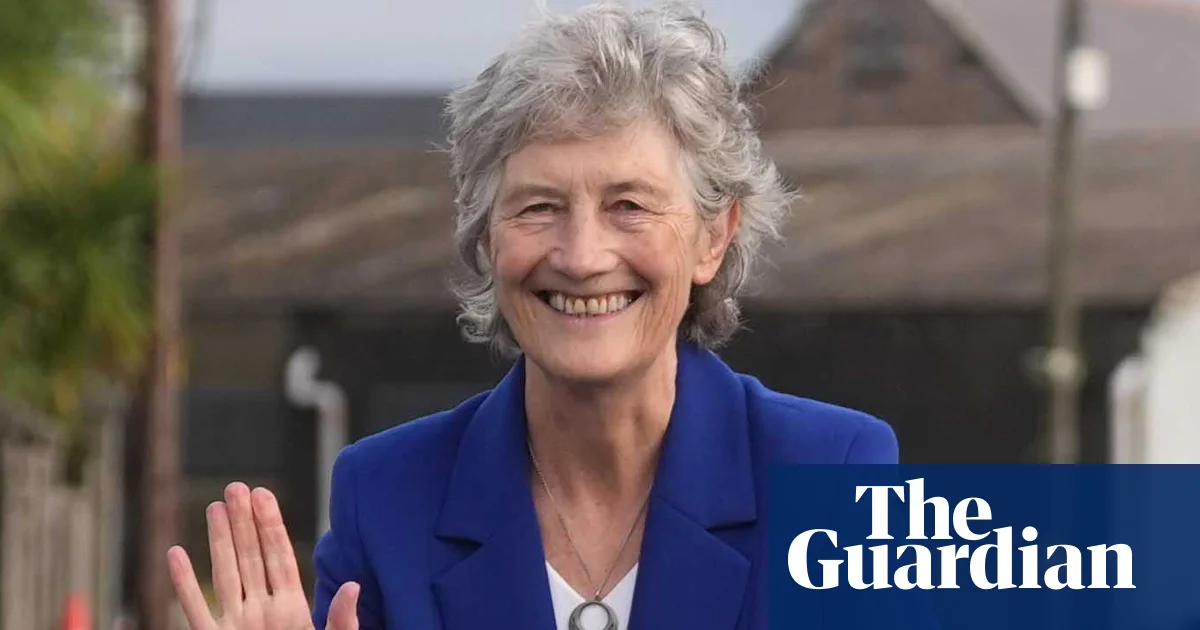
Ireland’s Political Landscape Shifts as Independent Candidate Catherine Connolly Wins Landslide Presidential Victory
In a landmark election that signifies a profound shift in Ireland’s political and social fabric, Catherine Connolly, an independent leftwing candidate and former barrister, has secured an outright majority in a landslide victory, winning over 63% of the first-preference votes. Her victory, declared at Dublin Castle amidst subdued voter turnout of 46%, encapsulates growing disenchantment with the traditional center-right parties—Fine Gael and Fianna Fáil—and underscores a population yearning for genuine change. Her campaign, bolstered by a rare united front of leftwing parties and resonant social media activism, challenges the long-standing status quo, urging Ireland to reassess its values and international stance. With her election, Ireland’s presidency enters a new era—one that, despite the largely ceremonial role, symbolizes a significant indicator of societal momentum towards progressive reform.
While the office of the president in Ireland remains largely symbolic, Connolly’s victory carries critical geopolitical implications. She promises to uphold Irish neutrality, distancing herself from what she labels as western “militarism,” and has openly criticized the involvement of the UK and US in contentious issues such as the Gaza conflict. Her stance aligns with a broader desire among many Irish citizens to forge an independent foreign policy—one less entangled with US-led military interventions and more focused on promoting peace and humanitarian values. International analysts and historians note that her assertion of sovereignty, combined with her vocal criticism of Western militarism, could influence Ireland’s diplomatic relationships, particularly with the United States and European Union members, fostering a more nuanced stance that prioritizes peace over military alliances.
The geopolitical impact extends beyond Ireland’s borders into regional stability, as Connolly’s positioning may inspire similar shifts among other smaller nations seeking to recalibrate their international engagements. Her advocacy for climate action and social justice resonates with a generation distrustful of entrenched politics and globalist agendas. As she embarks on her seven-year term, her potential to become a vocal moral voice on the international stage could reshape Ireland’s role within global institutions, emphasizing diplomacy and humanitarianism over alignment with hegemonic powers. Yet, some caution that her outspoken views, especially regarding the United States and European solidarity, could provoke friction, risking diplomatic isolation in an interconnected world already rife with tensions.
Driven by a wave of public frustration over the nation’s housing crisis and rising living costs, Connolly’s ascent is also a reflection of youth and urban discontent. Her campaign capitalized on social media platforms and cultural endorsements from artists such as Kneecap and the Mary Wallopers, capturing a narrative of hope and change that had previously been dismissed as marginal. Critics warn that her radical rhetoric and outspoken stance against established alliances might complicate Ireland’s diplomatic priorities, particularly in navigating its traditionally close relationship with the U.S. and European partners. Nevertheless, her victory signals a pivotal moment—where societal voices seeking justice, sovereignty, and peace take center stage, setting a course that history will continue to record and ponder. As the world watches Ireland’s evolving political story, it remains to be seen whether her presidency will mark the dawn of a new international chapter or become a cautionary tale of polarization’s toll on diplomacy. The pages of history, after all, are still being written, and Ireland’s next chapter is only beginning to unfold.